


Many patients worry about whether their dental implants will succeed, but few realize just how much smoking can interfere with the healing process.
One of the major smoking effects on dental implants is that it reduces blood flow to your gums, slows down bone healing, and increases your risk of infection.
All of this can lead to implant failure at rates much higher than most people expect. The chemicals in cigarettes don’t just affect your lungs. They directly impact your mouth’s ability to heal after surgery.
You might think that cutting back on cigarettes or smoking just a few per day won’t make much difference. However, even light smoking after dental implant surgery exposes your body to the same harmful effects that slow healing and reduce implant stability.
The good news is that understanding these risks can help you make informed choices about your treatment and recovery.
Whether you’re a current smoker considering implants or you’ve already had the procedure, knowing how smoking affects the healing process can make the difference between success and failure.
This article breaks down exactly what happens when you smoke after getting dental implants and what you can do to protect your investment in your smile.
Key Takeaways
- Smoking significantly increases dental implant failure rates by reducing blood flow and interfering with bone integration
- Even smoking a few cigarettes per day can slow healing and raise your risk of infection and complications
- Quitting smoking before and after implant surgery gives you the best chance for successful long-term results
Why Smoking Slows Implant Healing Significantly
Smoking creates multiple barriers to successful dental implant healing that work together to increase your risk of complications. Nicotine restricts blood vessels, tobacco chemicals interfere with bone formation, and reduced oxygen delivery prevents your body from repairing tissue effectively.
Effects of Nicotine and Tobacco on Implant Healing
Nicotine directly damages the cells your body needs to heal after dental implant surgery. When you smoke, nicotine enters your bloodstream and stops osteoblasts from working properly. These are the cells that build new bone around your implant.
Tobacco smoke contains over 400 chemicals that harm your healing process. These substances prevent your immune cells from fighting infection at the surgical site. Your white blood cells become less effective, which means bacteria can multiply more easily around your new implant.
Smoking interferes with cell differentiation, stopping your body from creating the fibroblasts and osteoblasts needed for tissue repair. The nicotine in cigarettes also passes easily through the gum tissue surrounding your dental implant, where it continues to block bone-building activity for hours after you smoke.
Impact on Osseointegration and Bone Integration
Osseointegration is the process where your jawbone fuses with the titanium implant post. This fusion must happen for your implant to work long-term. Smoking disrupts this critical process at every stage.
Your bone needs to grow around the implant threads and hold them firmly in place. When you smoke, your bone cells produce less new tissue and work more slowly. Studies show smokers experience failure rates up to three times higher than non-smokers during the osseointegration phase.
Research found that smokers had a 10% failure rate compared to 4% for non-smokers when evaluating 100 dental implants over six years. The bone around implants in smokers showed more resorption and weaker integration with the metal post.
Reduced Blood Flow and Oxygenation at the Surgical Site
Your blood carries oxygen and nutrients that your gums and bones need to heal after implant placement. Smoking reduces blood flow to your gums by constricting blood vessels throughout your mouth.
Nicotine causes your blood vessels to narrow and increases how much your platelets stick together. This combination results in less blood reaching the tissue around your new implant. Your cells become starved for oxygen, which they need to divide and repair damage.
The reduced circulation from tobacco use creates an environment where healing slows down significantly. Your body struggles to deliver immune cells to fight bacteria and remove damaged tissue.
This lack of oxygen and blood flow explains why smoking affects multiple aspects of the healing process and creates conditions where implant failure becomes much more likely.
Concerned about how smoking may affect your dental implant healing and long-term results? Contact our team today to discuss your risks, options, and a personalized treatment plan.
Smoking-Related Implant Complications and Risks
Smoking creates a range of serious complications that go beyond slow healing. You face higher infection rates, progressive bone deterioration, and a dramatically increased chance your implant won’t integrate properly with your jaw.
Increased Risk of Infection and Peri-Implantitis
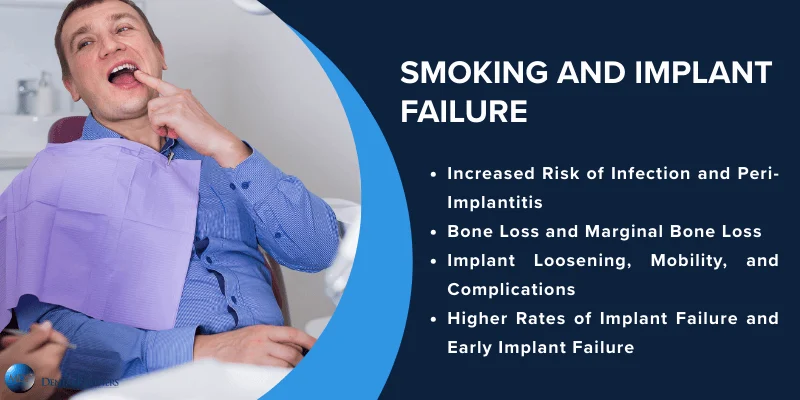
When you smoke, your risk of developing infections around your implant goes up significantly. Peri-implantitis is a major concern for smokers, as tobacco use weakens your immune response to bacteria that accumulate around the implant site.
Your body struggles to fight off harmful bacteria when nicotine restricts blood flow to your gums. This creates an environment where pathogens can thrive unchecked. Studies show that smokers have more anaerobic bacteria in their subgingival areas, which are the same types of bacteria linked to implant infections.
The reduced oxygen levels in your tissues also favor bacterial growth. You’re essentially creating perfect conditions for infection every time you light a cigarette.
Bone Loss and Marginal Bone Loss
Your jawbone needs to fuse with the implant for long-term success, but smoking interferes with this process. Marginal bone loss happens when the bone around the top of your implant starts to deteriorate.
Smokers experience more bone resorption than non-smokers because tobacco restricts the blood supply your bone needs to maintain itself. The chemicals in cigarettes also tip the balance between bone-building cells and bone-destroying cells in favor of destruction.
You might not notice this bone loss at first. It happens gradually over months and years. But once enough bone disappears, your implant loses the support it needs to stay stable.
Higher Rates of Implant Failure and Early Implant Failure
Your chances of implant failure increase substantially if you smoke. Smoking positions itself as a significant risk factor for failure over time, with research showing smokers who consume 20 or more cigarettes daily face the highest relative risk.
Clinical outcomes for smokers are 50-75% worse than for non-smokers. Early implant failure typically occurs within the first few months after placement, when your implant should be integrating with the bone.
The failure happens because smoking prevents proper osseointegration. Your bone simply doesn’t grow into and around the implant surface the way it should.
Implant Loosening, Mobility, and Complications
An implant that feels loose or moves is a serious warning sign. Smoking contributes to implant mobility by preventing stable bone integration and promoting ongoing bone loss around the implant.
You might first notice your implant feels slightly different when you chew. This mobility indicates the bone isn’t holding the implant firmly in place. Complications such as infections and slower healing make smokers more prone to these issues.
Other complications you face include wound dehiscence, where your surgical site splits open before healing completely. Smoking also increases post-operative infection rates, especially after procedures like sinus floor elevation that are sometimes needed for implant placement.
The Comparison: Smokers vs. Non-Smokers
Research shows smokers face significantly higher implant failure rates than non-smokers, with studies documenting differences in bone healing speed, integration quality, and long-term survival. The gap between these two groups reveals how tobacco use creates measurable obstacles throughout your implant journey.
Clinical Outcomes by Smoking Status
When you smoke, your clinical outcomes differ substantially from those of non-smokers. A systematic review examining 29,519 implants found that 25 out of 33 studies showed a significant correlation between smoking and increased failure rates.
The differences are evident in both the early and late stages of healing. You’re more likely to experience complications during the initial integration period and face ongoing risks years after placement.
Key outcome differences include:
- Higher infection rates at surgical sites
- Slower tissue regeneration around implants
- Increased bleeding during and after procedures
- Greater inflammation in surrounding gums
Studies comparing smokers and non-smokers consistently document these clinical differences across various patient populations.
Retrospective Studies and Evidence
Retrospective studies tracking implant outcomes over multiple years provide clear evidence about smoking’s impact. These studies examine patient records to identify patterns between smoking habits and treatment success.
Research involving over 18,301 patients demonstrates that your smoking status directly influences results. One retrospective study found that the risk of implant loss multiplied by 18.3 for smokers consuming more than 10 cigarettes daily compared to non-smokers.
The evidence reveals a dose-response relationship. If you smoke more cigarettes per day, you face proportionally higher failure risks. This pattern holds true across different study designs and patient populations.
Your smoking history matters too. Recent quitters show different outcomes than continuous smokers, though researchers continue examining how quickly cessation benefits appear.
Ready to take the first step toward a healthier, stronger smile? Complete our new patient form online so we can review your health history and prepare a customized implant consultation for you.
Bone Healing and Quality Differences
Smokers exhibit compromised bone quality that affects how implants integrate with your jaw. Tobacco use reduces blood flow to bone tissue, limiting the oxygen and nutrients needed for proper healing.
Your bone density and structure change when you smoke regularly. The chemicals in cigarettes interfere with osteoblast function—the cells responsible for building new bone around your implant.
This creates delayed wound healing that extends your recovery timeline. Where a non-smoker might achieve solid integration in three to six months, you may need additional time or face incomplete bonding.
The quality difference isn’t just about speed. Your bone may form less dense connections with the implant surface, creating a weaker foundation that’s more vulnerable to failure under normal chewing forces.
Long-Term Implant Success and Survival Rates

Long-term implant success rates drop significantly when you continue smoking after placement. Research shows implant survival time decreases by 4.2% in smokers versus non-smokers.
Your risk doesn’t disappear after initial healing completes. Smoking continues affecting the bone and tissue supporting your implant for years.
Success rate comparisons:
| Patient Group | Success Rate | Notes |
| Non-smokers | 95-98% | Standard success range |
| Former smokers | 95-98% | Similar to non-smokers |
| Current smokers | 85-90% | Significantly lower |
| Heavy smokers (10+ daily) | 70-85% | Highest failure risk |
Patients who quit smoking showed the same success rates as non-smokers in multiple studies. This means you can improve your chances by quitting before or after implant placement, though earlier is better for optimal healing.
Healing Challenges After Dental Implant Surgery
Smoking creates specific obstacles during recovery that affect soft-tissue repair, oral moisture levels, and bone integration around the implant site.
Soft Tissue Healing and Saliva Production
Your gums need healthy blood flow to heal properly after dental implant surgery. Smoking reduces oxygen levels in your blood and constricts blood vessels around the surgical site. This means your soft tissues receive fewer nutrients needed for repair.
Saliva plays a bigger role in healing than most people realize. It keeps your mouth clean and helps protect against infection. Smoking reduces saliva production, which leaves your mouth drier and more vulnerable to bacteria.
The chemicals in cigarette smoke also irritate your gum tissue directly. This irritation slows down the formation of new tissue around your implant. Your gums may take weeks longer to close properly compared to those of non-smokers.
Increased Risk of Dry Mouth and Dry Socket
Dry mouth becomes a serious concern when you smoke after implant placement. The reduced moisture creates an environment where harmful bacteria multiply faster. You might not notice the dryness right away, but it affects healing from day one.
Dry socket is a painful complication that happens when the blood clot at your surgical site breaks down too early. While more common with tooth extractions, smoking increases this risk with implants too. The suction from inhaling cigarettes can physically dislodge protective blood clots.
Smoking also slows your body’s natural healing process, making these complications more likely. Even light smoking affects tissue moisture and clot stability.
Bone Grafting and Recovery Concerns
If you needed bone grafting before your implant, smoking creates extra challenges. Your jawbone must integrate with both the graft material and the implant itself. This process requires strong blood supply and healthy bone cells.
Smoking interferes with bone formation at a cellular level. Your bone takes longer to grow around the implant, and the bond may be weaker. Studies show smokers experience significantly less bone growth after treating bone defects compared to non-smokers.
The risk of graft failure increases with each cigarette. Your bone graft needs several months to integrate fully, and smoking throughout this period puts your entire treatment at risk.
Smoking After Dental Implant Placement: What to Expect
Even light smoking creates serious risks after implant placement, and the healing timeline requires complete attention to protect your investment. The first few weeks determine whether your implant will integrate successfully with your jawbone.
Light Smoking After Dental Implant: Is It Safe?

No amount of smoking is safe after dental implant surgery. Many patients believe that light smoking after dental implant placement causes less harm than heavy smoking, but your body experiences the same negative effects regardless of quantity.
Even a few cigarettes per day reduces blood flow to your gums and jaw. This slowed circulation means less oxygen and fewer nutrients reach the surgical site where your implant needs to bond with bone.
The chemicals in tobacco smoke damage your immune response. Your body cannot fight infection effectively when exposed to nicotine and other toxins. Every cigarette increases your risk of implant failure, whether you smoke one per day or twenty.
Studies show that smokers experience 50-75% worse outcomes than nonsmokers after periodontal procedures. The relative risk of implant failure jumps significantly in patients who smoke, even in small amounts.
Not sure how smoking may impact your implant results or recovery timeline? Talk with our implant experts to get clear answers, risk assessment, and guidance tailored to your health and lifestyle.
Timeline and Critical Healing Phases
The first two weeks after implant placement represent the most critical healing window. During this time, your bone begins forming around the implant in a process called osseointegration.
Smoking after dental implant surgery during these initial weeks dramatically increases failure risk. Your body forms a blood clot at the surgical site that protects the area and helps healing start.
Key healing milestones include:
- Days 1-3: Blood clot formation and initial wound closure
- Weeks 1-2: Soft tissue healing around the implant site
- Weeks 2-8: Early bone integration begins
- Months 3-6: Complete osseointegration and implant stability
Smoking at any point disrupts these phases. The lack of oxygen and reduced blood flow prevent your bone from growing properly around the implant threads.
Most dental professionals recommend avoiding smoking for at least three months after surgery. Some suggest permanent cessation for the best long-term results.
Smoking and Delayed Implant Placement
Delayed implant placement happens when your dentist waits several months after tooth extraction before placing the implant. This approach gives your bone time to heal and rebuild after losing a tooth.
If you smoke, your dentist may require delayed placement instead of immediate implants. The waiting period allows them to assess your bone quality and healing ability before investing in the implant procedure.
How smoking impacts dental implant success becomes even more important with delayed placement because you need adequate bone volume to support the implant. Smoking reduces bone density and slows bone regeneration after extraction.
Your dentist might also require you to quit smoking for several weeks before scheduling delayed placement. This gives your circulation time to improve and your tissues time to recover from tobacco damage.
Promoting Implant Success: Prevention, Quitting, and Next Steps
Quitting smoking gives your implants the best chance to heal properly and last for years. Managing other health conditions like diabetes and keeping up with dental visits also play important roles in protecting your investment.
Strategies for Quitting Smoking Before and After Surgery
Quitting smoking at least one week before implant surgery helps your body start healing better. Staying smoke-free for at least two months after the procedure gives your bone time to fuse with the implant.
Your dentist can connect you with programs that make quitting easier. Nicotine replacement therapy like patches or gum can help manage cravings without the harmful chemicals in cigarettes.
Many patients find success by setting a quit date and telling friends and family about their plan. Support groups and phone apps can track your progress and remind you why you started.
If you slip up and smoke during recovery, tell your dentist right away. They can check your implant and adjust your care plan. The sooner you get back on track, the better your chances of success.
Preventing Peri-Implantitis and Implant Complications
Peri-implantitis causes inflammation around dental implants and can lead to bone loss if left untreated. Brushing twice daily and flossing around your implants removes bacteria that cause infection.
Daily care habits that protect your implants:
- Brush gently around the implant crown with a soft-bristled toothbrush
- Use unwaxed floss or special implant floss to clean below the gum line
- Rinse with an antimicrobial mouthwash to reduce bacteria
- Avoid hard foods that could damage the implant
Watch for warning signs like swollen gums, bleeding when you brush, or a bad taste in your mouth. These symptoms mean you need to see your dentist soon.
Additional Risk Factors: Diabetes and Oral Health
Diabetes affects how your body heals after surgery and increases your risk of implant problems. High blood sugar slows down bone growth and makes infections more likely.
Work with your doctor to keep your blood sugar levels stable before and after implant placement. Well-controlled diabetes has less impact on your implant success rate than unmanaged diabetes.
Your gum health matters just as much as blood sugar control. Diabetes makes gum disease worse, which weakens the bone supporting your implants. Treating any gum problems before getting implants gives you better results.
The Importance of Regular Dental Care
Professional cleanings every three to six months remove plaque and tartar that regular brushing misses. Your dentist can spot early signs of problems before they threaten your implant.
X-rays during checkups show whether bone loss is happening around your implants. Catching issues early makes treatment easier and more effective. Your dentist will measure pocket depths around implants to track your gum health over time.
Visit our clinic in Minot, ND, and meet our team for a comprehensive implant evaluation.
Frequently Asked Questions
Smoking interferes with blood flow and oxygen delivery to your gums and bone, which can more than double your risk of implant failure. Quitting at least one week before surgery and staying smoke-free for eight weeks after gives your body the best chance to heal properly.
How does smoking affect the recovery process after getting an implant?
When you smoke after getting a dental implant, nicotine constricts your blood vessels and reduces oxygen flow to the surgical site. This makes it much harder for your body to build new bone around the implant.
Your tissues need a steady supply of oxygen and nutrients to heal. Smoking cuts off that supply just when your body needs it most.
Smoking also weakens your immune response, making it easier for bacteria to cause infections around your implant. The healing process that normally takes a few months can stretch much longer if you continue smoking.
Can you explain why smokers might experience slower healing with dental implants?
Nicotine directly damages the cells that build new bone, called osteoblasts. At the same time, it increases the activity of cells that break down bone.
This creates a terrible situation where your body struggles to form the strong bone connection your implant needs. The process of osseointegration, where titanium bonds to your jawbone, depends on healthy bone formation.
Research shows that smokers face failure rates up to 20% compared to less than 2% for non-smokers. That dramatic difference comes down to how nicotine disrupts every stage of healing.
Your blood becomes thicker and stickier when you smoke, which further limits circulation to your gums and bone. Without proper blood flow, your body simply can’t deliver the building blocks needed for recovery.
What are the risks associated with smoking following an implant surgery?
The most serious risk is complete implant failure, where your body never forms a secure bond with the titanium post. You might also develop peri-implantitis, a painful infection of the tissue around your implant.
Bone loss around the implant is another common problem for smokers. Even if your implant initially seems stable, smoking can cause the supporting bone to gradually deteriorate.
You face higher chances of bleeding, prolonged swelling, and poor wound closure. Studies indicate that smoking more than doubles the odds of implant failure, with some research showing even higher risk for heavy smokers.
Failed implants mean more surgery, more expense, and more time away from your normal routine. The financial and emotional toll adds up quickly when complications arise.
Are there specific steps that smokers should take to improve implant healing times?
The single most important step is to quit smoking completely before your surgery. Set a firm quit date at least one week before your procedure, though six weeks is even better.
Talk to your doctor about nicotine replacement options like patches or gum. These deliver nicotine without the harmful chemicals in cigarette smoke that damage your healing tissues.
Stay extra vigilant about oral hygiene after surgery. Brush gently around the implant site and use any prescribed antibacterial rinses exactly as directed.
Schedule follow-up appointments to let your dentist monitor your progress closely. Early detection of problems gives you the best chance to save your implant.
Replace your smoking ritual with healthier habits like taking short walks or drinking herbal tea. These substitutions help break the behavioral patterns that make quitting so difficult.
Why is it recommended to quit smoking before an implant procedure?
Your body needs time to start healing itself before surgery even begins. Quitting ahead of time allows your blood vessels to recover and your immune system to strengthen.
Better circulation before surgery means your tissues will be better prepared to handle the procedure. You’ll bleed less during surgery and start the healing process from a healthier baseline.
Your risk of complications drops significantly when you give your body this head start. Even a few smoke-free weeks can make a measurable difference in how well your bone integrates with the implant.
Dentists can better predict your outcome when you quit early. This allows them to plan your treatment with more confidence and fewer contingencies for smoking-related problems.
How long should a patient refrain from smoking after receiving an implant to ensure proper healing?
You should stay completely smoke-free for at least eight weeks after your implant surgery. This critical window is when your bone actively grows around and fuses with the titanium post.
The first two months represent the most vulnerable period for your implant. Clinical guidelines recommend waiting at least one week before and two months after surgery for the best results.
Many dentists recommend extending your smoke-free period if possible. Bone remodeling continues for several months, and staying off cigarettes protects against late complications like peri-implantitis.
If you’ve made it eight weeks without smoking, consider making the change permanent. Your implant will last longer, your overall oral health will improve, and you’ll save money on both cigarettes and potential future dental repairs.