



Losing a tooth affects more than just your appearance. It can make eating difficult and cause you to feel less confident in social situations. If you grind your teeth at night, you might wonder whether dental implants are still an option for replacing missing teeth.
The good news is that you can get dental implants even if you grind your teeth, but you’ll need to take extra steps to protect them. Teeth grinding, called bruxism, puts extra pressure on your implants.
This means your dentist will need to create a treatment plan that accounts for the added stress. Studies show that implant success rates exceed 90% even in patients with bruxism when protective measures are used.
With the right approach, including wearing a night guard and choosing durable materials, your implants can last for many years. Understanding how teeth grinding impacts dental implants and what you can do to protect them will help you make the best decision for your smile.
Key Takeaways
- You can still get dental implants if you grind your teeth with proper planning and protective measures
- Wearing a custom night guard protects your implants from the excessive pressure caused by grinding
- Choosing stronger implant materials and maintaining regular dental checkups helps ensure long-term success
How Teeth Grinding Affects Dental Implants
Teeth grinding creates forces that can damage both the implant structure and surrounding bone tissue. Unlike natural teeth, implants lack protective mechanisms that absorb stress, making them more vulnerable to the pressure from nighttime clenching.
Why Bruxism Poses a Risk to Implants
When you grind your teeth at night, you generate grinding force that can reach up to 250 pounds per square inch. This pressure puts stress on dental implants in ways that can lead to serious problems.
The main concern is that bruxism can prevent proper osseointegration, which is when the implant post fuses with your jawbone. If you’re grinding during the healing period, the constant movement can stop this bonding process. This increases your risk and shows you early signs of implant failure.
Even after an implant heals, grinding and clenching can harm dental implants over time. The crown on top of the implant can crack or chip. The abutment that connects the crown to the post can loosen. In severe cases, the implant post itself can become loose in the bone.
Differences Between Natural Teeth and Implants
Your natural teeth have a built-in shock absorber called the periodontal ligament. This thin layer of tissue sits between your tooth root and jawbone. It cushions biting forces and protects teeth from damage.
Dental implants don’t have this protection. They connect directly to your jawbone with no cushioning layer in between. This means all the force from grinding goes straight into the implant and bone.
Natural teeth can shift slightly when pressure is applied. Implants stay rigid because they’re fused to bone. This lack of movement means implants and bruxism create a challenging combination that requires careful management.
Signs and Symptoms of Nighttime Grinding
Many people don’t realize they grind their teeth at night. Common signs of bruxism include worn-down teeth, especially on the chewing surfaces. You might notice enamel wear that makes teeth look flat or shorter.
Physical symptoms often appear when you wake up:
- Morning headaches, especially near your temples
- Jaw pain or jaw soreness in the morning
- Tooth sensitivity to hot or cold
- Tight or tired jaw muscles
Problems with your temporomandibular joint (TMJ) are also common. TMJ disorder can cause clicking or popping sounds when you open your mouth. You might feel pain near your ears or have trouble opening your jaw fully.
Your sleep partner might hear grinding sounds at night. Some people wake themselves up from the noise. If you notice any symptoms of bruxism, talk to your dentist before getting implants.
Can You Get Dental Implants If You Grind Your Teeth?
Yes, you can get dental implants if you grind your teeth, but your dentist will need to evaluate your bruxism severity and create a customized treatment plan that includes protective measures to ensure long-term success.
Eligibility and Candidacy Criteria
Having bruxism doesn’t automatically disqualify you from getting dental implants to replace missing teeth. Most people who grind their teeth can still be good candidates for tooth replacement with implants.
Your eligibility depends on several factors beyond just teeth grinding. You need adequate jawbone density to support the implant. Your gums should be healthy and free from active gum disease.
You also need to be committed to wearing protective devices like night guards after your procedure.
Key candidacy factors include:
- Sufficient bone volume in the jaw
- Good overall oral health
- Willingness to manage bruxism with protective appliances
- No uncontrolled health conditions that affect healing
- Commitment to regular dental checkups
People with dental implants and bruxism face about 2.2 times higher risk of complications compared to non-grinders. However, with proper planning and nightly protection, your implants can still succeed long-term.
Evaluating the Severity of Bruxism
Your dentist will assess how severely you grind your teeth before recommending implants. Sleep bruxism varies widely from person to person, and the intensity matters for treatment planning.
During your evaluation, your dentist looks for visible signs of grinding. These include worn-down tooth surfaces, cracks in existing teeth, and jaw pain or soreness. You might also experience headaches or notice clicking sounds in your jaw joint.
The assessment typically involves checking your occlusion (how your upper and lower teeth meet). Your dentist will examine whether you have daytime clenching habits in addition to nighttime grinding. They may ask if your partner has heard you grinding at night.
Mild grinders usually require minimal adjustments to their implant treatment. Moderate to severe grinders need more protective strategies and possibly stronger implant materials.
Your dentist might also recommend treating the underlying causes of your bruxism before placing implants.
Dental Assessment and Treatment Planning
A thorough dental assessment ensures your implants can withstand the forces from grinding. Your dentist or prosthodontist will perform a detailed bite analysis to understand the pressure patterns in your mouth.
The planning phase includes taking X-rays or CT scans to evaluate your jawbone structure. Your dentist measures bone density at the implant placement site. They also study your bite relationship to determine the best position and angle for your implants.
Your treatment plan may include:
- Custom night guard fabrication to protect implants after placement
- Stronger implant materials like titanium or zirconia for durability
- Strategic implant placement to distribute grinding forces evenly
- Bite adjustment to reduce stress on specific teeth
Your dentist will schedule more frequent follow-up visits to monitor implant stability. This allows them to catch any early signs of complications from grinding. The goal is creating a personalized approach that protects your investment and ensures your new teeth last for years.
Risks of Bruxism for Dental Implants
Grinding your teeth puts extra force on dental implants that can lead to several problems. The excessive pressure can damage the implant itself, harm the surrounding bone, and wear down the materials used in your restoration.
Common Complications and Failures
When you grind your teeth at night, the constant pressure can cause implant failure in several ways. The crown attached to your implant might crack or chip under the repeated force. Your dental crown becomes especially vulnerable because it absorbs most of the grinding pressure.
Porcelain crowns are beautiful but can break more easily when exposed to bruxism. Some dentists recommend zirconia crowns instead because they handle force better. The implant post itself can also loosen over time if the grinding is severe enough.
Another common problem is damage to the abutment. This is the connector piece between your implant and crown. Grinding can cause this piece to become loose or break completely.
Implant complications from bruxism also include:
- Screw loosening inside the implant
- Fractures in the implant post
- Damage to neighboring teeth
- Increased risk of infection around the implant site
Bone Loss and Implant Longevity
Your jawbone needs to fuse properly with the implant through a process called osseointegration. Grinding your teeth can disrupt this bonding process. The excessive force creates tiny movements that prevent the bone from attaching correctly to the titanium implants.
Once an implant is in place, continued grinding can cause bone loss around it. The pressure travels through the implant into the surrounding bone tissue. Over time, this can weaken the bone’s support structure.
Peri-implantitis becomes more likely when grinding stresses the area. This is an inflammatory condition that destroys the bone around your implant. It happens when bacteria get into damaged tissue around the implant site.
Implant longevity suffers significantly without proper protection. While implants typically last 20 years or more, grinding can reduce this lifespan considerably. The constant stress accelerates wear and breakdown of both the implant and surrounding structures.
Material Wear and Implant Restoration Issues
The materials in your dental restorations wear down faster when you grind. Implant crowns show visible signs of damage like chips, cracks, and flattened surfaces. These problems aren’t just cosmetic—they affect how your teeth come together when you bite.
Gum recession often develops around implants subjected to grinding forces. When gums pull back, they expose more of the implant and increase sensitivity. This also creates spaces where bacteria can enter and cause infections.
The cement or screws holding your crown in place can fail under grinding pressure. When this happens, your crown might feel loose or fall off completely. You’ll need repairs or replacement, which adds to your treatment costs.
Implant protection becomes critical for preserving your investment. Without proper safeguards like night guards, you risk needing additional procedures to fix damage. The restoration materials simply weren’t designed to handle the extreme forces that bruxism creates night after night.
Protecting Your Dental Implants If You Grind
Protecting implants from grinding damage requires a combination of physical barriers, proper bite alignment, and consistent oral care habits. These three approaches work together to reduce stress on your implants and keep them stable for years to come.
Custom Night Guards and Splints
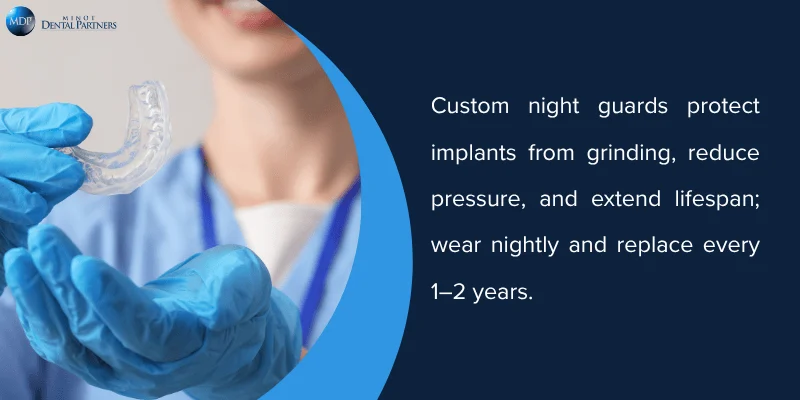
A custom night guard is your most effective defense against nighttime grinding. Unlike store-bought options, a custom-fitted night guard is made from impressions of your teeth to fit your mouth exactly. This ensures better protection and comfort while you sleep.
Your dentist can create an occlusal splint that absorbs the force from clenching and grinding. This barrier prevents direct contact between your upper and lower teeth, which protects both your implants and natural teeth from excessive wear.
Benefits of wearing a nightguard include:
- Reduced pressure on implant crowns and posts
- Protection for surrounding natural teeth
- Less jaw pain and muscle tension in the morning
- Extended lifespan for your dental work
You should wear your custom nightguard every night for the best implant protection. Clean it daily with a soft toothbrush and mild soap to prevent bacteria buildup. Replace your guard every 1-2 years or when it shows signs of wear.
Bite Adjustments and Balanced Occlusion
A balanced bite distributes chewing forces evenly across all your teeth. When your bite is uneven, certain teeth and implants bear more pressure than others. This extra stress can loosen your implant or damage the crown over time.
Your dentist can perform bite adjustments to ensure your teeth come together properly. This process involves carefully reshaping small amounts of tooth enamel to create a more even contact pattern.
For implants, this means the prosthetic crown won’t take on more force than it should.
Treating bruxism often involves checking your bite alignment during regular dental visits. Your dentist will look for signs of uneven wear and make corrections as needed to maintain implant stability.
Daily Oral Hygiene and Routine Care
Strong oral hygiene keeps the bone and gum tissue around your implant healthy. Brush twice daily with a soft-bristled toothbrush, paying special attention to where the implant crown meets your gum line.
Floss daily using special implant floss or a water flosser to remove plaque between teeth.
Regular dental checkups allow your dentist to monitor your implants for any signs of grinding damage. Schedule cleanings every six months, or more often if you have active bruxism. During these visits, your dentist can spot early warning signs like loose screws or crown damage before they become serious problems.
Essential care habits include:
- Brushing gently around implant areas
- Using antimicrobial mouthwash to reduce bacteria
- Avoiding hard foods that stress your implants
- Not chewing on ice, pens, or other non-food items
Material Choices for Implants in Bruxism Patients
The materials used for your implants and crowns play a big role in how well they hold up against grinding forces. Stronger materials can better handle the extra pressure that bruxism creates.
Titanium vs. Zirconia Implants
Titanium implants have been the standard choice for decades because they bond well with bone and can handle strong forces. They’re proven to work reliably for most patients.
Zirconia implants are a newer option made from a white ceramic material. Some dental practices suggest zirconia as a dental implant material for patients who want a metal-free option. However, zirconia can be more prone to fractures under extreme grinding forces.
One study found that a patient with strong bruxism experienced a fractured 4mm zirconia implant. This doesn’t mean zirconia can’t work for grinders, but it shows why your dentist needs to carefully evaluate which material fits your situation.
Key differences:
- Titanium offers more long-term clinical data
- Zirconia provides better aesthetics for front teeth
- Titanium may handle extreme grinding forces better
- Your specific grinding pattern affects which works best
Choosing Implant Crowns and Abutments
The crown that sits on top of your implant needs careful material selection when you grind your teeth. Your abutment, which connects the implant to the crown, also matters.
Porcelain crowns provide the best appearance and resist wear well over time. Research shows that using porcelain instead of composite resin had no negative effect on bone levels around implants after six years.
Metal crowns are sometimes recommended for back teeth in patients with bruxism. Many dentists prefer metal restorations over porcelain for second molars in the upper jaw where grinding forces are strongest.
Some materials recommended for bruxers include gold alloys and certain ceramics designed to withstand pressure. Your dentist might also suggest a metal framework with porcelain layered on top for strength and appearance.
Dental Restorations for Longevity
The way your dental restoration is designed affects how long it lasts when you grind your teeth at night. Acrylic resin was once commonly used because dentists thought it would absorb shock and protect the implant.
Studies now show that acrylic resin teeth wear down significantly over time and do not actually protect implants better than harder materials. Acrylic also fractured more often than other options.
Modern implant prostheses use materials chosen for durability rather than shock absorption. Clinical tests found that chewing forces were similar whether patients had acrylic or porcelain surfaces.
Factors that extend restoration life:
- Proper occlusion adjustment to reduce friction
- Centralized forces along the implant axis
- Regular monitoring for wear patterns
- Night guard use to protect the restoration
Your specific restoration should match your grinding intensity and location in your mouth.
Maintaining Oral Health and Long-Term Implant Success
Getting dental implants when you grind your teeth requires ongoing attention to keep them healthy and working properly. Success depends on regular exams and checkups, managing conditions that affect your jaw, and following good daily care habits.
Importance of Regular Dental Visits

You need to schedule regular dental checkups every six months to catch problems early. Your dentist will examine your implants and the gums around them to make sure everything looks healthy.
These visits let your dental team clean areas you might miss at home and check that your night guard still fits correctly.
During these appointments, your dentist can spot signs of grinding damage before it becomes serious. They will look for wear patterns on your implants and check the bone support underneath.
Your dentist may take X-rays to see what is happening below the gum line. This helps them monitor bone health and catch any issues with the implant posts early.
Managing Contributing Conditions and Lifestyle
You should talk to your doctor about conditions that might affect your implants. Sleep apnea often goes hand-in-hand with teeth grinding, and treating it can reduce nighttime jaw clenching. Your doctor might recommend a CPAP machine or oral appliance to help you breathe better at night.
Some people benefit from muscle relaxants to reduce jaw tension, though your doctor will decide if this is right for you. You can also try stress reduction techniques like exercise or meditation, since stress often triggers grinding.
Avoid smoking completely, as it is one of the factors that can affect implant longevity by damaging surrounding bone and gums.
Limit alcohol and caffeine, especially before bed, as these substances can increase muscle activity during sleep.
Long-Term Care for Restoring Your Smile
Your oral hygiene routine makes a huge difference in how long your implants last. Brush twice daily with a soft-bristled toothbrush and use low-abrasive toothpaste to avoid scratching the implant surface.
Floss around each implant carefully using special floss designed for implants or a water flosser to remove food particles.
To restore your smile and keep it healthy, clean your night guard every morning with cool water and mild soap. Replace your night guard when your dentist recommends it, usually every one to two years, depending on wear.
Consistent dental implant maintenance is essential, whether you have had your implants for a few months or many years.
Pay attention to any changes in how your implants feel. Contact your dentist right away if you notice pain, looseness, or swelling around an implant.
Frequently Asked Questions
People with teeth grinding often have specific concerns about getting dental implants and keeping them healthy long-term. Protective devices, careful planning, and ongoing maintenance all play important roles in implant success for bruxism patients.
What options are available to protect dental implants from teeth grinding at night?
A custom-fitted night guard is the most effective way to protect your dental implants from grinding damage. Your dentist creates this guard to fit your mouth precisely, and it acts as a cushion between your upper and lower teeth while you sleep.
Some dentists also recommend using stronger implant materials like zirconia or titanium for patients who grind their teeth. These materials can better withstand the extra pressure from clenching.
Bite adjustments might be needed to distribute force more evenly across all your teeth. This prevents any single implant from taking on too much stress during grinding episodes.
How does bruxism impact the success of dental implants?
Bruxism puts extra force on both the implant post and the crown that sits on top of it. This constant pressure can slow down how well the implant fuses with your jawbone after surgery.
The excessive grinding force may cause the implant to loosen over time. It can also damage the crown or the connector piece called the abutment.
Research shows that teeth grinders face about 2.2 times higher risk of implant failure compared to people who don’t grind. However, with proper protection and care, your implants can still be successful and last for many years.
Are there special considerations for dental implant care in patients with night teeth grinding?
You’ll need more frequent dental checkups if you grind your teeth at night. These visits let your dentist spot early warning signs of implant stress before serious damage occurs.
Good oral hygiene becomes even more important when you have both implants and bruxism. Healthy gums and strong bone structure give your implants the support they need to handle grinding pressure.
You should avoid habits that add unnecessary stress to your implants. Chewing on ice, pens, or very hard foods can damage implants, especially when combined with nighttime grinding.
Can wearing a night guard help maintain dental implants if I suffer from bruxism?
Yes, wearing a night guard is one of the best ways to maintain your dental implants when you have bruxism. The guard absorbs the grinding pressure that would otherwise go directly to your implants.
Studies show that patients who consistently use a night guard after getting implants report fewer complications. They also enjoy longer-lasting results compared to grinders who don’t use protection.
A night guard protects both your natural teeth and implants from wearing down over time. Most dentists strongly recommend wearing the guard every night if you grind your teeth.
What preventive measures should be taken for someone with night teeth grinding considering dental implants?
You should address your bruxism before getting dental implants whenever possible. This might involve stress management techniques, since anxiety often triggers grinding episodes.
Your dentist will evaluate your bite, jawbone strength, and wear patterns before placing implants. This assessment helps create a treatment plan designed specifically for your grinding habits.
Getting a custom night guard made before your implant surgery gives you time to adjust to wearing it. You’ll already be in the habit of using it when your new implants need protection most.
Is the dental implant procedure different for patients who have a history of grinding their teeth?
The basic implant procedure stays the same, but your dentist may choose different materials or placement strategies. Stronger implant posts and more durable crowns are often selected for patients with bruxism.
Your dentist might adjust where the implants are placed to avoid areas that receive the most grinding force. Partnering with an experienced periodontist ensures your bite and implant placement work together safely.
The healing timeline may be slightly longer for teeth grinders. Your dentist will monitor the implant integration process more closely to make sure the grinding isn’t interfering with proper healing.