



Dental implants need a team of people to work well, but someone has to keep everyone on the same page. You might visit a surgeon for placement, a specialist for bone work, and your regular dentist for cleanings.
Without good communication between these offices, you could end up with repeat X-rays, missed warnings signs, or confusion about who to call when something feels wrong.
Your family dentist can act as the main point of contact who shares your records, tracks your healing, and watches for problems during routine visits.
This person already knows your health history, your habits, and which teeth carry the most chewing force. That knowledge helps protect your implant before surgery and keeps it healthy for years after.
Family dentistry plays a significant role in preventive care by catching small issues before they turn into big problems. When your family dentist leads implant coordination, you get care that feels less stressful and more personal.
You also build a clear plan that fits your whole mouth, not just one missing tooth.
Key Takeaways
- Your family dentist coordinates with surgeons and specialists to share records and create a treatment plan that fits your long-term oral health goals
- Regular checkups with your family dentist help catch early warning signs like gum inflammation or bone loss around implants before they become serious problems
- Dental implants require constant maintenance and monitoring including professional cleanings and personalized home care coaching to ensure lasting success
The Family Dentist’s Role In Implant Care Coordination
Your family dentist acts as the central coordinator who manages your entire implant experience, from initial evaluation through long-term maintenance.
They work alongside specialists to ensure smooth communication and personalized care tailored to your specific needs.
Understanding the Implant Care Journey
Your family dentist guides you through each phase of the implant process. They start by evaluating whether you’re a good candidate for dental implants based on your oral health, bone density, and overall medical condition.
Many implant specialists prefer consultation before tooth extraction to determine if immediate implant placement is possible. Your family dentist schedules this consultation at the right time to maximize treatment success.
The implant journey involves multiple stages:
- Initial assessment of your oral health and treatment needs
- Referral coordination with oral surgeons and specialists
- Post-surgical monitoring to track healing progress
- Final restoration where the artificial tooth is placed
- Ongoing maintenance to protect your investment
Your family dentist tracks each milestone and ensures nothing falls through the cracks. They monitor your progress between specialist visits and address any concerns that arise during recovery.
Personalized Treatment Planning
Your family dentist creates a customized plan based on your unique situation. They consider your medical history, medications, and lifestyle factors that might affect implant success.
They review important health considerations like whether you take blood thinners or medications that could impact healing.
Your dentist also evaluates factors such as vitamin D levels and any history of periodontal disease that might influence outcomes.
Your personalized plan includes:
- Timeline for each treatment phase
- Cost estimates and payment options
- Home care instructions specific to your needs
- Follow-up appointment schedule
This individualized approach helps you understand exactly what to expect throughout your treatment.
Bridging Communication Between Specialists
Your family dentist maintains constant contact with the oral surgeon who places your implant and the prosthodontist who creates your restoration. This coordination ensures treatment efficiency and better outcomes for you.
They send detailed referral letters that include relevant medical history, X-rays, and specific treatment goals. This information helps specialists make informed decisions about your care.
When you return from specialist appointments, your family dentist reviews the treatment notes and incorporates them into your ongoing care plan.
They work together with specialists to maintain quality and consistency throughout the process. This teamwork prevents miscommunication and ensures everyone involved in your care stays on the same page.
Preparing Patients For Dental Implants
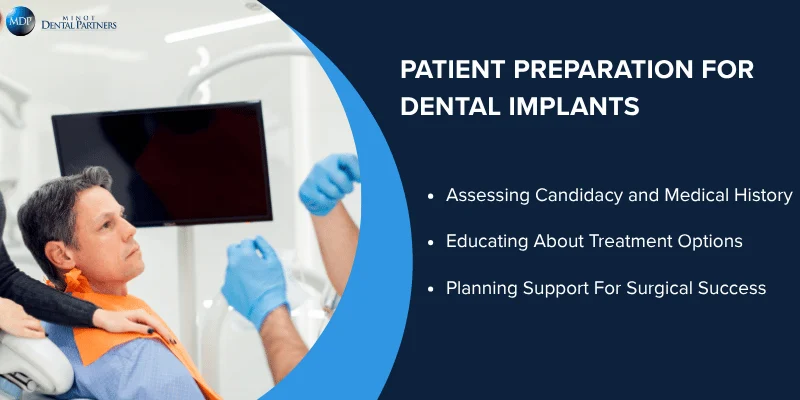
Family dentists start by checking if you’re a good candidate for implants and reviewing your complete medical background.
They explain different treatment paths and help you understand what works best for your situation, then arrange the support you need for a smooth surgery and recovery.
Assessing Candidacy and Medical History
Your family dentist reviews several health factors before recommending dental implants. They check if you have enough jawbone density to support the implant and examine your gum health for any signs of disease that need treatment first.
Key health considerations include:
- Current medications that affect healing
- Conditions like diabetes or heart disease
- Smoking habits that slow recovery
- Bone density in the jaw area
Your dentist asks about past dental work and any problems with missing teeth. They take X-rays and sometimes 3D scans to see the exact structure of your jaw. This initial evaluation helps reduce risks and speed up recovery after surgery.
Some patients need additional procedures first, like bone grafts or gum treatments. Your family dentist coordinates with specialists when these extra steps are necessary.
They also discuss your insurance coverage and financing options to help you plan for costs.
Educating About Treatment Options
Your dentist explains the different types of implants available for replacing missing teeth. Single implants work for one tooth, while multiple implants can support bridges or full dentures.
The treatment timeline typically includes several phases. The oral surgeon places the implant post first, then you wait 3-6 months for it to fuse with your jawbone.
After healing completes, your family dentist attaches the permanent crown.
Your dentist shows you what each implant type looks like and how it functions. They discuss realistic expectations about comfort, appearance, and how long the process takes.
Some patients qualify for same-day implants, while others need a longer approach.
You learn about caring for implants through daily brushing, flossing, and regular checkups. Your dentist explains how implants differ from natural teeth and what habits to avoid, like chewing ice or smoking.
Planning Support For Surgical Success
Your family dentist helps arrange practical details before your implant surgery. You’ll need someone to drive you home after the procedure and stay with you for the first 24 hours.
Pre-surgery preparation includes:
- Arranging time off work (usually 2-3 days)
- Stocking soft foods like yogurt and soup
- Getting prescribed medications filled
- Planning childcare or pet care if needed
Your dentist coordinates with the oral surgeon to ensure everyone understands your oral health needs. They schedule follow-up visits to monitor healing and check for any complications early.
You receive clear instructions about fasting before surgery and which medications to take or avoid. Your family dentist remains your main contact for questions and helps you feel calm and ready throughout the process. They also provide emergency contact information in case problems arise during recovery.
Implant Placement and Collaborative Care
Your family dentist works closely with specialists and tracks every detail to make sure your implant treatment goes smoothly from start to finish. Clear communication and organized records help everyone involved deliver better care for you.
Coordinating With Specialists
Your family dentist typically refers you to an oral surgeon or implant specialist when you need dental implants placed. This partnership ensures you get the right expertise at each stage.
Your family dentist starts by creating a treatment plan that outlines your needs and goals.
The specialist then reviews this plan and performs a detailed examination, often using 3D imaging to check your bone quality and structure.
Implant dentistry requires coordination between the restorative dentist and surgeon to achieve the best results.
Your family dentist and the specialist meet or communicate regularly to discuss implant position, timing, and the final restoration.
This team-based approach to implant placement helps prevent problems and keeps everyone working toward the same outcome for you.
Ensuring Seamless Record Sharing
Your dental records need to move quickly and accurately between your family dentist and the specialist. Digital systems make this easier by allowing instant sharing of X-rays, treatment notes, and medical history.
Your family dentist sends important information like medications you take, allergies, and previous dental work before your surgical appointment.
After the implant specialist places your implant, they send detailed reports back to your family dentist. These reports include surgical notes, implant specifications, and healing timeline.
This back-and-forth record sharing prevents gaps in your care and makes sure nothing gets missed during treatment.
Supporting Patients Before and After Surgery
Your family dentist helps you prepare for surgery by answering questions and making sure your mouth is healthy enough for the procedure. They may treat gum disease or tooth decay before referring you to the specialist.
After your implant is placed, your family dentist monitors your healing and watches for any problems. They check the surgical site at follow-up visits and coordinate with the specialist if concerns arise.
Your family dentist also guides you through proper cleaning techniques to protect your new implant.
Once healing is complete, your family dentist typically handles the restoration phase by placing the crown on your implant. Long-term dental implant care includes regular cleanings and checkups at your family dental office.
These ongoing visits help your implant last for many years by catching small issues early.
Long-Term Implant Maintenance And Home Care
Successful dental implant care requires both professional monitoring and consistent daily habits at home.
Patients who receive regular supportive implant therapy show lower rates of complications, while those without maintenance face over four times the risk of developing serious problems.
Routine Checkups and Professional Care
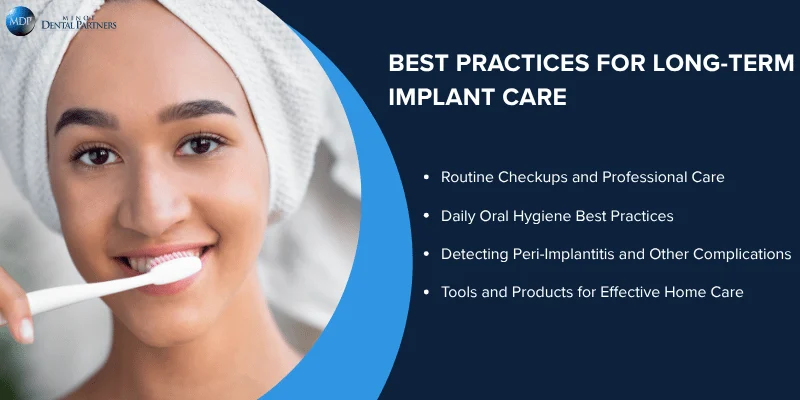
Your family dentist should see you every six months for professional implant maintenance. These appointments include professional deep teeth cleaning and mechanical plaque removal above and below the gum line around your implants.
Air polishing with low-abrasive powders works well for disrupting biofilm around dental implants without damaging the surface. This method is quick, comfortable, and reaches areas underneath implant structures that are hard to clean at home.
Your dentist may also use an intraoral camera to show you the condition of your implants. During each visit, they’ll measure pocket depths, check for bleeding, and assess your plaque levels.
These baseline measurements help track changes over time and catch early warning signs before they become serious issues.
Daily Oral Hygiene Best Practices
Brushing twice daily with a soft-bristled brush protects your implant surfaces from scratches while removing plaque effectively.
You should angle the brush at 45 degrees toward the gum line and use gentle circular motions around each implant.
Interdental brushes clean between implants and in hard-to-reach spaces where regular floss can’t go. Use these small brushes at least once daily to remove food particles and bacteria from around implant posts.
Water flossers provide another option for home biofilm control around implants. Set the pressure to medium and direct the stream along the gum line.
Avoid products containing abrasive ingredients or harsh chemicals that could damage implant materials.
Detecting Peri-Implantitis and Other Complications
Peri-mucositis appears first as reversible inflammation around the implant. You might notice redness, slight swelling, or bleeding when you brush.
This condition responds well to improved oral hygiene and professional cleaning if caught early.
Peri-implantitis is more serious and involves bone loss around the implant. Warning signs include persistent bleeding, pus, increased pocket depth, or looseness in the implant. You may also feel discomfort or notice a bad taste.
Contact your dentist immediately if you spot any of these symptoms. Early detection makes a significant difference in saving your implant and preventing further damage to surrounding bone and tissue.
Tools and Products for Effective Home Care
Essential daily tools:
- Soft-bristled toothbrush (manual or electric)
- Interdental brushes in various sizes
- Non-abrasive toothpaste
- Antimicrobial mouth rinse (if recommended)
Optional but helpful:
- Water flosser with implant-specific tips
- Tongue scraper
- Disclosing tablets to reveal plaque buildup
Your dentist will recommend specific products based on your implant type and oral health needs. Avoid metal instruments, stiff brushes, or whitening toothpastes with harsh abrasives.
These tools and proper techniques support implant longevity by keeping bacteria levels low and tissues healthy around your restoration.
Comparing Implant Care Approaches: With And Without Family Dentist Coordination
When you choose dental implants, the way your care is organized makes a real difference in success rates and stress levels.
Having a family dentist coordinate your treatment protects your oral health in ways that disconnected care cannot match.
Benefits of Integrated Family Dentistry
Your family dentist becomes the central point for all implant decisions when you choose integrated care.
This means one person tracks your medical history, manages communication between specialists, and watches for early warning signs of implant failure that could affect implant stability.
With coordinated family dentistry, you get several clear advantages. Your dentist sends complete records to the surgeon before your first appointment, so you avoid repeat X-rays and wasted time.
They treat any gum disease before surgery starts, which lowers your risk of infection. They also build implant checkups into your regular cleanings, making long-term implant maintenance feel less overwhelming.
Your family dentist knows if you grind your teeth at night or struggle with certain cleaning tools. They use that knowledge to protect your implants from excess force and teach you home care methods that actually work for your hands and vision.
This personal attention helps implants last longer with fewer complications.
Risks Associated With Fragmented Care
Without a family dentist leading coordination, your implant care can fall apart quickly. You might see a surgeon once, then never hear from them again. No one checks if your gums stay healthy around the implant or if bone loss starts months later.
Fragmented care creates specific problems that raise your chance of implant failure. You might receive treatment plans that ignore your bite pattern or existing dental work. Important health information like diabetes or heart medications might not reach the surgical team.
Warning signs such as gum bleeding or loose implant parts can go unnoticed until serious damage occurs.
You also face practical burdens. Mixed messages from different offices leave you confused about who to call when pain starts. You schedule appointments at multiple locations and repeat your medical history over and over.
The stress alone can make you skip follow-up visits, which puts your investment at risk.
Maximizing Implant Longevity Through Lifestyle Choices
Your daily choices directly impact how long your dental implants will last. The foods you eat, health conditions you manage, and commitment to regular dental visits all work together to protect your investment.
Nutrition and Diet Recommendations

What you eat affects your implant stability and the health of the bone and gum tissue surrounding your implants. A diet rich in calcium, vitamin D, and protein helps maintain strong bone density that supports your implants for years to come.
Focus on eating leafy greens, lean proteins, dairy products, and crunchy vegetables. These foods promote healthy gums and provide nutrients your body needs for bone health.
Avoid or limit sugary snacks and acidic beverages that increase inflammation and infection risk around your implants.
Hard foods like ice, hard candy, and popcorn kernels can damage your implant crowns or loosen components. Cut tough foods into smaller pieces and chew carefully.
Stay hydrated with water throughout the day to wash away food particles and keep your mouth clean between brushings.
Managing Health Conditions and Habits
Certain health conditions and habits can threaten your oral health and implant success. Smoking restricts blood flow to your gums, which increases the risk of implant failure significantly. If you smoke, quitting is one of the best things you can do for your implants.
Conditions like diabetes and osteoporosis affect bone health and healing. Work with your family dentist to manage these conditions and adjust your care plan as needed.
They can coordinate with your medical doctors to ensure your overall health supports your implants.
Teeth grinding puts excessive stress on your implants and can cause mechanical damage over time. Your dentist can fit you with a custom nightguard to protect your implants while you sleep.
Avoid using your teeth to open packages or bite hard objects.
Role of Regular Dental Visits
Professional cleanings every three to six months are essential for maintaining dental implant health. Your family dentist uses specialized tools designed specifically for implants that won’t scratch or damage the implant surface.
These visits allow your dentist to check for early warning signs of peri-implantitis, which is a form of gum disease that can compromise implant stability. They remove plaque and tartar buildup in areas your toothbrush can’t reach at home.
Your dentist also monitors how your implants are holding up compared to any dentures or natural teeth you may have.
They can adjust your maintenance schedule based on changes in your health, medications, or lifestyle to keep your implants functioning properly for decades.