

A cracked molar can happen at the worst time. Maybe you bit down on something hard at dinner, or you woke up with jaw pain and now there’s a sharp edge cutting your tongue.
Whether you need to see an emergency dentist tonight or can wait until Monday depends on your symptoms, not just how the crack looks.
If you’re in Minot and not sure what to do next, this guide will help you figure it out fast.
Not every cracked tooth is a dental emergency, but some warning signs mean you shouldn’t wait. Severe pain, swelling, bleeding, or a piece of your molar that’s completely broken off are all signs you need care today.
On the other hand, a small crack with no pain and no sharp edges might be safe to manage at home for a day or two before your dentist can see you.
This post will walk you through how to tell the difference, what you can do at home to protect your tooth in the meantime, and what treatment options an emergency dentist might use to fix cracked teeth.
You’ll also learn how to plan follow-up care so you can protect your smile going forward.
Key Takeaways
- Not every cracked molar is an emergency, but certain symptoms mean you should seek care right away.
- There are simple steps you can take at home to protect your tooth until you see a dentist.
- Getting the right treatment and follow-up care can help prevent future cracks and keep your smile healthy.
Deciding Whether Your Cracked Molar Needs Care Today
A cracked molar can range from a tiny surface crack you barely notice to a painful fractured tooth that needs help right away.
Knowing the difference helps you decide if you need to call an emergency dentist in Minot today or if your regular dentist can see you on Monday.
Signs of an Urgent Dental Emergency
Some cracked molar symptoms mean you should not wait. If you have severe tooth pain that will not go away, swelling in your face or gums, or a tooth that feels loose, these are signs of a dental emergency.
You should also watch for bleeding that does not stop, a bad taste in your mouth, or a fever. These can point to an infection spreading from a broken tooth.
If you can see the inner layer of your tooth, or if the crack goes down toward your gum line, treat it as urgent. Waiting too long with these signs can lead to a lost tooth or a spreading infection.
When a Small Crack May Wait Until Monday
Not every cracked molar is an emergency. If you have a mild toothache that comes and goes, or if the crack is small and only affects the outer layer of your tooth, it may be safe to wait until your regular office opens.
Surface cracks that do not cause sharp pain when you chew are often cosmetic. A chipped tooth with no pain and no sharp edges usually falls into this category too.
Signs that a crack can likely wait include:
- No swelling in your face or gums
- No fever or bad taste in your mouth
- Pain only when you bite down hard
- The tooth still feels stable, not loose
Keep the area clean and avoid chewing on that side until you get help.
Why Pain Level Alone Does Not Tell the Whole Story
It is easy to think that no pain means no problem, but that is not always true. Some non-urgent dental emergencies cause a lot of pain, while some serious cracks barely hurt at all.
A tooth fracture deep inside the tooth can feel like a dull ache one day and sharp dental pain the next. This happens because the crack may open and close as you chew, which changes how much it hurts.
On the other hand, a crack that reaches the nerve can sometimes cause very little pain if the nerve is already damaged.
This is why a dentist needs to check the depth and direction of the crack, not just how much pain you feel.
If you are unsure whether your toothache or tooth pain means something serious, it is always safer to call a dentist and describe your symptoms rather than guess based on pain alone.
Red Flags That Require Immediate Help
Some cracked molar symptoms mean you need to see a dentist right away, not wait for a regular appointment. Knowing these warning signs can help you protect your health and avoid bigger problems down the road.
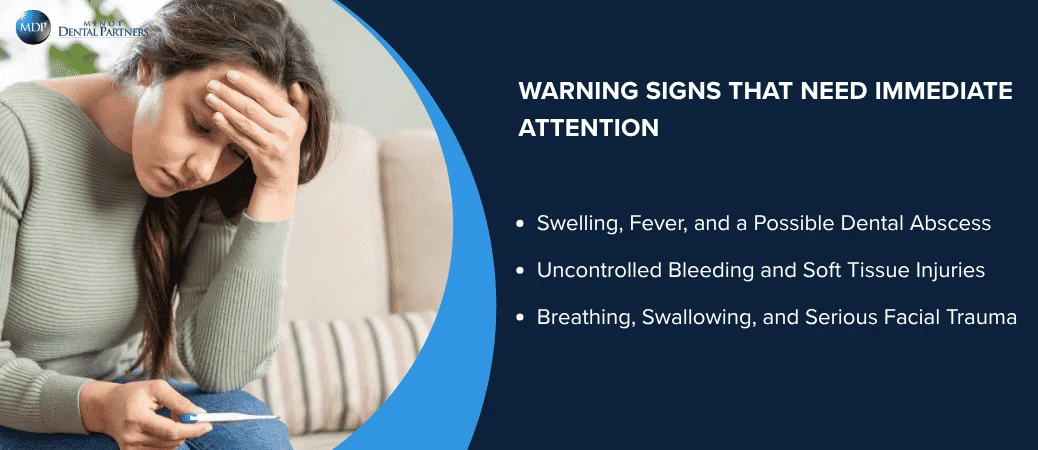
Swelling, Fever, and a Possible Dental Abscess
If your face, jaw, or gums start to swell around the cracked tooth, this is a sign your body may be fighting an infection.
A dental emergency red flag like swelling near your lymph nodes often points to a deeper problem that needs quick attention.
A fever paired with tooth pain is another sign you shouldn’t ignore. This combo can mean you have a dental abscess, which is a pocket of infection that can spread if it’s not treated.
You might also notice a bad taste in your mouth or pus near the tooth. These signs, along with facial swelling, mean you should visit your dentist instead of waiting for a regular office visit.
Uncontrolled Bleeding and Soft Tissue Injuries
Bleeding from a cracked tooth that won’t stop after 10 to 15 minutes of gentle pressure needs urgent care. This kind of bleeding can point to damage that goes beyond the tooth itself.
Soft tissue injuries often happen alongside a cracked molar. Cuts to your tongue, cheek, or gums can bleed heavily and may need stitches to heal properly.
If you notice a deep cut, a large flap of torn tissue, or bleeding that keeps coming back, don’t wait it out.
This type of dental trauma should be checked the same day to lower your risk of infection and make sure nothing serious was missed.
Breathing, Swallowing, and Serious Facial Trauma
Trouble breathing or swallowing after a tooth injury is a true medical emergency. This can happen if swelling spreads to your throat or if a tooth fragment gets lodged somewhere it shouldn’t be.
If you have severe dental pain along with jaw stiffness, difficulty opening your mouth, or a change in your voice, head to a hospital emergency room rather than waiting for a dental office to open.
Serious facial trauma, like a broken jaw or a wound that exposes bone, also calls for a hospital emergency department visit first.
A dentist can follow up once you’re stable, but injuries like these need medical care that goes beyond emergency dental treatment alone.
What to Do at Home Before Seeing a Dentist
A cracked molar can hurt, but there are simple steps you can take right away to protect your tooth and feel more comfortable.
Here’s what you can do to manage dental pain and prevent more damage until you get to your appointment.
Protecting the Tooth From Further Damage
Try not to touch the cracked area with your tongue or fingers. This can spread bacteria and make things worse.
If a piece of your tooth broke off, rinse it gently with warm water and store it in milk or saliva. Bring it with you to your dental visit.
You can buy temporary dental cement at most drugstores. This can cover sharp edges and protect the tooth until a dentist can see you.
Only use dental cement as a short-term fix. It’s not a real repair, and you still need to see a dentist soon.
Avoid biting down on that side of your mouth. This keeps the crack from getting bigger.
Safe Pain Relief and Swelling Control
A cold compress held against your cheek can help bring down swelling and ease pain. Apply it for about 15 to 20 minutes at a time.
For pain management, an over-the-counter pain reliever like ibuprofen or acetaminophen can help. Follow the directions on the label and don’t take more than what’s recommended.
Rinsing your mouth with warm salt water can also help with dental pain. Mix about half a teaspoon of salt in a cup of warm water and swish gently.
If your pain gets worse or you notice swelling in your face, don’t wait until Monday. This could mean you need same-day care.
Foods and Habits to Avoid With a Cracked Molar
Stick to soft foods while you wait for your appointment. Think mashed potatoes, yogurt, scrambled eggs, and soup.
Avoid hard, crunchy, or sticky foods like nuts, chips, or caramel. These can put pressure on a cracked tooth or a broken tooth and make the crack worse.
Try to chew on the opposite side of your mouth. This gives your cracked tooth a break from extra force.
Skip very hot or very cold drinks and foods. A cracked tooth can be extra sensitive to temperature changes right now.
If you grind your teeth at night, try to be extra mindful of it until you see your dentist. This habit can make a cracked molar worse over time.
How an Emergency Dentist Can Treat a Damaged Molar
When you crack a molar, an emergency dentist has several tools to fix the damage and stop the pain. The right treatment depends on how deep the crack goes and whether the nerve inside your tooth is affected.
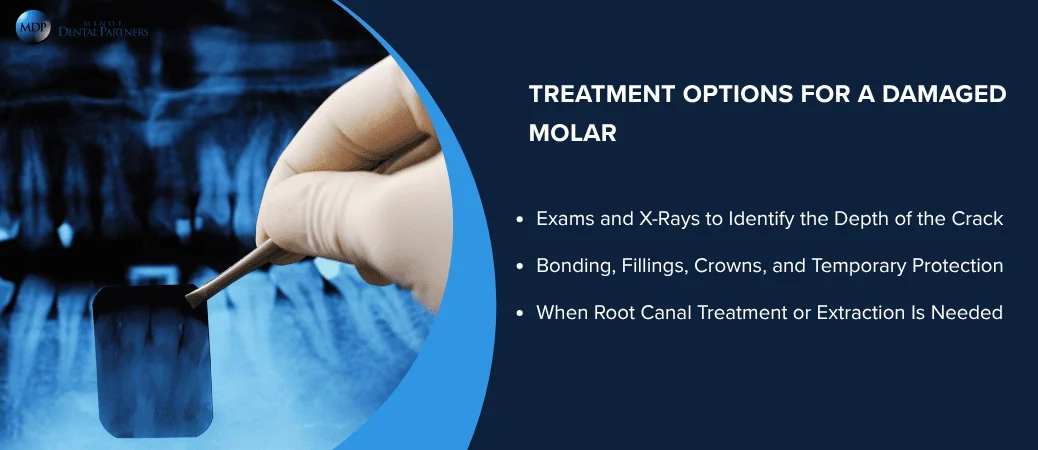
Exams and X-Rays to Identify the Depth of the Crack
Your dentist will start with a close look at your molar and take X-rays. This advanced dental technology helps them see how far the crack goes and whether it has reached the nerve.
Not every crack looks the same. Some are just on the surface enamel. Others go deep into the tooth and cause a lot of pain.
X-rays show things you can’t see with your eyes alone. They help your dentist spot if the crack reached the root or if there’s an infection starting.
This step matters because it helps determine your treatment plan. A same-day fix for a cracked tooth is often possible once your dentist knows exactly what they’re dealing with.
Bonding, Fillings, Crowns, and Temporary Protection
For smaller cracks, your dentist has a few options to fix your tooth fast. These fixes protect your molar and stop it from getting worse.
Here’s what your dentist might use:
- Bonding: A tooth-colored resin fills in small cracks and chips
- Fillings: These replace a lost filling or lost restoration and fill in cavities caused by the crack
- Crowns: A cap covers the whole tooth when the damage is bigger
- Temporary protection: A soft dressing or temporary crown keeps your tooth safe until your next visit
Your dentist picks the best option based on how much of your tooth is damaged. Sometimes you’ll need a temporary fix now and a permanent one later at your dental clinic.
When Root Canal Treatment or Extraction Is Needed
Some cracks go deeper and reach the soft tissue inside your tooth. When this happens, you may need root canal treatment to save the molar.
A root canal removes the damaged tissue inside your tooth. Your dentist then seals the space and often adds a crown on top. This stops the pain and keeps your fractured tooth from getting infected.
If the crack splits the tooth root or the damage is too severe, extraction might be your only choice. Trying to save a badly broken molar can sometimes lead to more problems down the road.
Left untreated, a deep crack can turn into a loose tooth or lead to full tooth loss. That’s why urgent dental care matters when you notice signs like sharp pain, swelling, or a visible crack line.
Planning Follow-Up Care and Preventing Another Crack
Once your cracked molar is treated, you still need a follow-up visit to make sure it’s healing right. You can also take steps now to lower your chances of cracking another tooth later.
Scheduling Prompt Follow-Up Even When Symptoms Improve
Pain going away does not mean your tooth is fully healed. Cracks can still spread below the surface even when you feel fine.
You should book a follow-up appointment within one to two weeks of your first treatment. This lets your dentist check that the crack has not gotten worse and that any filling or crown is holding up.
Skipping this step can turn a small problem into one of the more serious dental emergencies down the road. If you notice new sensitivity, swelling, or pain before your scheduled visit, contact your dentist right away.
Waiting too long can lead to infection or a bigger break. It’s always better to check in early than to wait and hope it heals on its own.
Financing Options for Your Dental Treatment & Questions to Ask
Before your follow-up, ask the dental office for an estimate of what your treatment may cost. If your cracked tooth needs a crown, root canal, or another procedure, knowing the expected cost can help you plan ahead.
Minot Dental Partners offers several financing options that can help spread dental treatment costs over time.
Depending on eligibility, patients may have access to flexible payment plans through CareCredit, Sunbit, Cherry, Proceed Finance, and LendingClub.
You can also ask the team which financing option may fit your treatment and budget before moving forward.
Here are a few questions worth asking:
- What is the estimated cost of my treatment?
- Which financing options may be available for my treatment?
- Can I finance treatment that requires more than one visit?
- Are there separate costs if I later need a root canal or crown?
Getting clear answers now helps you avoid surprise bills later.
Protecting Long-Term Oral Health With Prevention
Small daily habits go a long way in protecting your teeth from future cracks. Brushing twice a day and flossing helps prevent cavities and gum disease, both of which can weaken teeth over time.
If you play sports or clench your jaw at night, ask your dentist about a custom mouthguard. This simple device can prevent a lot of damage.
Try to avoid chewing on ice, hard candy, or popcorn kernels, since these are common causes of cracked teeth. Regular checkups also let your dentist catch small cracks before they turn into bigger problems.
If you’re interested in teeth whitening or other cosmetic work, wait until your molar is fully healed. Protecting your dental health now sets you up for fewer problems, and fewer costs, down the road.
Frequently Asked Questions
Cracked teeth come with a lot of confusing advice, so it helps to have clear answers. Below are common questions people in Minot ask about cracked molars and when to get help.
How urgent is a cracked molar, and when should I seek same-day dental care?
A cracked molar can range from a minor issue to a real emergency. It depends on how deep the crack is and how much pain you feel.
If you have sharp pain, sensitivity to hot or cold, or you can see a piece of the tooth missing, you likely need same-day care. Waiting too long can let bacteria reach the inner part of the tooth.
Can a cracked tooth wait until Monday if it is not painful?
Sometimes, yes. If the crack is small, you have no pain, and there is no visible damage to the tooth’s structure, you may be able to wait a day or two.
But keep an eye on it. Watch for new pain, swelling, or sensitivity that shows up over the weekend.
What symptoms mean a cracked tooth needs emergency treatment right away?
Some symptoms are clear signals that you should not wait. These include severe pain that does not go away, heavy bleeding, or a piece of the tooth that has broken off completely.
Swelling in your face or gums is also a warning sign. This could mean an infection is starting. If you notice any of these signs, you should contact a dentist right away.
Can a dentist repair a cracked molar in one appointment?
In many cases, yes. Small to medium cracks can often be fixed in a single visit using a filling, bonding material, or a crown.
Larger cracks that reach the nerve may need more than one visit. This could include a root canal followed by a crown. Your dentist will look at your tooth and let you know what to expect.
What should I do at home to protect a cracked molar until I can see a dentist?
While you wait for your appointment, try to avoid chewing on that side of your mouth. Stick to soft foods like yogurt, eggs, or mashed potatoes.
Rinse your mouth with warm salt water to help keep the area clean. You can also use a cold compress on your cheek to help with swelling.
Over-the-counter pain relief can help manage discomfort in the meantime. If your pain gets worse, it may mean you should not wait.
Can urgent care help with a cracked tooth, or do I need an emergency dentist?
Urgent care clinics can help with pain relief and antibiotics if there is an infection. But they cannot fix the actual crack in your tooth.
For real repair, you need to see a dentist who can evaluate the damage and determine the right treatment.
At Minot Dental Partners, Dr. Kyle Perkins can examine the cracked tooth and recommend the appropriate next step based on how deeply it is damaged.
Getting dental care promptly can help address the source of the problem rather than only managing the pain temporarily.