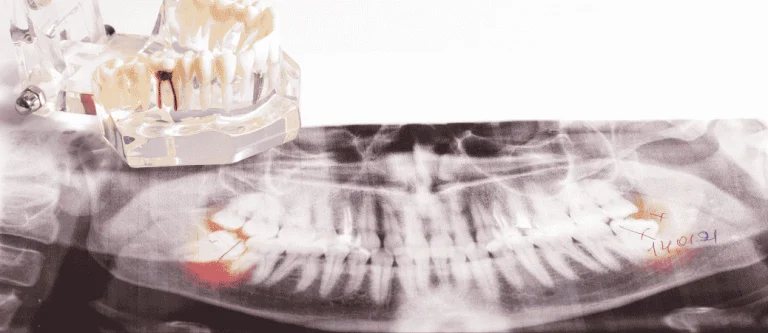


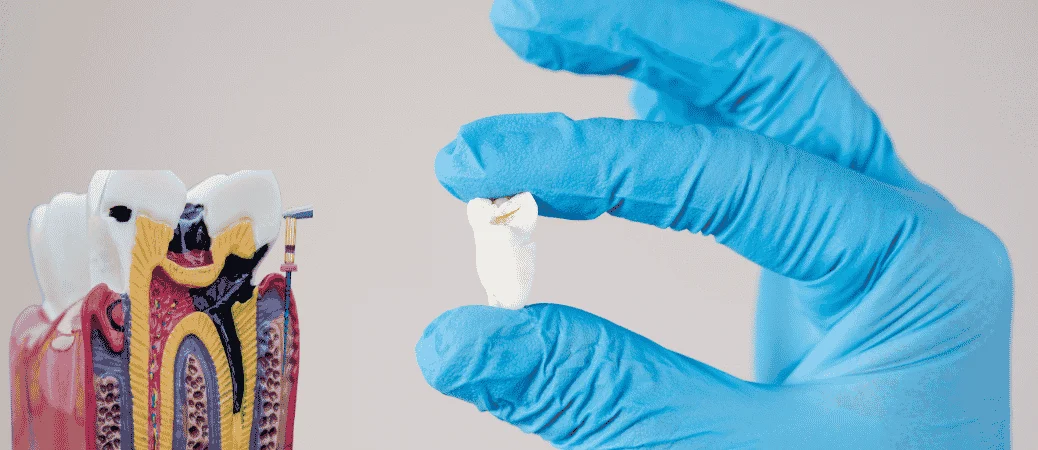
A toothache has a way of making everything feel urgent. You want the pain gone, and you want to know what happens next without a long, confusing explanation.
When comparing root canal vs tooth extraction for an infected or badly damaged tooth, the right choice depends on whether the tooth can still be predictably saved and restored.
The decision comes down to whether the tooth can be predictably restored, or whether the damage has gone past the point where saving it makes sense.
Dentists weigh this by looking at how much healthy tooth is left, how the infection has spread, and how well the gum and bone are holding the tooth in place.
That clinical picture, not a general rule about saving teeth “no matter what,” is what should guide the conversation with your dentist.
Key Takeaways
- A tooth’s long-term outlook depends on remaining structure, bone support, and infection control, not just pain level.
- Root canal treatment is usually favored when the tooth is restorable and the infection can be fully cleaned out; extraction becomes the more reliable choice when a fracture, bone loss, or repeated infection makes saving the tooth unpredictable.
- Extraction always opens a second decision: whether and how to replace the missing tooth, which affects long-term cost and chewing function.
What Makes a Tooth Worth Saving?
A tooth is worth saving when it has enough healthy structure left to support a lasting restoration, adequate bone holding it in place, and no untreatable fracture running through the root.
Dentists look at these factors together during a dental exam rather than focusing on pain alone.
How Dentists Assess Restorability
Restorability means a dentist can reasonably predict that a rebuilt tooth will hold up to normal biting and chewing.
Dr. Kyle Perkins at Minot Dental Partners can evaluate the remaining tooth structure, X-rays, bone support, and extent of decay or infection before recommending whether saving the tooth is realistic.
A molar carrying heavy chewing force needs more remaining structure than a front tooth to be considered a good long-term candidate.
Why Remaining Tooth Structure and Ferrule Matter
Enough natural tooth structure above the gumline is what allows a crown to grip and stay stable for years.
Dentists call this remaining rim of tooth the ferrule, a band of healthy enamel and dentin that wraps around the base of the tooth like a ring around a post.
Without enough ferrule, even a well-done root canal and crown can loosen or crack under normal biting pressure.
Enamel and dentin below the gumline are harder to reach and harder to build a lasting restoration around, which is part of why some badly broken-down teeth are not reliable candidates.
How Gum Health, Bone Support, and Bite Stability Affect Prognosis
Healthy bone and firm gum support are what keep a saved tooth stable once the infection is treated.
Advanced gum disease, also called periodontal disease, can wear away the bone holding a tooth in its socket, and no root canal can rebuild that lost bone support.
A dentist also checks bite stability, since a tooth that shifts or feels loose under pressure may not hold up even after treatment.
When Root Canal Treatment Is Usually the Better Choice
Root canal treatment is usually the better choice when the tooth has enough remaining structure and the infection is confined to the pulp, the soft tissue inside the tooth.
This is the option dentists reach for first when a natural tooth can be predictably restored.
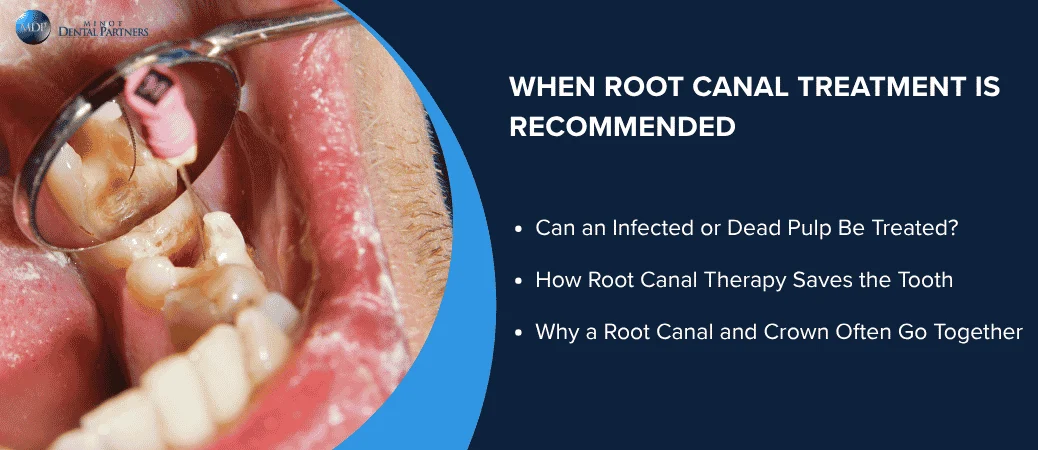
Can an Infected or Dead Pulp Be Treated?
Yes, an infected or dead pulp can usually be treated with root canal therapy.
Decay, a cracked tooth, or deep trauma can let bacteria reach the pulp, causing infection or killing the nerve tissue inside.
Once pulp tissue is infected or dead, it will not heal on its own.
Root canal therapy removes that tissue and disinfects the space, which is why waiting rarely helps and often lets extensive decay spread further into the tooth.
How Root Canal Therapy Saves the Tooth
Endodontic therapy clears out infected or dead pulp tissue, cleans and shapes the inner canals of the root, then seals the space to reduce the risk of reinfection.
When the tooth has enough healthy structure and is properly restored afterward, root canal treatment can provide a reliable way to preserve the natural tooth.
An endodontist, a specialist trained specifically in this kind of care, often handles more complex root canals using tools like microscopes and 3D imaging that can reveal treatment options a general dentist’s exam might miss.
Why a Root Canal and Crown Often Go Together
A crown is often recommended after root canal therapy, especially for back teeth that handle heavier chewing forces.
Teeth that need root canal treatment may already have significant decay, cracks, large fillings, or lost tooth structure, so a crown can help protect the remaining tooth from fracture.
Skipping the crown on a back tooth raises the risk of fracture later, even if the root canal itself was successful.
Together, a root canal and crown are what restore both the health and the chewing function of a saved tooth, and you can learn more about the process through this overview of root canal treatment.
When Pulling the Tooth Is the More Predictable Option
Pulling a tooth becomes the more predictable option when the damage or infection has gone beyond what a root canal can reliably fix.
This usually involves a fracture through the root, bone loss that will not support the tooth long term, or a treatment history that keeps failing.
Which Cracks and Fractures Cannot Be Reliably Repaired?
A vertical root fracture, a crack running down the length of the root, cannot be reliably repaired and usually leads to tooth loss.
Unlike a crack limited to the crown of the tooth, this type of root fracture creates a pathway for bacteria that no filling or root canal can fully seal.
Dentists confirm this kind of fracture with imaging and a careful exam, since not every crack means the tooth is unsavable. Once a vertical root fracture is confirmed, extraction is usually the more predictable choice.
When Severe Decay or Failed Treatment Changes the Plan
Severe decay or a failed root canal can shift the plan toward extraction when there is not enough healthy tooth left to restore.
A repeat root canal is sometimes possible, but if the infection keeps returning or the remaining structure is too thin, retreatment stops being a reliable option.
Advanced gum disease with significant bone loss around the tooth also changes the outlook, since a tooth without stable bone support will not hold up even after a technically successful root canal.
What Is the Difference Between a Simple and Surgical Extraction?
A simple extraction removes a visible, accessible tooth using local anesthesia, while a surgical extraction is needed when the tooth is broken at the gumline, impacted, or curved in a way that requires an incision.
Both procedures use local anesthesia for comfort. The approach and provider depend on the tooth’s position, condition, and the complexity of the extraction.
| Factor | Simple Extraction | Surgical Extraction |
| Tooth visibility | Fully visible above gum | Broken, impacted, or below gumline |
| Provider | General dentist | Often oral surgeon |
| Anesthesia | Local anesthesia | Local anesthesia, sometimes sedation |
| Recovery time | Shorter | Longer |
What Happens After Each Treatment Choice?
Recovery after a root canal is usually shorter and milder than recovery after an extraction, since the tooth stays in place and the surrounding bone is not disturbed.
Extraction adds a second step: deciding whether and how to replace the missing tooth.
What to Expect During Root Canal Recovery
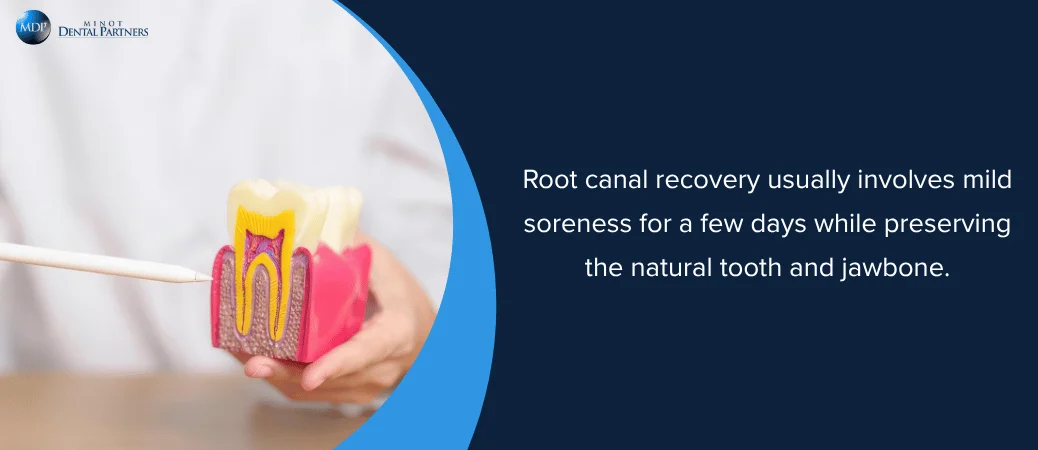
Most people feel mild soreness for a few days after root canal recovery, especially if the crown is placed in a separate visit.
Over-the-counter pain relievers are usually enough to manage discomfort while the area settles.
Since the natural tooth stays in the mouth, there is no gap to plan around and no change to the jawbone underneath.
How Extraction Recovery and Dry Socket Differ
Extraction recovery generally takes longer than root canal recovery because the body needs to heal an open socket in the bone.
A small risk during this healing window is dry socket, a painful condition where the protective blood clot in the socket dislodges too early and exposes bone and nerve endings.
Dry socket is uncomfortable but treatable, and dentists give clear aftercare instructions, such as avoiding straws and smoking, to lower the risk.
Which Tooth Replacement Options May Be Recommended?
A missing tooth left unreplaced can lead to shifting teeth, bite changes, and gradual bone loss in the jaw, so dentists usually discuss tooth replacement options soon after an extraction.
Common choices include a dental implant, a bridge, and a partial denture.
- Dental implant: a titanium post placed into the jawbone during implant placement, topped with a crown; may require a bone graft first if the jawbone has thinned.
- Bridge replacement: an artificial tooth anchored to the neighboring teeth.
- Partial denture: a removable appliance replacing one or more missing teeth.
Each option restores chewing function differently, and a dentist can walk through which fits your bone health and budget using this guide to tooth replacement options.
Preserving the jawbone after an extraction is also worth discussing early, since bone can begin changing shape once a tooth is gone, as explained in this overview of jawbone preservation after tooth extraction.
Choosing the Option With the Strongest Long-Term Outlook
The strongest long-term outlook usually comes from comparing the complete treatment paths rather than the initial procedure alone.
Saving a tooth may involve root canal treatment followed by a restoration such as a crown, while extraction may involve additional treatment if the missing tooth needs to be replaced.
How Do Total Treatment Costs Compare?
Replacing an extracted tooth adds another treatment and cost consideration.
Dental implants, bridges, and partial dentures involve different procedures and fees, so the better comparison is the total treatment plan rather than the extraction fee alone.
Coverage and out-of-pocket costs can vary by treatment and plan. Review the financial options available and confirm your individual benefits before choosing a treatment based on cost.
When Is a Second Opinion Worth Seeking?

A second opinion is worth considering when extraction is recommended but you would like to know whether saving the natural tooth is still realistic.
A second evaluation can help clarify the tooth’s remaining structure, bone support, fracture pattern, and whether root canal treatment has a predictable outlook.
An endodontist’s evaluation, often using imaging tools a general dental office may not have, can clarify whether a tooth is a reliable candidate for treatment.
If you are weighing both options for a borderline tooth, asking Minot Dental Partners about a specialist evaluation is a reasonable next step before committing to either path.
Conclusion
Deciding between a root canal and an extraction comes down to whether a tooth has enough healthy structure, bone support, and stable infection control to hold up long term.
Root canal treatment tends to be the more predictable path when those conditions are met, while extraction becomes the safer choice for fractures through the root, advanced bone loss, or infections that keep coming back.
Whichever path fits your tooth, plan for the full picture: recovery, any needed tooth replacement, and how the choice affects your oral health years from now.
A conversation with your dentist, and a second opinion when the case feels borderline, gives you the clearest path forward.
Frequently Asked Questions
Is it better to get a root canal or pull the tooth?
Saving the tooth with a root canal is usually better when there is enough healthy structure and bone support to make treatment predictable.
When a fracture through the root or advanced bone loss makes the outcome unreliable, extraction becomes the more sensible choice.
Can a tooth with a cracked root be saved?
A crack limited to the crown of the tooth can sometimes be treated and saved.
A true root fracture, especially a vertical root fracture running down the length of the root, usually cannot be reliably repaired and typically leads to extraction.
Does a failed root canal always mean the tooth must be extracted?
Not always. A failed root canal can sometimes be treated with a repeat root canal or a specialized retreatment procedure, depending on how much healthy structure remains and whether the infection can be fully cleared.
Is recovery easier after a root canal or an extraction?
Root canal recovery is usually milder and shorter, since the tooth and surrounding bone are not disturbed. Extraction recovery takes longer because the body has to heal an open socket, and it carries a small risk of dry socket.
Do I need to replace a tooth after it is pulled?
Replacing a pulled tooth is strongly recommended, especially for back teeth used in chewing, since a gap can lead to shifting teeth and gradual bone loss.
Options include a dental implant, a bridge, or a partial denture, each with different costs and maintenance needs.
Should I get a second opinion before having a tooth extracted?
A second opinion makes sense whenever you are told a tooth must be pulled but you would like to know if it can be saved.
An endodontist’s evaluation can confirm whether root canal treatment is a realistic option before you move forward with extraction.