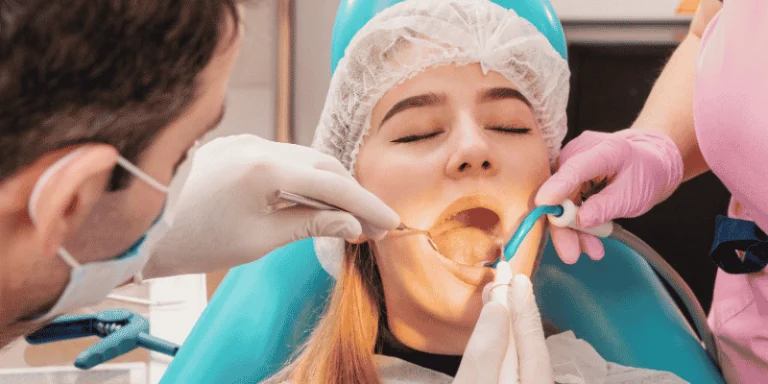


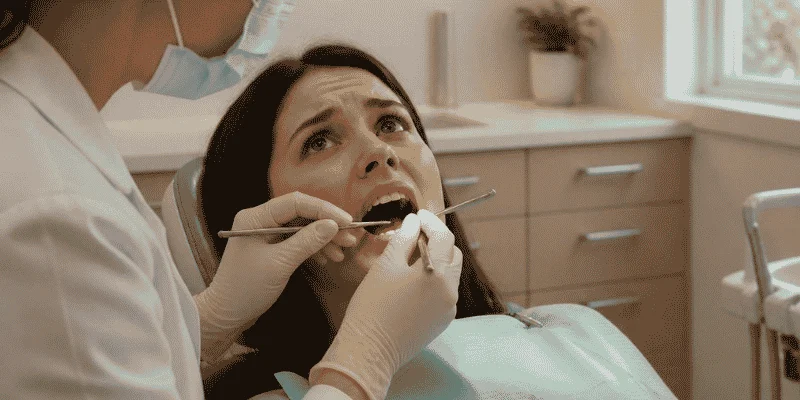
When you lose a tooth without warning, your jawbone starts to change right away. The bone no longer gets pressure from chewing, so it begins to shrink. You may not see it at first, but the process can start within months.
Dentists stabilize your jawbone after sudden tooth loss by placing dental implants or using bone grafting procedures to protect the bone and restore support.
These treatments keep your jaw strong and help prevent long-term changes to your bite and face shape.
If you act quickly, you give your dentist more options to save bone and protect your smile. Understanding how stabilization works helps you make clear decisions about your next steps.
Key Takeaways
- Jawbone shrinkage can begin soon after a tooth is lost.
- Early treatment helps preserve socket, teeth and jawbone health.
- Implants and grafting are common ways to support and protect the jaw.
Immediate Effects of Sudden Tooth Loss on the Jawbone
When you lose a tooth without warning, changes start under the gum line right away. Your jawbone no longer receives pressure from the tooth root, and that lack of force triggers bone loss that can affect your bite and facial shape.
Bone Resorption and Its Timeline
After sudden tooth loss, your body begins a process called bone resorption. This means it starts to break down the bone that once held the tooth root in place.
The jawbone depends on daily chewing pressure to stay strong. When that pressure stops, your body treats the bone as unnecessary and begins to shrink it.
Research shows that bone loss can begin within the first few months after a tooth is removed. In fact, you may lose a noticeable amount of bone width during the first year. This early stage moves faster than many people expect.
The speed of bone resorption depends on your age, health, and where the missing tooth was located. Back teeth often lead to more rapid changes because they handle greater chewing force.
Impact on Jawbone Density
Your jawbone density drops when the tooth root is no longer there to stimulate it. The root acts like a natural signal to keep bone tissue strong and active.
Without that signal, the bone becomes thinner and less dense. This does not just affect the empty socket. The surrounding bone can also weaken over time.
Bone loss can start within months and may continue for years if you do not replace the missing tooth. Dentists often stress early treatment because bone loss due to missing teeth can make future procedures, like dental implants, more complex.
Lower jawbone density can also affect how well your remaining teeth stay in place. Teeth next to the gap may shift, which can change your bite and increase wear.
Consequences for Facial Structure
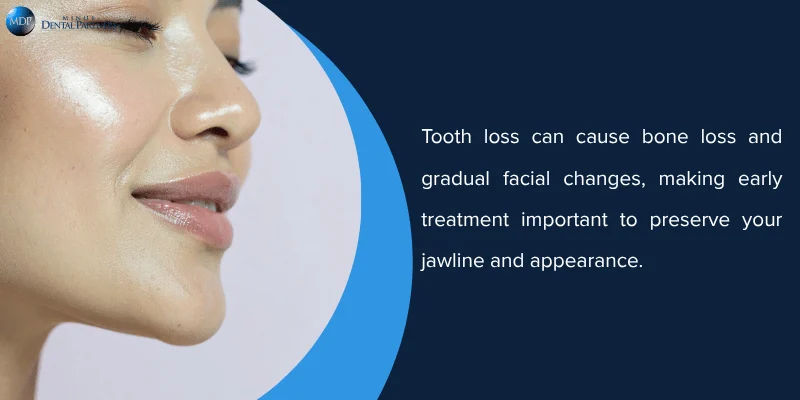
Your jawbone supports your lips and cheeks. When bone resorption reduces bone volume, your facial structure can change.
You may notice that the area around the missing tooth looks slightly sunken. Over time, continued bone loss can shorten the distance between your nose and chin. This can lead to early signs of facial collapse, especially if you lose several teeth.
Even a single missing tooth can affect how your jawline looks. Changes in the lower face may develop slowly, which makes them easy to miss at first.
As described in discussions about why your jawline changes after losing a tooth, the bone under the tooth plays a key role in keeping your facial shape stable.
When you act quickly after tooth loss, you give your dentist more options to protect your jawbone and maintain your natural appearance.
Why Jawbone Stabilization Is Essential After Tooth Loss
When you lose a tooth, your jawbone no longer gets the pressure it needs from chewing. Without quick action, the bone in that area can shrink, weaken, and affect your long-term oral health.
Risks of Inaction
Your jawbone depends on daily chewing to stay strong. When a tooth is gone, that part of the bone loses stimulation and begins to shrink.
Bone loss can start within months. Over time, the ridge that once held your tooth may become thinner and shorter.
As the bone shrinks, nearby teeth may shift. This can change your bite and make it harder to chew.
You may also notice changes in your facial shape. Bone loss in the jaw can lead to a sunken look around the mouth. Poor jawbone health does not just affect appearance. It can limit your options for future treatments like implants.
Benefits of Early Intervention
When you act quickly, you protect your bone health. Dentists often place bone graft material into the socket right after an extraction. This step supports bone preservation.
A graft creates a framework for bone regeneration. Over time, your body builds new bone around the material. This helps maintain the height and width of your jaw.
Early treatment also keeps your options open. If you plan to get an implant, you need enough healthy bone to hold it in place. Many dentists recommend bone grafting and socket preservation after tooth extraction to support this goal.
Taking action early usually means fewer procedures later. It can reduce the need for larger grafts in the future.
Role in Long-Term Oral Health
Stable bone supports more than one tooth. It helps keep your whole bite balanced.
When your jawbone stays strong, it protects nearby teeth from shifting. This makes brushing and flossing easier and lowers your risk of gum problems.
Good jawbone health also supports restorations like implants and dentures. Implants, in particular, help protect bone by providing the stimulation your jaw needs. You can see how dental implants help prevent jawbone loss after a tooth is lost.
By focusing on bone preservation and bone regeneration early, you protect your comfort, your appearance, and your long-term oral health.
Modern Techniques to Stabilize and Regenerate Jawbone
Dentists act fast after sudden tooth loss to protect your jawbone from shrinkage. They use bone grafting, growth factors like platelet-rich plasma, and detailed 3D imaging to rebuild and stabilize the area before placing a dental implant.
Bone Grafting Procedures
When you lose a tooth, your jawbone no longer gets pressure from chewing. The bone can start to shrink within months.
Dentists often use dental bone grafting to add volume and density back to the area. During this procedure, they place graft material into the empty socket or thin ridge. This material acts as a framework where new bone can grow.
Your body then replaces the graft with natural bone over time. This process can take several months, depending on your health and the size of the defect.
Dentists may place the graft right after tooth removal to limit bone loss. In other cases, they rebuild the ridge later to prepare for a dental implant. The goal stays the same: create a strong, stable base that can handle normal biting forces.
Types of Grafts: Autograft, Allograft, Xenograft
Not all grafts come from the same place. Your dentist chooses the type based on your needs, health history, and how much bone you have lost.
Here is a simple comparison:
| Type | Where It Comes From | Key Point |
| Autograft | Your own body (chin, jaw, or hip) | Strong integration, no rejection risk |
| Allograft | Processed human donor bone | No second surgical site |
| Xenograft | Animal source, often bovine | Acts as a scaffold for new bone |
With an autograft, your dentist moves bone from one part of your body to another. Because it is your own tissue, it blends well with existing bone.
An allograft uses sterilized donor bone. Many dentists rely on this option because it avoids a second surgical area.
A xenograft comes from animal bone and serves as a framework for bone regeneration. Dentists often use these options when performing procedures to regenerate jawbone for dental implants.
Guided Bone Regeneration and PRP
Sometimes your dentist adds special tools to improve healing. Guided bone regeneration uses a thin membrane to cover the graft.
This membrane keeps soft tissue from growing into the space meant for bone. It protects the area so bone cells can fill in the defect.
Dentists may also use platelet-rich plasma (PRP). They draw a small amount of your blood and spin it in a machine to concentrate platelets.
PRP contains growth factors that may support healing and bone regeneration. When your dentist mixes PRP with graft material, it can help your body respond more efficiently during the early healing phase.
3D Imaging for Precise Planning
Accurate planning reduces risk and improves results. Dentists now rely on 3D imaging, such as cone beam CT scans, to study your jaw in detail.
Unlike regular X-rays, 3D scans show width, height, and bone density. Your dentist can measure the exact size of the defect and locate nearby nerves and sinuses.
This detail helps them decide how much graft material you need and where to place it. It also guides future implant placement so the implant lines up with your bite.
With clear imaging, your treatment becomes more precise and predictable.
Dental Implants: The Cornerstone for Jawbone Stabilization
Dental implants help stop bone loss by replacing both the missing tooth and its root. They support your jaw through secure implant placement and a process called osseointegration, which anchors the implant to your bone.
Implant Placement Process
When you lose a tooth, your dentist may suggest a dental implant to protect your jawbone. An implant acts as an artificial tooth root. It sits inside your jaw and supports a crown, bridge, or denture.
First, your dentist checks your bone with X-rays or 3D scans. If your jaw lacks enough thickness or strength, you may need a bone graft before implant placement.
During surgery, your dentist opens the gum and places a small titanium post into the bone. The post sits deep in the jaw to handle chewing pressure.
After placement, your gum heals over or around the implant while the bone begins to bond with it.
You may wear a temporary tooth while you heal. This step keeps your smile complete during treatment.
Osseointegration Explained
Osseointegration is the key reason dental implants stabilize your jawbone. After implant placement, your bone grows and attaches directly to the titanium surface.
Unlike natural teeth, which connect to bone through ligaments, implants form a firm bond with the bone. The process creates a stable base for your final dental restoration.
This bonding can take several months, depending on your health and bone quality.
During this time, your jaw treats the implant like a natural root. Chewing forces pass through the implant into the bone. This pressure helps maintain bone density and reduces the shrinkage that often follows sudden tooth loss.
If osseointegration does not occur fully, the implant may loosen and need removal. Your dentist will monitor healing closely to lower this risk.
Advantages Over Dentures and Bridges
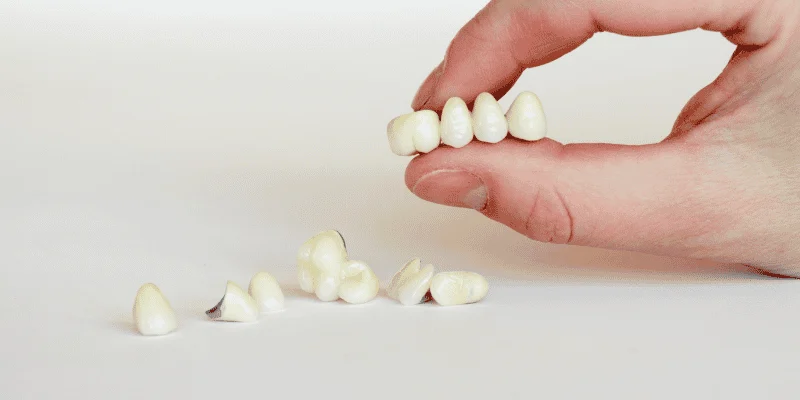
Dental implants offer clear benefits when compared to other tooth replacement options. Traditional dentures and bridges sit on top of the gums or rely on nearby teeth for support. They do not replace the tooth root.
Because implants sit inside the bone, they help preserve jaw structure. Implants fuse with the jaw and provide strong support for artificial teeth.
Here is how implants compare:
| Feature | Dental Implants | Dentures | Bridges |
| Replace tooth root | Yes | No | No |
| Help maintain bone | Yes | No | Limited |
| Affect nearby teeth | No | No | Yes, may require reshaping |
With implants, you avoid grinding down healthy teeth for support. You also reduce the risk of jawbone shrinkage over time. This makes implants a strong choice for long-term jawbone stabilization and lasting dental restoration.
Other Surgical Solutions for Jawbone Loss
When you lose a tooth suddenly, your jawbone can shrink fast. Dentists use precise surgical methods like sinus lifts, bone preservation, and newer regenerative tools to restore bone and protect your long‑term oral health.
Sinus Lift and Bone Augmentation
If you lose an upper back tooth, the bone under your sinus can become too thin for an implant. A sinus lift adds bone to this area so you have enough height to support a stable implant.
During the procedure, your dentist gently lifts the sinus membrane and places graft material underneath it. Over several months, your body builds new bone around the graft.
This approach helps restore bone that bone loss has weakened. It can make the difference between being told you are not a candidate for implants and moving forward with treatment.
Dentists often recommend grafting because missing teeth cause the jaw to shrink over time. Grafts rebuild areas where bone has deteriorated and create a stronger base for implants.
Healing usually takes a few months, but it gives you a more secure and lasting result.
Ridge Preservation After Extraction
Bone loss starts quickly after a tooth comes out. The ridge, which is the bony socket that held your tooth, begins to shrink within weeks.
Ridge preservation helps protect that shape right away. Your dentist places bone graft material into the empty socket at the time of extraction.
This step supports bone preservation and reduces the amount of shrinkage. It also keeps your jaw wide and tall enough for a future implant.
When you lose a tooth, the jaw stops getting stimulation from chewing. The body responds by breaking down unused bone. Acting early limits that damage.
Ridge preservation does not stop all bone loss, but it can greatly reduce it and make later treatment simpler.
Emerging Technologies and Future Treatments
Researchers continue to study new ways to restore bone with less surgery. Some treatments use your own blood to support healing.
Platelet-rich plasma, or PRP, concentrates growth factors from your blood. Dentists may combine it with grafting to help tissue heal faster.
Scientists are also studying stem cell therapies that may help your body rebuild bone naturally. These treatments are still in early stages and are not widely available yet.
Dental implants remain one of the most effective ways to slow ongoing bone loss because they replace the tooth root and stimulate the jaw. This process helps maintain bone strength.
As research moves forward, you may see more options that focus on preserving and rebuilding bone right after tooth loss.
Preventing Further Bone Deterioration and Supporting Jawbone Health
After sudden tooth loss, you need to control infection, protect the bone, and support healthy bone remodeling. Your daily habits and follow-up care play a direct role in keeping your jawbone strong and stable.

Managing Periodontal Disease
Periodontal disease is a leading cause of bone loss around teeth. When bacteria infect your gums, they trigger inflammation that breaks down the bone that supports your teeth.
You must treat gum disease early to protect jawbone health. Dentists often recommend deep teeth cleaning, also called scaling and root planing, to remove bacteria below the gumline.
In more advanced cases, they may suggest surgical treatment to clean deeper areas and reduce pocket depth.
Common causes of jawbone loss include gum infection and poor oral hygiene.
To support healing, you should:
- Brush twice a day with a soft toothbrush
- Floss daily to remove plaque between teeth
- Use an antibacterial mouth rinse if your dentist advises it
Controlling inflammation helps slow bone breakdown and supports long-term bone health.
Lifestyle Choices and Bone Health
Your body’s overall bone health affects your jawbone. Conditions like osteoporosis can lower bone density, which may also impact the jaw.
Research shows a clear link between systemic bone loss and oral health changes, including reduced jawbone density.
You can support jawbone health by:
- Eating foods rich in calcium and vitamin D
- Getting regular weight-bearing exercise
- Avoiding smoking
- Limiting alcohol intake
Smoking reduces blood flow to the gums and bone. This slows healing and increases your risk of bone loss after tooth removal.
If you have a medical condition that affects bone health, tell your dentist. They can adjust your treatment plan to better protect your jawbone.
Long-Term Maintenance and Follow-Up
Replacing missing teeth quickly helps prevent further bone shrinkage. When a tooth is missing, the bone in that area no longer receives normal chewing pressure. Over time, the body may resorb that bone.
Dental implants can help maintain bone by stimulating it during chewing.
You also need regular dental visits. Most patients benefit from checkups every six months, though some need more frequent periodontal maintenance.
At these visits, your dentist will:
| What Your Dentist Checks | Why It Matters |
| Gum pocket depth | Detects active periodontal disease |
| Bone levels on X-rays | Monitors bone loss over time |
| Bite alignment | Reduces excess pressure on bone |
Consistent follow-up helps you catch small problems before they lead to more bone deterioration.
Frequently Asked Questions
When you lose a tooth without warning, the bone around it begins to change within weeks. Fast action, such as splinting or bone grafting, can protect your jaw and improve your options for implants later.
What happens to the jawbone right after a tooth is suddenly lost?
Right after a tooth comes out, your body forms a blood clot in the empty socket. This clot protects the area and starts the healing process.
Within the first few months, the bone that once held the tooth root no longer receives chewing pressure. Without that stimulation, the body begins to break down the bone.
You can lose a noticeable amount of bone width and height in the first year. The most rapid change often happens in the first three to six months.
How can a dentist prevent jawbone shrinkage after an unexpected tooth loss?
Your dentist can place a bone graft into the socket right after the tooth is removed. This step helps support the thin outer bone walls and limits collapse.
A dental implant can also help preserve bone because it acts like a tooth root and transfers chewing force into the jaw. Replacing missing teeth quickly lowers the risk of jawbone loss.
In some cases, your dentist may use a protective membrane over the graft. This barrier guides new bone growth during healing.
Can jawbone density be rebuilt after tooth loss, and what treatments are used?
You can rebuild lost bone in many cases. Dentists use bone grafts made from your own bone, donor tissue, or synthetic material.
Over several months, your body replaces the graft with new natural bone. This process restores bone volume and improves support for an implant.
Advanced cases may need staged treatment, where you heal from grafting before placing a dental implant. Your dentist will check bone levels with X-rays or 3D scans before planning care.
What temporary options can stabilize the area while waiting for a permanent replacement?
If nearby teeth feel loose after trauma, your dentist may use periodontal splinting. This method bonds the loose tooth to stable teeth to limit movement.
You may also wear a temporary partial denture, often called a flipper. It fills the gap and protects the area while the socket heals.
These options do not stop bone loss on their own, but they help you chew and speak more comfortably during healing.
How long does periodontal splinting usually last, and when is it recommended?
Dentists usually keep a splint in place for a few weeks to a few months. The exact time depends on how much support the tooth lost and how well it heals.
They recommend splinting when a tooth becomes loose from injury or sudden gum damage. The goal is to stabilize it long enough for the surrounding tissues to recover.
Your dentist will check the tooth regularly and remove the splint once it feels stable.
When should you consider bone grafting after tooth loss to support a future implant?
You should consider bone grafting right after an extraction if you plan to get an implant later. Early grafting helps preserve the shape of the ridge.
If months or years have passed and the ridge looks thin, you may still qualify for grafting. Dentists often suggest this approach when scans show not enough bone to hold an implant securely.
Acting sooner gives you more predictable results and may shorten your total treatment time.