



When you face a dental emergency that requires tooth extraction, you might wonder whether you can get an implant right away or if you need to wait.
The choice between immediate and delayed implant placement depends on several factors including the condition of your tooth, the health of your bone, and whether infection is present.
Emergency tooth extractions and planned dental implant procedures follow different timelines, and understanding which approach fits your situation can help you make the best decision for your oral health.
Immediate implant placement happens during the same visit as your extraction, while delayed placement requires waiting three to four months for your socket to heal completely.
Your specific situation determines which path makes sense for you. Factors like infection, bone quality, and where the tooth is located in your mouth all play a role in what your dentist recommends.
Key Takeaways
- Immediate implants save time by placing the implant right after extraction, while delayed implants require months of healing first
- Your candidacy for immediate placement depends on bone health, absence of infection, and the condition of the extraction site
- Both approaches offer good success rates when proper planning and technique are used for your individual needs
Key Differences Between Emergency Tooth Extraction and Planned Implant Placement
Emergency tooth extraction addresses urgent dental problems that need immediate attention, while planned implant placement involves carefully scheduled procedures with time for preparation.
The main differences lie in how these treatments are performed, when they happen, and whether you receive your implant right away or later.
Definition and Procedure Overview
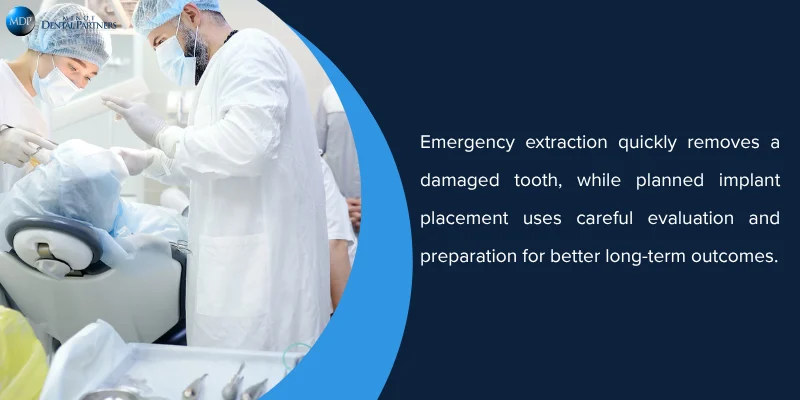
Emergency tooth extraction happens when you need a tooth removed quickly due to severe pain, infection, trauma, or advanced decay.
Your dentist focuses on removing the damaged tooth and controlling any immediate problems like bleeding or swelling.
Planned implant placement is a scheduled surgical dental implant procedure where your dentist evaluates your oral health, takes imaging scans, and creates a treatment plan before placing the titanium implant post.
This approach allows your dental team to assess bone quality, plan the exact implant position, and prepare for any additional procedures you might need.
The key difference is preparation time. Emergency extractions prioritize solving your current problem, while planned procedures give your dentist time to optimize every aspect of your treatment for better long-term results.
Timeline and Treatment Sequence
Your treatment timeline varies significantly between these two approaches. Emergency tooth extraction typically happens within 24-48 hours of your initial visit when you have urgent symptoms requiring immediate care.
With planned implant placement, your dentist schedules everything in advance. You’ll have consultation appointments, imaging sessions, and time to discuss your options before any surgery begins.
The complete process from planning to final restoration can take several months.
Typical emergency extraction timeline:
- Day 1: Urgent visit and extraction
- Weeks 2-4: Initial healing period
- Months 3-6: Decision point for implant placement
Typical planned implant timeline:
- Week 1: Consultation and imaging
- Weeks 2-3: Treatment planning
- Month 2: Scheduled implant surgery
- Months 3-6: Healing and final restoration
Immediate vs Delayed Implant Placement
Immediate implant placement means your dentist inserts the implant post directly into the socket during the same visit as your tooth extraction. This can work well when you have healthy bone and no active infection at the extraction site.
Delayed implant placement happens when your dentist waits before placing your implant. Early implant placement occurs 4-8 weeks after extraction, while late placement happens after 4 months of healing time.
Research shows that delayed implant placement demonstrates high survival rates of 92-100% with predictable outcomes.
Emergency situations often require delayed placement because infected sites need time to heal before receiving an implant.
Planned procedures give you and your dentist the flexibility to choose immediate versus delayed dental implant placement based on your specific needs rather than being limited by urgent circumstances.
Benefits and Risks of Immediate Implant Placement
Immediate implant placement offers faster treatment times and better tissue preservation, but it also comes with specific surgical challenges and strict patient requirements.
Understanding both the advantages and potential complications helps you make an informed decision about your tooth replacement options.
Bone Preservation and Esthetic Outcomes
When you lose a tooth, your alveolar bone begins to shrink within weeks. Immediate implant placement helps preserve bone volume by filling the socket right away and stimulating the surrounding bone tissue.
This preservation of bone is one of the biggest advantages of getting your dental implant at the same time as your extraction.
Your gum tissue also benefits from immediate placement. The procedure maintains the natural contours of your gums, which is especially important for front teeth where people can see your smile.
Without an implant, bone resorption causes your gums to recede and change shape.
Esthetic outcomes tend to be better with immediate placement because:
- Your gum line stays more natural-looking
- Less bone loss means better support for the implant crown
- A temporary crown can be placed to maintain your appearance
- Tissue recession is minimized compared to delayed placement
The immediate dental implant acts as a placeholder that keeps your jaw structure intact while osseointegration occurs over the next few months.
Surgical Complications and Implant Stability
Primary stability is the most critical factor for success with immediate implants. Your dentist needs to achieve a torque of at least 35 Ncm when placing the implant to ensure it stays firmly in place during healing.
Without this initial stability, implant failure becomes much more likely.
Infection presents a higher risk when extraction and implant happen together. If your tooth has an active infection, immediate placement may not be advisable because bacteria can compromise healing.
Other potential complications include:
- Damage to surrounding bone during extraction
- Inadequate bone width to support the implant
- Poor osseointegration if the implant moves during healing
- Soft tissue problems that affect gum health
Your dentist may place a temporary restoration to protect the site while your bone heals around the implant. This helps maintain proper spacing and appearance but requires careful monitoring to prevent excessive pressure on the healing implant.
Patient Eligibility Criteria
Not everyone qualifies for immediate implant placement after tooth extraction. You need sufficient bone volume and healthy surrounding tissue to support the new implant during the healing process.
Ideal candidates typically have:
- No active infection in the tooth being removed
- Adequate buccal bone thickness (at least 1-2mm)
- Good overall health without uncontrolled diabetes
- Non-smoker status or willingness to quit temporarily
- Teeth with straight roots and minimal bone loss
Your dentist will use 3D imaging to measure your bone density and volume before recommending immediate versus delayed implant placement. Teeth with fractured roots, severe decay, or long-term infections usually need delayed placement instead.
Systemic health conditions like osteoporosis can affect implant stability and healing. You’ll need a thorough medical evaluation to determine if immediate placement is safe for your specific situation.
Contact us to discuss urgent tooth concerns and safe implant planning with personalized guidance.
Advantages and Considerations of Delayed Implant Placement
Delayed implant placement gives your jawbone time to heal fully after tooth extraction, which can lead to better outcomes and higher success rates.
This approach allows your dentist to address bone density issues and plan for any necessary procedures before placing your permanent implant.
Healing and Bone Regeneration
When you choose delayed implant placement, you give your extraction site three to four months to heal completely. During this time, your jawbone naturally fills in the empty socket and begins to regenerate.
This healing period lets your dentist see exactly how much bone you have to work with. Your bone density becomes easier to measure after the gum tissue has closed and inflammation has gone down.
If you need a bone graft, the delayed approach gives that grafted material time to integrate with your natural bone.
The waiting period also reduces your risk of infection. Your body can focus on healing the extraction site without the added stress of supporting a new implant at the same time.
Success Rates and Long-Term Oral Health
Delayed implant placement shows high survival rates between 92-100% with predictable outcomes. These results come from giving your jawbone the strongest possible foundation before adding an implant.
Your long-term oral health benefits from this careful approach. The implant sits in fully healed bone that can support the forces of chewing and biting. Your permanent crown will have a stable base that can last for decades with proper care.
You might need to use a removable denture during the waiting period. While this adds an extra step, it protects the healing site and maintains your appearance until you’re ready for the implant.
Need for Bone Grafting and Sinus Lifts
Delayed placement makes bone grafting procedures more predictable and easier to plan. Your dentist can assess your bone density after extraction and determine if you need additional support.
A bone graft can be placed and allowed to heal completely before your implant surgery.
If you need a sinus lift for upper back teeth, the delayed approach gives you better results. The membrane that separates your sinus from your jawbone needs careful handling, and waiting reduces complications.
Your dentist can combine multiple procedures during the healing phase. This might include adding bone graft material or preparing the site for optimal implant placement.
The extra time means each step gets proper attention without rushing your treatment.
Clinical Decision Factors: How to Choose the Right Approach
Your dentist evaluates several key factors when deciding between emergency extraction and planned implant placement.
These include your current gum health, the quality of diagnostic imaging, and whether your specific case is suitable for immediate or delayed treatment.
Gum Disease and Overall Health
Your gum health plays a major role in determining the best treatment path. If you have active gum disease, dentists must proceed with caution when considering tooth extraction and immediate implant placement.
Patients with elevated plaque scores face uncertain outcomes. The severity of periodontal disease depends on multiple risk factors that affect treatment success.
Your overall health matters too. Conditions like diabetes or a compromised immune system can affect healing after extraction. Your dentist will review your medical history during the implant consultation to identify any concerns.
Healthy gum tissue is essential for successful implant placement. If inflammation or infection is present, your dentist may recommend treating these issues first before proceeding with extraction and implant surgery.
Consultation and Imaging Techniques
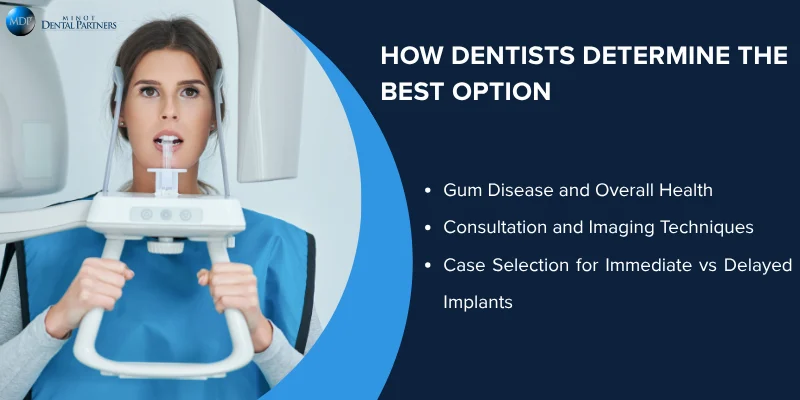
Your dentist uses advanced imaging to plan the procedure. Radiographic evaluation helps determine whether extraction is necessary and if your bone can support an implant.
CBCT scans show the thickness of your buccal bone and the dimensions of the extraction socket. This information helps your dentist select the right implant diameter and implant design for your specific anatomy.
The imaging reveals if you have enough bone width and height. If the buccal bone is too thin, you may need bone grafting before or during implant placement.
Case Selection for Immediate vs Delayed Implants
The timing of implant placement varies based on your individual situation. Not every patient is a good candidate for immediate placement right after extraction.
Immediate placement works best when you have:
- Adequate buccal bone density
- No active infection at the extraction site
- Good primary stability for the implant
- Healthy surrounding gum tissue
Delayed placement gives your extraction socket time to heal. This approach is better if you have bone loss, infection, or inadequate bone volume. Your dentist can place a bone graft during extraction to prepare the site for a future implant.
Restorative Solutions After Extraction: Prosthetic Options and Outcomes
After a tooth extraction, you have several ways to replace the missing tooth, ranging from temporary solutions that protect the site during healing to permanent options that restore full function.
Each restoration option after tooth extraction offers different benefits in terms of durability, cost, and treatment time.
Temporary and Permanent Restorations
A temporary restoration protects your extraction site while you heal and wait for your permanent solution. Your dentist might place a temporary crown on an implant or create a removable partial denture to fill the gap.
These temporary options keep your surrounding teeth from shifting and help maintain your appearance during the healing period.
Permanent restorations provide long-term solutions that fully restore your bite and smile. A permanent crown attached to a dental implant offers the most natural feel and function.
The crown is custom-made to match your other teeth in color and shape. Unlike temporary options, permanent restorations are built to last many years with proper care.
Comparing Dental Implants, Bridges, and Dentures
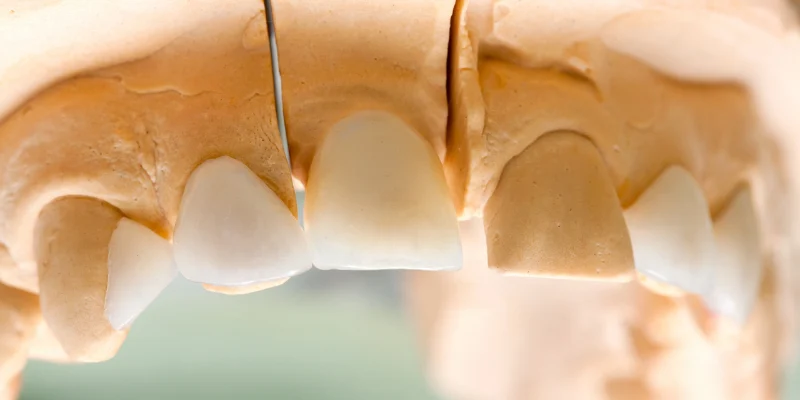
When choosing between dental implants, bridges, and other replacement options, you need to understand how each one works for your situation.
Dental implants involve placing a titanium post into your jawbone that acts as an artificial root. After the post heals and bonds with your bone, your dentist attaches a permanent crown.
Implants preserve your jawbone and don’t require altering neighboring teeth. They typically last 20+ years.
Dental bridges use your adjacent teeth as anchors to hold a replacement tooth in the middle. Your dentist reshapes the neighboring teeth to fit crowns that support the bridge.
While bridges cost less upfront than implants, they require modifying healthy teeth and may need replacement every 10-15 years.
Removable dentures can replace single teeth or multiple missing teeth. You can take them out for cleaning. Partial dentures use metal clasps to attach to your remaining teeth.
They’re the most affordable option but may feel less stable when eating or speaking.
Frequently Asked Questions
Emergency tooth extractions often raise questions about timing, risks, and next steps for implant placement. Understanding the differences between immediate and delayed procedures helps you make informed decisions about your dental care.
How do I know if I need an emergency tooth extraction or if it can wait for a scheduled appointment?
You need an emergency extraction if you have severe pain that won’t stop with medication, significant swelling in your face or jaw, or signs of a spreading infection like fever. These symptoms mean the tooth problem could get worse quickly.
If your tooth is broken but doesn’t hurt much, or if you have mild discomfort that responds to pain relievers, you can usually wait for a scheduled appointment.
A cavity or crack without infection typically doesn’t require emergency care.
Call your dentist right away if you notice pus around a tooth, have trouble swallowing or breathing, or experience bleeding that won’t stop. These are signs that waiting could be dangerous.
What are the risks of delaying a tooth extraction when I’m in severe pain or have swelling?
Delaying an extraction when you have an infection can allow bacteria to spread to other parts of your body. The infection might move into your jaw bone, sinuses, or even your bloodstream.
Severe swelling can block your airway in extreme cases. You could also develop an abscess, which is a pocket of pus that causes intense pain and requires immediate treatment.
The longer you wait, the more bone loss you might experience around the tooth. This makes future implant placement harder and might require bone grafting procedures later.
How soon after a tooth extraction can I get a dental implant?
The timing for dental implants after extraction depends on your bone quality, overall health, and whether infection was present. Some people can get implants the same day their tooth comes out.
Most patients wait between three to six months after extraction before getting an implant. This gives your bone time to heal and fill in the empty socket.
If you had an infection or need bone grafting, you might need to wait longer. Your dentist will take X-rays to check if your bone has healed enough to support an implant.
What does the “3/2 rule” mean for timing implant placement after an extraction?
The 3/2 rule suggests waiting three months after extracting a back tooth (molar) or two months after removing a front tooth before placing an implant. This guideline helps ensure proper bone healing.
Front teeth typically heal faster because they have thinner roots and less bone around them. Back teeth have multiple roots and more bone involvement, so they need extra healing time.
This rule isn’t absolute for everyone. Your specific healing time depends on factors like your age, smoking habits, and whether you needed additional procedures during extraction.
Can I get an implant placed the same day my tooth is removed, and who is a good candidate for that?
Extraction and immediate implant placement combines removing your tooth and inserting the implant in one appointment. This saves time and helps preserve your bone and gum tissue.
You’re a good candidate if your tooth has no infection, you have enough healthy bone around the extraction site, and the tooth isn’t severely damaged. Your dentist needs to achieve stable placement for the implant to succeed.
People with uncontrolled diabetes, heavy smokers, or those with significant bone loss usually aren’t good candidates for same-day implants.
If your tooth had a long-term infection, your dentist will likely recommend waiting for the socket to heal first.
What should I ask a dental office (like Aspen Dental) about same-day extractions, costs, and follow-up care?
Ask if they can do the extraction the same day you call or if you need to schedule it. Find out what their emergency policies are and whether they charge extra for urgent appointments.
Request a detailed cost breakdown that includes the extraction, any required X-rays, anesthesia, and medications. Ask if they offer payment plans or accept your insurance.
Find out who will handle your follow-up care and when you’ll need to come back. Ask about their after-hours emergency number in case you have problems with pain or bleeding after the procedure.