



If you have put off a filling or crown for years, you are not alone, and you are not the only one who feels nervous just thinking about it.
Dental anxiety and treatment avoidance can keep adults away from routine care for years, sometimes for a decade or longer.
What starts as a small worry about one appointment can turn into years of avoidance, and that gap can feel harder to explain the longer it goes on.
Sedation dentistry offers a different way to approach that visit.
For many patients, sedation options make it possible to sit through a filling or crown appointment with far less fear, less physical tension, and less worry about pain or losing control.
This kind of care is not about rushing you into treatment. It is about giving you a realistic, calm picture of what a sedation-supported appointment looks like, so you can decide if it feels right for you.
Key Takeaways
- Sedation options can ease the specific fears tied to needles, numbness, gagging, and long chair time.
- Different sedation levels exist for different anxiety levels, from mild nervousness to years of avoidance.
- A short conversation about your health history and worries helps your dental team plan a safer, more comfortable visit.
Why Fillings and Crowns Can Feel Hard to Face
Routine fillings and crowns often carry more emotional weight than the procedures themselves deserve.
The work itself is common and predictable for dental patients, but the buildup in your mind beforehand can feel much bigger than the actual appointment.
Three things tend to drive this: a past experience that left a mark, specific fears around needles and numbness, and the quiet way anxiety grows the longer care gets delayed.
How a Traumatic Dental Experience Can Create Lasting Avoidance
A single hard appointment can shape how you feel about dentistry for years.
Pain that was not managed well, a rushed dentist, or feeling unheard during a procedure can turn into dental phobia that shows up every time you think about scheduling a visit.
This reaction is a normal response to a real experience. Your body remembers stress, even when the current situation is different from the one that caused it.
Fear of Needles, Pain, and Difficulty Getting Numb
Fear of needles is one of the most common reasons people delay fillings and crowns.
Some patients also worry about difficulty getting numb, especially if a past local anesthetic did not fully work before a procedure started.
These worries are valid and worth naming out loud.
Dental treatment today includes ways to manage both the injection itself and the numbing process, and a sedation dentist can talk through your specific history before any treatment begins.
Why Delayed Restorative Care Can Make Anxiety Grow
Waiting longer does not usually make a dental visit feel easier.
Small dental procedures can turn into bigger ones the longer a cavity or a failing filling goes untreated, which adds a new layer of worry about cost, time, and what the dentist will find.
That growing uncertainty often feeds anxiety more than the original fear did. Addressing a filling or crown earlier, with the right support in place, tends to keep the appointment simpler.
Has dental fear kept you from getting a filling or crown? Visit our dental office in Minot, ND to discuss comfort and sedation options.
How Sedation Can Change a Routine Restorative Visit
Sedation dentistry changes how your body and mind respond to a filling or crown appointment, not the procedure itself. The treatment your dentist performs is the same.
What shifts is how relaxed, comfortable, and present you feel while it happens.
Conscious sedation, in particular, is designed to lower stress without putting you fully to sleep, so you can still breathe on your own and respond if needed.

What You May Feel During Conscious Sedation
Most patients describe a deep sense of calm and drowsiness during conscious sedation. Muscles relax, racing thoughts slow down, and the usual tension in your jaw and shoulders eases.
You stay able to breathe on your own throughout, and many patients say time seems to pass faster than expected.
Some people remember very little of the appointment afterward, which can be a relief if memory of past dental visits is part of what triggers anxiety.
Why Relaxation Can Make Longer Appointments More Manageable
A relaxed body handles a longer appointment far better than a tense one.
Crowns and multiple fillings can take more chair time than a simple checkup, and keeping your mouth open for an extended stretch can cause fatigue or soreness on its own.
Sedation helps your body stay loose and settled through that longer window, which can make appointments involving multiple dental procedures under sedation feel more manageable in a single visit.
Sedation and Local Anesthesia Work Together
Sedation does not replace numbing medication. Local anesthesia still handles pain control at the specific tooth being treated, while sedation calms the anxiety and stress around the whole experience.
Your dentist still administers a local anesthetic before working on a filling or crown.
Sedation simply makes it easier to sit through that step and the rest of the appointment without the anxiety spiral that used to make dental visits feel impossible.
Which Sedation Option May Fit Your Anxiety Level?
Sedation dentistry offers a range of options, from a light, quickly-reversible gas to deeper medication-based approaches.
The right choice depends on how strong your anxiety is, how long the appointment will take, and your overall health history.
A sedation dentist reviews all of this with you before recommending an option, so nothing is decided without a full conversation first.
Nitrous Oxide for Mild Anxiety and Quick Recovery
Nitrous oxide, often called laughing gas, works well for mild to moderate nervousness.
You breathe it through a small mask, feel a light sense of calm within minutes, and recover quickly once the mask comes off, since nitrous oxide sedation leaves your system fast.
This option suits patients who feel a bit on edge about a filling but do not have a long history of avoidance.
Oral Conscious Sedation for Stronger Dental Fear
Oral sedation uses a prescribed oral medication, such as triazolam or diazepam, taken before your appointment.
It produces a deeper, longer-lasting sense of relaxation than nitrous oxide, and works well for patients with stronger dental phobia or a strong gag reflex that complicates routine care.
Because this medication affects your alertness for several hours, planning ahead for the day matters.
When IV Sedation or General Anesthesia May Be Considered
IV sedation may be considered for severe anxiety or more involved treatment, since it takes effect faster and allows your dental team to adjust the depth of sedation during the appointment.
General anesthesia is reserved for specific situations and is discussed individually with your dentist.
| Sedation Option | Onset | Depth of Relaxation | Recovery Time |
| Nitrous Oxide | Minutes | Light | Fast, same day |
| Oral Sedation | 30-60 minutes before visit | Moderate to deep | Several hours, needs a ride |
| IV Sedation | Minutes, adjustable | Deep | Several hours, needs a ride |
At Minot Dental Partners, sedation dentistry decisions come after a conversation about your specific fears, not a one-size-fits-all recommendation.
Planning a Safe, Comfortable Appointment
A safe sedation appointment starts with a clear conversation about your health before any medication is discussed.
Your dental team needs an accurate picture of your medical history, current medications, and specific concerns to plan a visit that fits you.
Why Your Medical History and Current Medications Matter
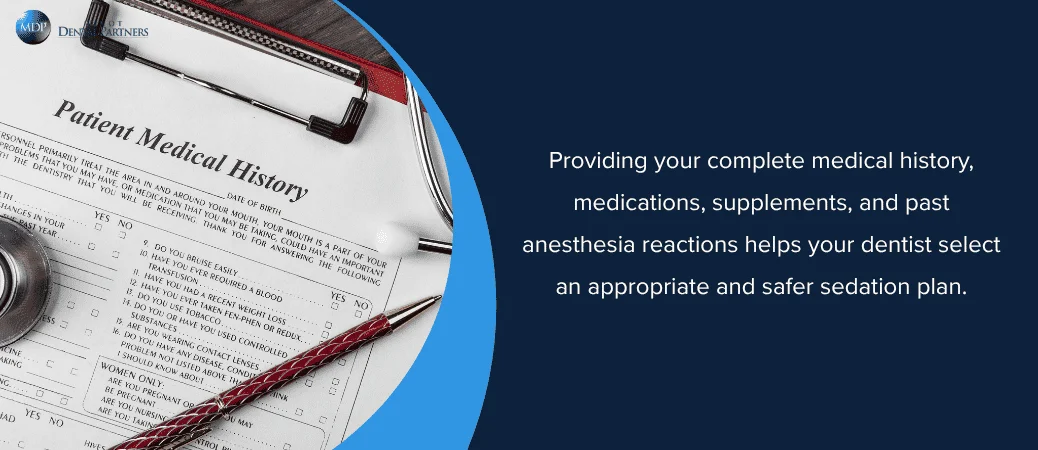
Sharing your full medical history and current medications helps your dentist avoid unsafe drug interactions and choose the right sedation level.
Certain health conditions and medications change how your body responds to sedation, so leaving nothing out protects you.
Bring a current list of prescriptions, supplements, and past reactions to anesthesia if you have had them.
What to Share About a Strong Gag Reflex or Sensitive Teeth
A strong or sensitive gag reflex is common, and telling your dental team about it in advance changes how they approach your visit.
Sedation can ease the reflex response that makes routine work feel unbearable, and your team can also adjust positioning and pacing around it.
Sensitive teeth are worth mentioning too, since it helps your dentist plan gentler steps during the filling or crown process.
Transportation, Recovery, and Possible Short-Term Effects
Oral sedation and IV sedation both require a ride home, since the medication affects coordination and judgment for hours after your appointment.
Nitrous oxide wears off quickly enough that most patients can drive themselves once it clears.
Short-term effects like drowsiness, dizziness, or dry mouth are common after deeper sedation and usually fade within the same day.
A Calmer Way to Get Needed Care Back on Track
Fear of the dentist does not have to keep controlling your oral health.
Sedation dentistry gives you a practical path back to routine fillings and crowns, without asking you to push through years of built-up anxiety on willpower alone.
Anxiety-free dentistry is not a promise that every visit will feel effortless. It is a realistic way to lower the fear enough that you can finally get the care your teeth need.
Frequently Asked Questions
Can I stay awake during sedation for a filling or crown?
Yes, with nitrous oxide and oral conscious sedation, most patients stay awake and can respond to their dental team throughout the appointment.
You will feel drowsy and deeply relaxed, but you are not fully asleep unless deeper sedation or general anesthesia has been planned for your specific case.
Will sedation replace the numbing injection for my dental treatment?
No, sedation and local anesthesia serve different purposes during the same appointment.
Local anesthesia numbs the specific tooth being treated, while sedation calms your overall anxiety and helps your body stay relaxed.
Can I drive myself home after nitrous oxide sedation?
Nitrous oxide usually wears off quickly once the gas is stopped. Your dental team will assess your recovery and let you know when it is safe to leave and resume normal activities.
Do I need someone to drive me home after oral sedation?
Yes, oral sedation affects your alertness and coordination for several hours, so plan for a ride home in advance. Driving yourself is not safe until the medication has fully worn off, which your dentist will discuss with you.
Can sedation help if I have a strong gag reflex?
Yes, sedation often reduces the intensity of a strong gag reflex, making routine fillings and crowns easier to complete. Telling your sedation dentist about this concern ahead of time allows them to plan positioning and pacing around it too.
What should I tell my sedation dentist before my appointment?
Share your full medical history, current medications, past reactions to anesthesia, and specific fears about needles, numbness, or gagging.
This information helps your sedation dentist choose the safest, most comfortable option for your visit.