



If you need several treatments, you may worry about booking visit after visit. You might feel nervous about each appointment, especially if you deal with dental phobia. Sedation dentistry can change that experience.
Yes, you can often combine multiple dental procedures under sedation with the right professional care.
Dentists regularly group treatments like fillings, crowns, deep cleanings, and even some surgical work into a single, longer appointment when it is safe for you.
With careful planning and a full health review, you can save time, reduce repeated stress, and finish more of your dental care services at once.
Knowing how it works helps you decide if this approach fits your needs and comfort level.
Key Takeaways
- You can often complete several treatments in one visit with sedation dentistry.
- Your dentist reviews your health and treatment plan to keep the visit safe and manageable.
- Combining care may reduce repeated anxiety and cut down on separate appointments.
Table of Content
- How Sedation Enables Multiple Procedures in One Visit
- Sedation Options Available for Combined Treatments
- Types of Dental Procedures Commonly Combined
- Safety Considerations and Patient Evaluation
- Planning and Recovery Following a Sedation Appointment
- Frequently Asked Questions
How Sedation Enables Multiple Procedures in One Visit
Sedation dentistry helps you stay calm and comfortable while your dentist completes several treatments at once. It lowers anxiety, improves focus for the dental team, and makes longer appointments easier to handle.

Reducing Dental Anxiety and Phobia
If you struggle with dental anxiety or dental phobia, long or repeated visits can feel overwhelming. Sedation dentistry helps you relax so you can stay in the chair without fear taking over.
A sedation dentist uses options like oral medication, nitrous oxide, or IV sedation to calm your nervous system. You remain safe and monitored while your dentist works.
Because you feel relaxed, your dentist can move from fillings to crowns or even extractions without stopping due to stress or panic.
Many patients choose sedation for multiple dental procedures to avoid spreading treatment across many visits.
You only prepare mentally once. You only recover once. That alone can make a big difference if fear has delayed your care.
Streamlining Complex or Overdue Dental Care
When you have several issues at the same time, breaking them into separate visits can stretch care over months. Sedation allows your dentist to complete multiple procedures in one visit while you stay comfortable.
Your dentist often starts with the most complex treatment, such as extractions or root canals, and then moves to restorations like fillings or crowns. This planned order keeps the appointment efficient and organized.
Clinics that focus on combining multiple dental procedures under sedation explain that this approach reduces total appointments and recovery periods.
Common treatments combined in one session:
- Multiple fillings
- Crown preparation
- Root canal therapy
- Tooth extractions
- Deep cleaning
You avoid repeated numbing injections and repeated time off work. Your mouth heals from one main appointment instead of several smaller ones.
Who Benefits Most From Combined Appointments
You may benefit from combined appointments if you:
- Have moderate to severe dental anxiety
- Need extensive or overdue treatment
- Have a tight work or travel schedule
- Struggle with a strong gag reflex
Busy adults often choose this option because it limits time away from work. Parents also find it easier to arrange one longer visit instead of several short ones.
Patients who travel for care especially value efficiency. Some clinics highlight how multiple procedures can be completed in one visit when sedation is used safely and carefully.
A sedation dentist will review your medical history first. You need proper screening to confirm that a longer appointment is safe for you.

Sedation Options Available for Combined Treatments
You can complete several dental procedures in one visit when you choose the right level of dental sedation.
Each option controls pain and anxiety in a different way and works best for certain types of treatment time and complexity.
Oral Sedation and Its Uses
Oral sedation uses a prescribed pill that you take before your appointment. It helps you feel calm and drowsy, but you stay awake and can respond to simple instructions.
Many sedation dentists recommend this option for 2–3 hours of combined care. It often works well for fillings, crown preparation, or deep cleanings done in one visit.
Combining multiple dental procedures under sedation, oral sedation fits most non-surgical combinations that take a few hours.
You will need someone to drive you home. The effects can last several hours, and you may not remember much of the visit. This option balances comfort with safety for longer but routine treatment.
IV Sedation for Extended Care
IV sedation goes through a small line placed in your arm or hand. Your dentist controls the level of medication during the visit, which allows steady and adjustable sedation.
Dentists often choose IV sedation when your treatment lasts more than two hours or includes surgery. It works well for implant placement, multiple extractions, or full-mouth care done in one sitting.
Many practices note that IV sedation is ideal for patients who need several procedures in one visit or who feel strong dental fear.
You stay deeply relaxed but can still respond if needed. You must arrange a ride home and plan for a day of rest. Your sedation dentist will review your medical history to confirm that extended care is safe for you.
Nitrous Oxide (Laughing Gas) for Mild Relaxation
Nitrous oxide, often called laughing gas, provides mild relaxation through a small mask placed over your nose. You breathe it in during treatment, and the effects begin within minutes.
This option suits shorter combined visits, such as two or three fillings completed in under 90 minutes. It reduces anxiety and eases your gag reflex without putting you to sleep.
Many offices explain that nitrous works well for nervous patients who want to stay fully aware but calm. The biggest benefit is quick recovery.
Once the mask comes off, the effects fade fast, and you can usually drive yourself home.
When to Consider General Anesthesia
General anesthesia places you in a fully unconscious state. A trained provider monitors your breathing, heart rate, and blood pressure the entire time.
Dentists may recommend it for very complex treatment, extensive oral surgery, or patients who cannot tolerate dental care while awake. It also helps some people with severe dental phobia or special healthcare needs.
This option involves more planning and higher cost. You may receive care in a hospital or surgical center instead of a regular dental office.
Your dentist will review your health history and explain the risks and benefits. General anesthesia makes sense when lighter sedation options will not provide enough comfort or control for your combined procedures.
Types of Dental Procedures Commonly Combined
You can complete many dental services in one visit when your dentist plans enough time and uses the right level of sedation.
Dentists often group treatments that affect the same area of your mouth or require similar healing steps.
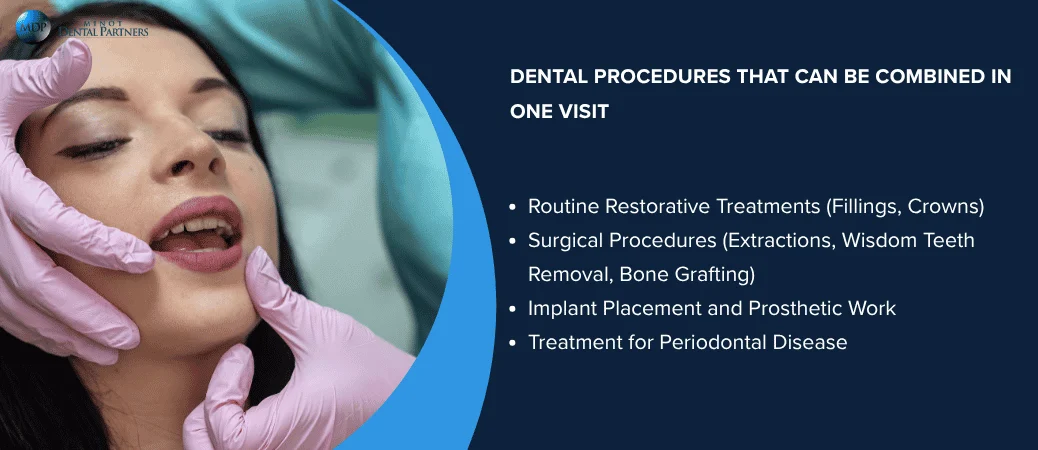
Routine Restorative Treatments (Fillings, Crowns)
You can often combine fillings and crowns in one extended appointment. This works well when several teeth have decay or old restorations that need replacement.
For example, your dentist may place 2–4 fillings and prepare a tooth for a crown during the same visit. If the office offers same-day crown technology, you may even receive the final crown before you leave.
Sedation helps you stay relaxed during longer visits. Dentists frequently group fillings and crown preparation to reduce repeat appointments.
You save time, limit numbing injections, and avoid taking several days off work. Your dentist will still check that your bite stays balanced and that you can keep your mouth open comfortably for the full visit.
Surgical Procedures (Extractions, Wisdom Teeth Removal, Bone Grafting)
You can also combine surgical treatments, such as extractions and wisdom teeth removal, in one session. Dentists often remove multiple teeth at once to shorten your total recovery period.
If you need bone grafting after an extraction, your dentist may complete it during the same appointment. This protects the jawbone and prepares the site for future dental implants.
Sedation plays a key role in surgical cases. Many practices explain that multiple tooth extractions in one visit using sedation can reduce stress and combine healing into a single recovery window.
Your dentist will review your health history first. Conditions like heart disease, uncontrolled diabetes, or certain medications may limit how much surgery you can safely complete at once.
Implant Placement and Prosthetic Work
Dental implants often involve several steps, but some parts can happen together. For example, your dentist may remove a damaged tooth and place the implant in the same visit if your bone is healthy.
In more complex cases, you may combine extractions, bone grafting, and implant placement under one sedation appointment. This approach reduces repeat surgeries and extra healing phases.
Some offices also pair implant placement with impressions or temporary crowns. Extended appointments can replace several shorter visits when your case allows.
Your dentist will check bone density, gum health, and bite alignment before making this plan. Not every patient qualifies for same-day implant placement, but many can safely combine key steps.
Treatment for Periodontal Disease
If you have periodontal disease, your dentist may complete a full deep cleaning in one longer session. This treatment, called scaling and root planing, removes plaque and bacteria from below the gum line.
Instead of cleaning one section at a time over four visits, you may treat all quadrants in a single appointment. Sedation can help you stay comfortable during this longer procedure.
Some dentists also combine deep cleaning with minor extractions or restorative work when infection affects nearby teeth. Your dentist will assess the severity of your periodontal disease first.
If your gums are very inflamed, you may need to stage treatment to support proper healing.
Safety Considerations and Patient Evaluation
You can combine multiple dental procedures under one sedation appointment, but your dentist must review your health, monitor you closely, and limit how long and complex the visit becomes.
Careful planning keeps dental sedation safe and effective.
Medical Health and Candidacy
Your sedation dentist starts with a full medical review. You share your health history, current medications, allergies, and past reactions to anesthesia.
Certain conditions need extra care. These include heart disease, lung problems, sleep apnea, diabetes, and high blood pressure. You may also need clearance from your physician before treatment.
Your dentist checks:
- Blood pressure and heart rate
- Weight and age
- Use of blood thinners
- Pregnancy status
- History of anxiety or panic during dental care
Not every patient is a good fit for deep dental sedation or general anesthesia. Some people do better with mild oral sedation or nitrous oxide.
A careful screening lowers risk. It also helps your dentist decide how many multiple dental procedures you can safely complete in one visit.
Monitoring and Recovery Measures
Safety does not stop once sedation begins. Your dental team tracks your vital signs during the entire appointment.
They monitor:
- Oxygen levels
- Heart rate
- Blood pressure
- Breathing pattern
Trained staff stay in the room while you are sedated. They adjust medication as needed to keep you stable and comfortable.
After the procedures, you move to a recovery area. The team watches you until you are alert, breathing well, and able to respond clearly.
You must arrange for a responsible adult to drive you home if you receive moderate sedation or general anesthesia.
You may feel drowsy for several hours, so you should avoid driving, signing legal papers, or making major decisions that day.
Limits on Procedure Length and Complexity
Even with dental sedation, there are limits. Longer visits increase physical stress and fatigue.
Your sedation dentist considers:
- Total treatment time
- Number of teeth involved
- Amount of local anesthetic used
- Expected bleeding or swelling
Some procedures fit well together. For example, you might combine fillings, crowns, or extractions in one session.
Very complex full-mouth work may require staged visits. In some cases, general anesthesia in a surgical setting is safer than office-based sedation.
Your dentist balances efficiency with safety. The goal is to complete as much treatment as is reasonable without pushing beyond safe time or comfort limits.
Planning and Recovery Following a Sedation Appointment
You need a clear plan before combining multiple procedures in one visit. Good preparation and careful aftercare help you stay safe and heal without problems.
Consultation and Treatment Sequencing

You start with a detailed exam and health review. Your dentist checks your medical history, current medications, allergies, and past reactions to dental sedation or local anesthesia.
Be honest about heart issues, breathing problems, sleep apnea, or pregnancy. These details affect the type and level of sedation used.
Your dentist then maps out the order of care. For multiple procedures in one visit, they often complete treatments in this sequence:
- Deep cleanings or extractions first
- Root canals before crowns
- Implants or grafting before final restorations
This order reduces infection risk and limits repeated numbing. Even with dental sedation, your dentist still uses local anesthesia to block pain in specific areas.
You also review time estimates. Longer visits may require breaks, IV fluids, or staged treatment if the plan feels too long for one day.
What to Expect on the Day of Care
Follow all instructions about food and drink. If you receive oral or IV dental sedation, you may need to stop eating for several hours before your visit.
Arrange for a responsible adult to drive you home. You should not drive, work, or make legal decisions the same day.
At the office, the team checks your blood pressure, heart rate, and oxygen levels. During treatment, they continue to monitor you closely.
Even under sedation, you may feel pressure or movement. Local anesthesia prevents sharp pain while the dentist completes each step.
Because you are relaxed, your dentist can often complete more work efficiently. This makes multiple procedures in one visit more manageable.
Aftercare Instructions and Healing
Plan to rest for the remainder of the day. Sedation can make you feel sleepy, unsteady, or forgetful for several hours.
Follow written instructions carefully. You may receive guidance such as:
- Take prescribed pain medicine as directed
- Use ice packs to limit swelling
- Avoid straws if you had extractions
- Eat soft foods for the first 24 hours
If you had several procedures, healing times may overlap. Mild swelling and soreness are common, especially when extractions or implants are involved.
Call your dentist if you notice heavy bleeding, severe pain that does not improve, fever, or signs of infection.
Schedule follow-up visits as advised. These checks ensure your gums heal well and that crowns, fillings, or other restorations fit properly.
Frequently Asked Questions
You can often complete several treatments in one sedation visit, including fillings, crowns, cleanings, and some surgical procedures.
The number and type depend on your health, the length of the appointment, and the level of sedation your dentist recommends.
What types of dental treatments can be safely done in the same sedation visit?
You can combine common treatments like 2–4 fillings, crown preparation, deep cleaning, extractions, and even implant placement in one longer visit.
Many offices group procedures in different areas of your mouth to work more efficiently.
Some dentists outline common combinations such as fillings with a crown or full deep cleanings under oral or IV sedation.
Your dentist will review your medical history, the complexity of each procedure, and your recovery needs before confirming the plan.
How many fillings can be completed in one appointment with sedation?
You can often complete two to four fillings in one visit with nitrous oxide or oral sedation. The exact number depends on the size and location of the cavities.
If the fillings are small and in the same area, your dentist may finish them within 90 to 120 minutes. Larger or deeper cavities may take longer.
Sedation allows your dentist to work steadily without stopping because of discomfort or anxiety.
Is it possible to combine a crown, root canal, and filling in one day under sedation?
Yes, you can often complete a root canal and crown preparation in the same visit if the tooth qualifies. Your dentist may also place a filling in another area during that appointment.
This approach works best when the infection is controlled and your overall health allows for a longer visit. Many practices explain that multiple dental treatments can be done together when health, timing, and healing needs line up.
You may still need a short follow-up visit to place the final crown after the lab completes it.
How long can a sedation dentistry appointment typically last?
A sedation visit can last from 90 minutes to four hours. The length depends on the number of procedures and the type of sedation used.
Nitrous oxide often works for shorter visits. Oral sedation and IV sedation support longer sessions, especially when surgery is involved. Your dentist will set a time limit based on your comfort and safety.
Who is a good candidate for having multiple dental procedures done at once with sedation?
You may be a good candidate if you have moderate to severe dental anxiety, need several treatments, or have delayed care for years. Sedation can help you complete more work in fewer visits.
You also need stable overall health and clearance for the chosen sedation method. People with certain medical conditions may require extra evaluation first.
If you want to reduce repeat stress and time off work, a longer combined visit may fit your needs.
How do I find a reputable sedation dentist near me for a longer appointment?
Start by looking for a dentist who clearly lists sedation options such as nitrous oxide, oral sedation, and IV sedation. Review their training and confirm they monitor vital signs during longer procedures.
Ask direct questions about experience with extended visits and combined treatments. You should also check reviews and confirm that the office explains costs, risks, and recovery steps in clear language.