


Getting a dental implant is a big step toward restoring your smile, but knowing what to expect during recovery can feel confusing.
Some pain after surgery is completely normal, but how do you tell the difference between typical healing discomfort and a sign that something is wrong?
Normal dental implant pain feels like a localized ache or pressure around the surgical area that gradually improves over the first week, while red flags include severe pain that gets worse, increasing swelling after a few days, fever, or a loose implant.
The key is understanding what your body should feel like during each stage of healing so you can spot problems early.
Most patients experience mild to moderate soreness, some swelling, and maybe light bruising in the first few days after getting an implant. This discomfort should steadily decrease as your body heals.
Learn about the dental implant healing pain timeline to recognize these warning signs, which help protect your investment and ensure your implant heals properly.
Key Takeaways
- Normal healing pain is mild to moderate and decreases steadily within the first week after surgery
- Warning signs like persistent pain, increasing swelling, fever, or a loose implant require immediate dental attention
- Following your dentist’s care instructions and attending follow-up appointments helps catch problems early and supports successful healing
Understanding Normal Dental Implant Healing and Pain
After dental implants are placed, you’ll experience some discomfort as your body adapts to the new titanium post in your jawbone. The pain typically peaks within the first 72 hours and steadily decreases as healing progresses over several months.
Expected Sensations After Implant Surgery
Right after your implant surgery, you’ll feel soreness at the surgical site. This is your body’s natural response to the procedure. The discomfort typically resembles having a tooth extracted.
Most people describe the pain as mild to moderate rather than severe. You might also notice:
- Localized tenderness around the implant area
- Dull throbbing that responds well to over-the-counter pain medication
- Pressure sensations in your jaw
- Mild swelling in the gums and cheeks
The most intense pain occurs in the first 24 to 72 hours after surgery. You can manage this discomfort with prescribed pain relievers. Many patients return to work within one to two days. Full-arch restoration procedures may cause more widespread soreness because multiple implants are placed simultaneously.
Healing Timeline and Stages
Your implant healing follows a predictable pattern over several months. Understanding this timeline helps you know what’s normal at each stage.
First Week: Pain decreases significantly, and swelling starts to subside. You’ll still feel some tenderness when chewing.
Weeks 2-4: You’ll notice a significant reduction in pain as tissues heal around the implant post. Bruising fades completely during this period.
Months 2-6: Minor discomfort may appear occasionally but should be barely noticeable. Your jawbone is actively fusing with the implant during this time.
Any bruising around your cheeks and jawline should fade within the first week. By week four, you should feel mostly back to normal with only occasional mild sensitivity.
Role of Osseointegration in Recovery
Osseointegration is the process where your jawbone grows around and fuses with the titanium implant. This biological bonding is what makes dental implants so stable and long-lasting.
During osseointegration, you shouldn’t feel much pain. The process takes three to six months depending on your bone density and overall health. Your jawbone cells gradually attach to the implant surface, creating a strong foundation.
You might feel occasional slight pressure or odd sensations as the bone remodels itself. This is completely normal and different from the initial surgical pain. The implant becomes part of your jaw structure during this phase, which is why dental implants can last decades with proper care.
Symptoms of Normal Implant Healing Pain
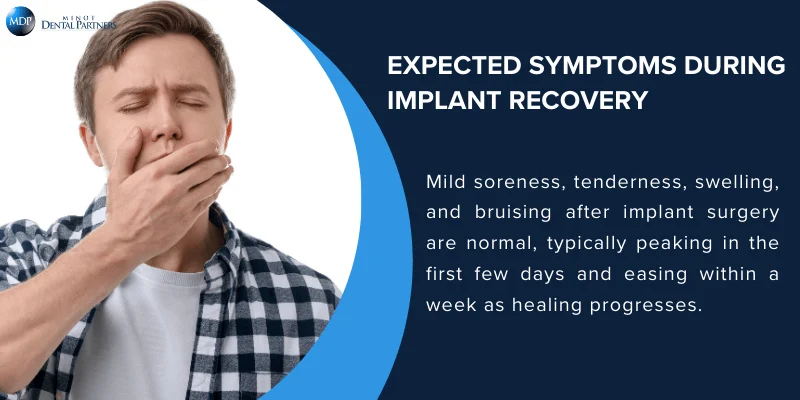
After getting a dental implant, you’ll experience some predictable discomfort as your body heals. Most pain peaks within the first few days and gradually improves as the surgical site recovers.
Common Discomforts and Their Causes
Your mouth will feel tender around the implant site during the first week after surgery. This happens because your dentist made an incision in your gum tissue and drilled into your jawbone to place the metal post.
You might notice several normal sensations:
- Soreness when you touch the area or chew nearby
- Throbbing that feels like a dull, rhythmic ache
- Tenderness in your gums around the surgical site
- Pressure as your jawbone begins healing around the implant
These feelings occur because your body is working to heal the surgical wound. Blood flow increases to the area, bringing nutrients and immune cells that repair damaged tissue. Your nerves also become more sensitive after being disturbed during the procedure.
Typical Duration of Pain and Sensitivity
The worst dental implant pain usually happens in the first 24 to 72 hours after your procedure. During this time, you’ll likely need pain medication your dentist prescribed.
Most people find their discomfort drops significantly after the third day. By the end of the first week, you should only feel mild soreness when touching the area or eating.
Complete implant healing takes several months as your bone fuses with the metal post. However, the acute pain phase only lasts about 7 to 10 days. If you still have significant pain after two weeks, contact your dentist.
Post-Surgical Swelling and Bruising
Swelling of your face and gums is a normal part of recovery. You’ll probably notice your cheek looks puffy on the side where you got the implant. This peaks around day two or three after surgery.
The swelling happens because your body sends extra fluid to the surgical area as part of the healing process. You might also see bruising on your face or gums that ranges from purple to yellow as it fades.
Both swelling and bruising should gradually improve over the first week. Applying ice packs during the first 48 hours helps reduce the extent of swelling. Minor bleeding at the surgical site is also normal for the first day or two.
Not sure if your implant discomfort is part of normal healing or a warning sign? Schedule a post-procedure checkup at Minot Dental Partners to evaluate your recovery and ensure everything is healing properly.
Red Flags: Warning Signs of Implant Healing Problems
Some pain after implant surgery is normal, but certain symptoms mean something is wrong. Sharp pain that won’t go away, movement in your implant, or trouble biting down properly all signal potential implant failure that needs immediate attention.
Persistent or Increasing Pain
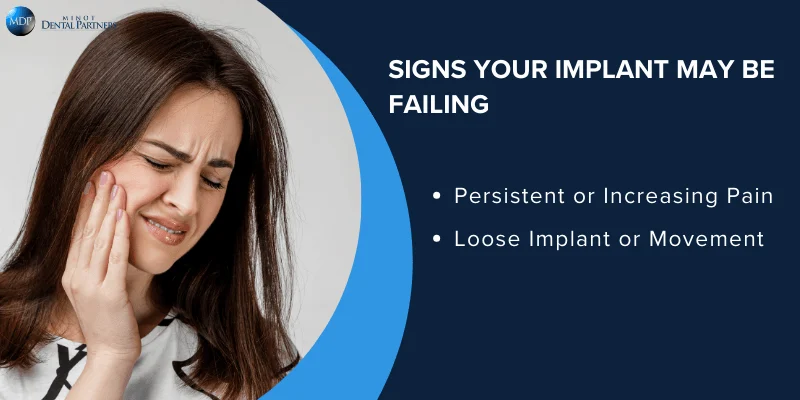
Pain should get better each day after your surgery, not worse. If you’re experiencing sharp, throbbing pain that lasts beyond the first week or gets stronger over time, this indicates a problem with healing.
Normal discomfort fades within 3-7 days and responds well to over-the-counter pain medication. Persistent pain that keeps you awake at night or makes it hard to focus during the day is abnormal. This type of ongoing discomfort often points to infection or issues with how the implant is bonding to your jawbone.
Pay attention to pain that returns after initially improving. This pattern suggests possible implant failure or infection developing around the implant site. You should contact your dentist right away if pain medication stops working or you need to take it more frequently than prescribed.
Implant rejection happens rarely, but persistent pain is one of its main symptoms. Your body may be reacting negatively to the implant material.
Loose Implant or Movement
Your implant should feel completely stable once it’s placed. A properly placed dental implant becomes integrated into your jawbone and should not wiggle or shift at all.
Any movement you can feel with your tongue or fingers means the implant isn’t bonding correctly to the bone. An implant feels loose when osseointegration fails or an infection damages the surrounding bone tissue. This mobility won’t fix itself and typically gets worse without treatment.
Try gently pressing on the implant with your tongue. It should feel as solid as your natural teeth. Even slight wiggling or rotation is a serious warning sign that requires immediate dental care.
Signs your implant is loose:
- The implant moves when you touch it
- You feel shifting when biting down
- The implant rotates slightly in the socket
- Gap appears between the implant and gum tissue
Difficulty Chewing and Bite Changes
Your bite should feel natural once the initial swelling goes down. If you notice your teeth don’t line up correctly when you close your mouth, this suggests problems with implant placement or healing.
Bite misalignment creates uneven pressure on your implant and surrounding teeth. You might feel like one side of your mouth hits first when you chew, or that your jaw shifts to one side. This abnormal pressure can prevent proper healing and lead to implant failure.
Pain when chewing firm foods beyond the first two weeks indicates trouble. While you should stick to soft foods initially, gradually you should be able to eat normally. Ongoing discomfort when biting suggests the implant isn’t integrating properly with your bone.
Contact your dentist if you experience clicking sounds, jaw pain, or headaches related to your bite. These symptoms mean the implant position needs adjustment before permanent damage occurs.
Detecting Infection, Gum, and Bone Complications
Knowing how to spot problems with your dental implant can make the difference between saving it and losing it. Infections, gum issues, and bone loss each have their own warning signs that you need to recognize quickly.
Signs of Infection Around Implants
Infections after dental implant surgery are uncommon but can happen, so you need to know what to watch for. The most obvious sign is pus or discharge coming from around your implant site. This yellow, green, or white fluid means bacteria have taken hold.
You might also notice these infection warning signs:
- Persistent pain that doesn’t get better or actually gets worse after the first week
- Red, swollen gums that feel hot to the touch
- Fever or chills that suggest your body is fighting an infection
- Bad taste or smell in your mouth that wasn’t there before
- Tender lymph nodes under your jaw or in your neck
The gum tissue around an infected implant often looks shiny and puffy rather than healthy and pink. If you press gently on the area, you might see more pus come out. Any of these signs of infection after dental implant surgery needs immediate attention from your dentist.
Identifying Gum Inflammation and Recession
Gum inflammation around your implant can start small but turn into serious problems if you ignore it. Early gum inflammation typically presents as redness and slight swelling at the gum line. Your gums might bleed when you brush or floss around the implant.
Peri-implantitis is an inflammatory condition that affects the tissues around your dental implant and leads to bone loss. This is basically gum disease for implants. The gums become very red and puffy, and they may begin to pull away from the implant.
When your gums recede, you’ll see more of the metal parts of your implant showing through. The tissue may appear to be shrinking or moving downward. This creates pockets where bacteria can hide and multiply. Healthy gums should fit snugly around your implant without gaps or spaces.
Recognizing Bone Loss and Its Impact
Bone loss around your implant is serious because the bone holds your implant in place. You usually can’t see bone loss directly, but you’ll notice its effects. Your implant might feel slightly loose or move when you touch it. This mobility is a major red flag.
Other signs that suggest bone loss include:
- Gums that keep receding and expose more implant
- A change in how your bite feels
- Increasing gaps between the implant crown and your gum
- Pain when chewing or putting pressure on the implant
Your dentist can see bone loss on X-rays before you feel any symptoms. That’s why keeping your regular dental checkups matters so much. Peri-implantitis causes progressive loss of supporting bone, which can lead to complete implant failure if you don’t treat it. The bone around a healthy implant should stay stable year after year.
Experiencing pain that doesn’t seem to improve after implant surgery? Contact our clinic in Minot, ND, so we can assess your symptoms and prevent small issues from becoming serious complications.
Factors That Can Worsen Implant Pain or Complications
Several preventable issues can turn normal healing into a painful problem. Poor cleaning habits, teeth grinding, and loose components all put extra stress on your implant.
Oral Hygiene Practices and Risks
Your oral hygiene routine plays a huge role in whether your implant heals properly or develops problems. Skipping brushing or flossing at the implant site allows bacteria to accumulate, which can lead to infection and inflammation.
When you don’t clean your implant correctly, you risk developing peri-implantitis. This is a serious condition where infection spreads to the bone supporting your implant. The warning signs include bleeding, swelling, and pain that gets worse instead of better.
You need to brush gently around your implant twice daily and use a soft-bristled toothbrush. Floss carefully between the implant and neighboring teeth to remove food particles. Your dentist may recommend special tools such as interdental brushes or water flossers for better implant care.
Smoking is especially harmful because it reduces blood flow to your gums and slows healing. If you smoke, your risk of implant failure goes up significantly.
Bruxism and Pressure on Implants
Grinding or clenching your teeth puts enormous pressure on dental implants. This condition, called bruxism, often occurs during sleep without the individual’s awareness.
The constant force from bruxism can damage the bone around your implant before it fully heals. You may notice increased pain or sensitivity, or feel the implant becoming loose. The excessive pressure can also crack the crown or damage internal components.
A custom nightguard protects your implant by cushioning the grinding forces. Your dentist creates this guard to fit your mouth exactly, and you wear it while sleeping. Most people with bruxism need to use their nightguard every night to prevent complications.
If you wake up with jaw pain or headaches, tell your dentist right away. These are common signs that you’re grinding your teeth at night.
Loose Abutment or Crown Issues
The abutment connects your implant to the crown on top. If this connection becomes loose, you’ll likely feel pain, movement, or an odd sensation when chewing.
A loose abutment allows bacteria to get trapped underneath, creating infection and inflammation. The movement also puts stress on the implant itself. You might notice the crown feels wobbly or sits differently than before.
A loose crown causes similar problems and needs immediate attention. Don’t try to tighten it yourself or ignore the issue. Contact your dentist as soon as you notice any movement or unusual feelings around your implant.
Your dentist can tighten the abutment or recement the crown in a quick appointment. Catching these problems early prevents more serious damage to your implant and surrounding bone.
Ensuring Healthy Healing and When to Seek Help
Taking care of your implant properly speeds up healing and helps you spot problems early. Good oral hygiene and knowing what milestones to watch for will keep your recovery on track.
Self-Care and Implant Maintenance
Clean your mouth gently but thoroughly during the healing period. Use a soft-bristled toothbrush to clean the teeth around your implant site, but avoid brushing directly on the surgical area for the first week.
Rinse with warm salt water two to three times per day to keep bacteria away. Mix one teaspoon of salt in eight ounces of warm water and swish gently for 30 seconds. Your dentist may also prescribe an antimicrobial mouthwash.
Protect your implant by avoiding hard or crunchy foods for at least two weeks. Chew on the opposite side of your mouth when you start eating solid foods again.
Don’t smoke or use tobacco products during recovery, as they reduce blood flow and slow bone healing. Also avoid drinking through straws, as the suction can disturb the blood clot forming around your implant.
Tracking Progress and Recovery Milestones
Your healing happens in stages, and knowing what to expect helps you recognize healthy progress. Dental implant healing may take 3 to 6 months, depending on your age and overall health.
During Week 1, you’ll have some swelling and discomfort that should peak around day three, then gradually improve. Light bleeding or oozing is normal for the first 24 to 48 hours.
Weeks 2-3 bring reduced swelling as your gum tissue starts to heal and close around the implant. Pain should be minimal by this point.
Months 2-6 involve osseointegration, where your jawbone fuses with the titanium implant. You won’t feel this happening, but it’s the most important phase for long-term success. Understanding dental implant healing stages helps you know if you’re on schedule.
When to Contact Your Dentist
Reach out to your dentist right away if you notice any warning signs of complications. Severe or worsening pain after the first five days isn’t normal and could signal infection or implant failure.
Call immediately if you experience:
- Fever above 101°F
- Heavy bleeding that doesn’t stop after 24 hours
- Pus or yellow discharge from the implant site
- Swelling that gets worse after day three
- A foul taste or smell that doesn’t go away with rinsing
You should also contact your dentist if your implant feels loose or if you notice the area around it turning dark red or purple. Signs of infection or other problems require quick treatment to save your implant.
Don’t wait to see if symptoms improve on their own. Early intervention makes a big difference in outcomes.
If swelling, soreness, or sensitivity feels worse instead of better, don’t wait. Talk with our dental team right away to protect your implant and your oral health.
Frequently Asked Questions
Most people have similar concerns about dental implant pain and healing. The timing of discomfort, warning signs of problems, and knowing what feels normal are the most common questions patients ask.
How long should I expect to experience pain following a dental implant procedure?
You’ll likely feel mild discomfort for the first few days after your dental implant surgery. The pain usually peaks within the first 48 hours and then starts to get better.
By the end of the first week, you should notice a clear improvement. Most people find that any remaining soreness is manageable with over-the-counter pain medication.
Within two weeks, your discomfort should be minimal and your gums should look healthier. If you’re still experiencing significant pain after this point, something may be wrong.
What signs indicate that my dental implant might not be healing correctly?
Watch for pain that gets worse instead of better in the days following your procedure. This could mean there’s a problem that needs attention.
Swelling that increases or doesn’t go down after a few days is a red flag. You should also look for pus or discharge around the implant site.
A loose or wobbly implant is never normal and requires immediate care. Persistent pain following dental implant placement can be a sign of an injured nerve, especially if you feel numbness or tingling in your lips.
At what point should the pain from a dental implant start to diminish?
Your pain should start getting better within 2-3 days after surgery. Each day, you should feel a little more comfortable than the day before.
If your pain stays the same or gets worse after the third day, call your dentist. This isn’t part of normal healing.
Most people can return to their regular activities within a week. You might still feel some tenderness, but it shouldn’t interfere with your daily life.
What are common causes of late-onset pain in dental implants?
Late-onset pain can happen from infection around the implant site. Bacteria buildup can cause inflammation weeks or even months after your surgery.
Teeth grinding or clenching can put too much pressure on your implant. This can cause pain even after the initial healing period is over.
Poor oral hygiene lets bacteria accumulate around your implant. You have the highest chances of successful treatment if you see a dental professional within 36 hours of noticing severe pain.
Are there specific symptoms of peri-implantitis I should be aware of?
Peri-implantitis causes your gums around the implant to become red, painful, or tender to touch. This happens when bacteria build up and cause chronic inflammation.
You might notice bleeding when brushing your teeth near the implant. This is one of the earliest warning signs.
Smoking or having diabetes increases your risk of developing this condition. Over time, it can cause your gum tissues and bone to break down if left untreated.
What type of pain is considered normal immediately after receiving a dental implant?
Expect to feel soreness at the surgical site right after your procedure. This feels similar to the achiness you might have after other dental work.
Some swelling in your gums and face is normal. You might also see minor bruising on your skin or gums around the area.
The discomfort should feel manageable with the pain medication your dentist prescribes. If the pain feels sharp, shooting, or unbearable, that’s not normal and you should contact your dentist right away.