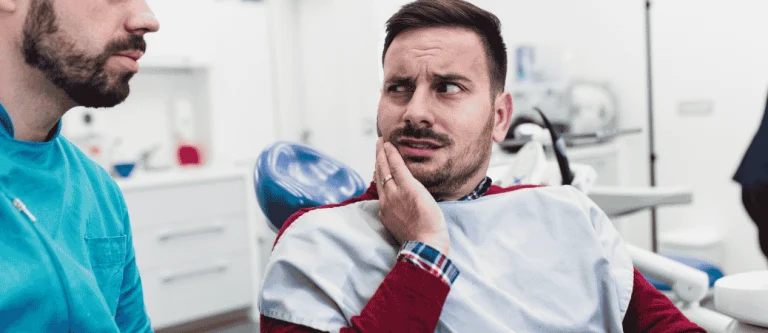


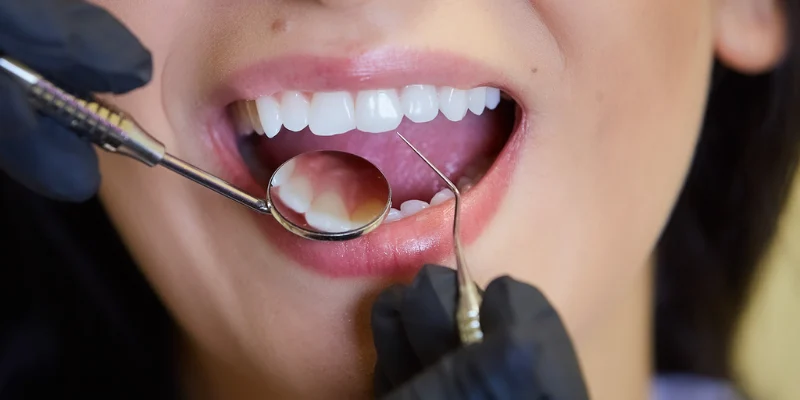
Getting dental implants is a big step toward improving your smile and oral health. But once the procedure is done, you probably have questions about getting back to your normal routine.
Can you go to work the next day? When is it safe to take that trip you’ve been planning?
For most simple dental implant procedures, you can return to work within one to two days, while travel is generally safe after three to seven days of healing.
The timeline depends on how complex your surgery was and how well your body recovers. If you had multiple dental implants or bone grafting, you might need more time before resuming normal activities.
Planning ahead helps you heal properly and avoid complications. Understanding what to expect during recovery lets you schedule work, travel, and daily activities without putting your new implants at risk.
This guide covers everything you need to know about managing your time after dental implant surgery.
Key Takeaways
- Most people can return to work one to two days after simple dental implant surgery
- Traveling after dental implants is typically safe after three to seven days for uncomplicated procedures
- Complex procedures like bone grafting may require waiting 10 to 14 days before resuming normal activities
Understanding Dental Implant Surgery and Recovery
Dental implant surgery involves placing a titanium post into your jawbone, which then fuses through osseointegration over several months.
Most people experience mild to moderate discomfort and need one to two weeks before returning to normal activities.
What Dental Implants Involve
Dental implant surgery is a procedure where your dentist places a small titanium post into your jawbone to replace a missing tooth root. The surgery typically takes one to two hours per implant.
Your dentist will numb the area with local anesthesia. They make a small cut in your gum tissue and drill a precise hole into the jawbone. The titanium post gets inserted into this space.
Is dental implant surgery painful? Most patients report feeling pressure but not pain during the procedure. After the anesthesia wears off, you’ll likely feel some soreness.
The surgical site gets closed with stitches. Some dentists place a temporary crown right away, while others let the area heal first.
How Osseointegration Impacts Healing
Osseointegration is the process where your jawbone grows around and bonds with the titanium implant. This creates a stable foundation for your replacement tooth.
The bone fusion process typically takes 3-6 months to complete. Your jawbone cells attach to the implant surface and gradually build new bone tissue around it.
Several factors affect how quickly osseointegration happens:
- Bone density – denser bone integrates faster
- Location – lower jaw bone is typically denser than upper jaw
- Health habits – smoking slows down bone healing
- Age – younger patients often heal faster
You won’t feel osseointegration happening. Your dentist monitors the process through follow-up appointments and x-rays to confirm the implant is secure before adding the final crown.
Common Symptoms and Downtime Expectations
The initial recovery from dental implant surgery takes about one to two weeks. During this time, swelling and discomfort decrease after the first week.
You’ll experience some bleeding for the first 24-48 hours. Light oozing is normal and stops when a blood clot forms over the surgical site.
Swelling usually peaks around day three. Your cheek might look puffy or feel tight. Bruising sometimes appears on your face or neck.
Pain levels vary by person. Most people describe it as mild to moderate aching. The discomfort is usually manageable with over-the-counter pain relievers.
Typical symptoms include:
- Tenderness at the implant site
- Minor bleeding or oozing
- Swelling of gums and face
- Slight bruising
Most people can return to normal activities within a few days. However, you should avoid strenuous exercise for at least one week to prevent complications.
When and How to Return to Work
Most people need one to three days off after getting dental implants, though your specific healing timeline depends on the complexity of your procedure and the type of work you do.
Planning ahead helps you recover comfortably while meeting your work obligations.
Typical Downtime Recommendations
For a single dental implant, many patients return to work the next day. The procedure itself is less invasive than you might expect, and most people feel well enough to resume light activities within 24 hours.
However, more complex cases require extra healing time. If you receive multiple implants, bone grafts, or sinus lifts, you should plan for three to five days off work.
It’s best to take the rest of the day off after your procedure, even though dental implant surgery is considered minor. Your body needs time to start the healing process, and pushing yourself too soon can lead to complications.
Factors That Affect Your Return to Work
Number of implants placed: A single implant causes minimal discomfort, while multiple implants typically lead to more swelling and tenderness. Each additional implant extends your recovery slightly.
Additional procedures performed: Extractions, bone grafting, or sinus lifts during the same appointment add complexity to your surgery. These procedures cause more soreness and may double your time off work.
Your healing response: Everyone recovers differently based on their age, overall health, and how their body responds to surgery. Some people bounce back quickly, while others need more rest.
Medication and pain management: Following your dentist’s instructions for prescribed medications helps control discomfort and speeds up your return to normal activities.
Desk Jobs vs. Physically Demanding Roles
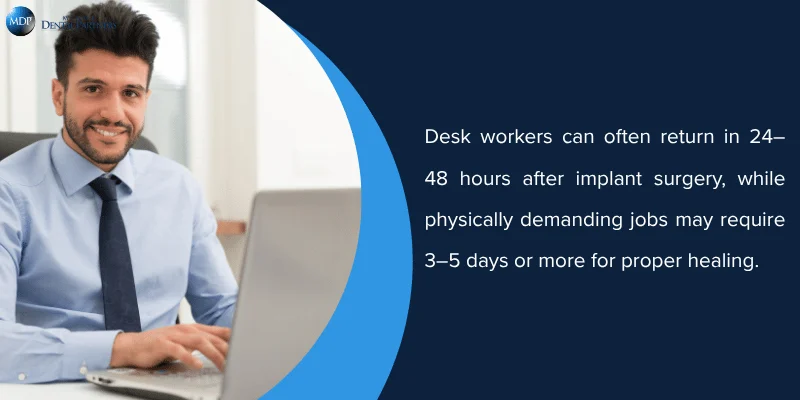
Your job type plays the biggest role in when you can safely return to work after dental implant surgery.
Desk jobs: You can typically return within 24 to 48 hours. Since you’re sitting and working at a computer, there’s minimal risk of disturbing the surgical site.
Physically demanding roles: Jobs involving heavy lifting, bending, or strenuous activity require three to five days off minimum. Physical exertion increases blood flow to your head and jaw, which can worsen swelling and bleeding.
If you work outdoors in hot conditions or around dust and debris, you may need extra time off to protect your healing implants from irritation and infection.
Managing Downtime and Self-Care After Surgery
Recovery requires rest, proper care, and attention to your body’s needs. Planning for comfort, managing discomfort, and maintaining good nutrition will help you heal faster and feel better during the first few days after your procedure.
Tips for a Comfortable Recovery at Home
Creating a comfortable space makes recovery easier. Set up a recovery area with essentials like pillows, blankets, medications, and entertainment within reach before your procedure.
Keep your head elevated when resting. Use two or three pillows to reduce swelling and improve comfort. This position helps blood flow and can minimize facial puffiness.
Essential items to have ready:
- Ice packs wrapped in soft towels
- Extra pillows for elevation
- Prescribed medications and pain relievers
- Phone charger and entertainment
- Soft tissues or gauze
Arrange for help during the first 24 to 48 hours. You may feel drowsy from anesthesia or pain medication. Having someone assist with meals, medication reminders, and basic tasks reduces stress.
Wear loose, comfortable clothing. Avoid anything that needs to be pulled over your head. Button-up shirts or zip hoodies work best and won’t disturb your surgical site.
Pain, Swelling, and Oral Hygiene Strategies
Some discomfort after dental implant surgery is normal, but it should be manageable. Most people find that any pain peaks within the first 48 hours and gradually improves. Take prescribed pain medication as directed, even before discomfort becomes severe.
Apply ice packs to your face for 15 to 20 minutes at a time during the first day. This reduces swelling and numbs the area naturally. After 48 hours, switch to warm compresses if swelling persists.
Swelling management timeline:
- First 24-48 hours: Ice packs, head elevation, minimal activity
- Days 3-5: Swelling peaks then begins to decrease
- After one week: Most visible swelling resolves
Avoid brushing directly on the surgical site for the first few days. Gently rinse your mouth with warm salt water (one teaspoon salt in eight ounces of water) after meals. Start careful brushing of other teeth using a soft-bristled toothbrush.
Don’t spit forcefully or use straws. These actions create suction that can disturb healing tissues or cause bleeding.
Soft Foods and Hydration Essentials
Your diet plays a major role in recovery. Stick to soft, cool, or room-temperature foods for at least three to five days. Avoid anything hot, spicy, crunchy, or chewy that could irritate your surgical site.
Stay hydrated throughout recovery by drinking plenty of water. Dehydration slows healing and can make you feel worse. Sip water frequently rather than gulping large amounts at once.
Good food choices include:
- Yogurt, pudding, and smoothies
- Mashed potatoes and soft-cooked vegetables
- Scrambled eggs and oatmeal
- Soups (cooled to warm, not hot)
- Protein shakes and applesauce
Avoid alcohol for at least 48 hours, especially if taking pain medication. Skip caffeine if possible, as it can increase swelling. Don’t use tobacco products, which significantly slow healing and increase infection risk.
Add protein to your diet to support tissue repair. Soft foods like eggs, Greek yogurt, and protein shakes provide nutrients without requiring much chewing.
Planning Travel and Activities Post-Implant Surgery
Your dental implants need time to heal and integrate with your jawbone, which affects when you can safely travel or attend social events.
Most patients can resume short trips within a few days, but longer travel and certain activities require more planning around your recovery timeline.

Travel Considerations During Initial Recovery
Wait at least 48 to 72 hours after dental implant surgery before flying if you had a single implant placed. This gives your body time to form initial blood clots and begin the healing process.
Multiple implants typically require 3 to 5 days before air travel. If your procedure included bone grafting, you should wait 7 to 14 days before flying to allow the graft material to stabilize.
Cabin pressure changes during flights can affect your healing tissues. The air in your sinuses expands and contracts during takeoff and landing, which may cause discomfort near your implant sites.
Pack these essential items for travel:
- Prescribed pain medications and antibiotics
- Extra gauze pads
- Salt packets for rinses
- Soft-bristled toothbrush
- Contact information for your dentist
Long-haul flights present additional challenges during early healing. You should move around the cabin every hour and stay well hydrated throughout your journey.
Guidelines for Social Events and Commitments
You can attend most social gatherings within a few days of surgery, but your participation may need adjustments. Osseointegration, the process where your implants fuse with your jawbone, begins immediately and continues for several months.
Skip events that involve physical activities like dancing or sports for at least one week. Avoid situations where you might accidentally bump your face or jaw.
Adjust your social activities based on these factors:
- Eating requirements – Choose events where soft foods are available
- Speaking demands – Limit long conversations during the first 48 hours
- Duration – Keep early social commitments under 2 hours
- Physical activity level – Avoid high-energy events for 7 days
You can return to work within 1 to 3 days for desk jobs. Jobs requiring heavy lifting or physical labor need 5 to 7 days of recovery time before you resume normal duties.
Recognizing and Responding to Potential Complications
While most dental implant procedures heal without issues, knowing what symptoms need urgent care can help you protect your investment and health. Quick action when problems arise makes a significant difference in outcomes.
Symptoms That Require Immediate Attention
Severe pain that worsens after the first few days or doesn’t respond to prescribed medication needs evaluation. Some discomfort is normal, but intense, throbbing pain may signal infection or other issues.
Excessive bleeding beyond light oozing in the first 24 hours requires contact with your dental team. If bleeding soaks through gauze within minutes or continues heavily after two days, call immediately.
Significant swelling that increases after day three or prevents you from opening your mouth should be checked. While some puffiness is expected, rapid swelling accompanied by fever suggests infection.
High fever above 101°F (38.3°C) or persistent low-grade fever lasting more than 48 hours may indicate your body is fighting an infection at the implant site.
Implant movement or a loose feeling where your dental implant was placed needs immediate attention. The implant should feel stable and secure.
Communicating With Your Dental Team
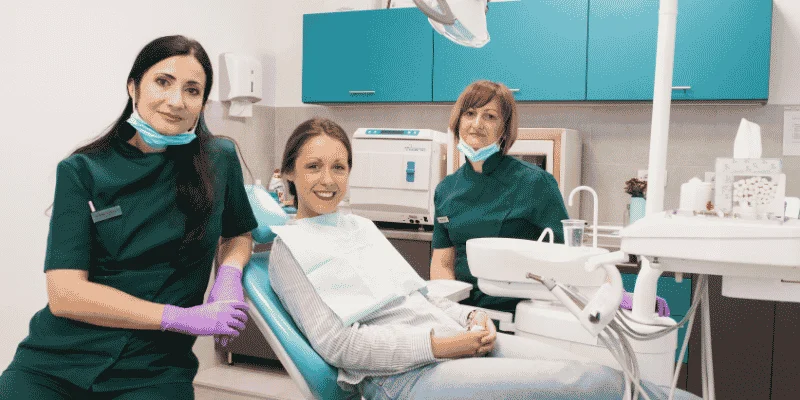
Contact your dentist before your symptoms become emergencies. Most practices have after-hours lines for urgent concerns, so save this number in your phone before surgery.
Describe symptoms clearly by noting when they started, how they’ve changed, and what makes them better or worse. Take photos of visible issues like swelling or unusual discharge.
Don’t wait until Monday if problems develop over the weekend. Delaying care for infections or implant complications can lead to implant failure.
Keep your surgeon’s contact information and any emergency instructions in an easily accessible place during your recovery period.
Your dental team expects questions and would rather address concerns early than deal with preventable complications later.
Frequently Asked Questions
Most people can return to work within 1-3 days after implant surgery, but air travel requires waiting at least 48-72 hours.
Physical symptoms like severe pain, excessive swelling, or bleeding indicate you should postpone travel and work until healing progresses.
How soon can I fly after implant surgery?
You should wait at least 48-72 hours before flying after implant surgery. The changes in air pressure during flight can increase swelling and discomfort at your surgical site.
If you had a simple single implant placement, flying after three days is usually safe. More complex procedures like bone grafting or multiple implants may require waiting a full week before air travel.
Talk to your oral surgeon before booking any flights. They can give you personalized advice based on your specific procedure and how you’re healing.
When is it safe to travel long distances by car or train after implant surgery?
Car or train travel is generally easier on your body than flying. You can usually make these trips within 2-3 days after surgery if you feel well enough.
The key difference is that you can stop and rest whenever you need to. You also avoid the air pressure changes that happen on planes.
Plan for frequent breaks to walk around and reduce swelling. Bring ice packs, pain medication, and soft foods for the journey.
How many days off work should I plan to take after implant surgery?
Most people need 1-3 days off work for dental implant surgery. If you have a desk job, you might return after just one day.
Jobs involving physical labor require more recovery time. You may need 3-7 days off for these types of work.
The number of implants affects your downtime too. A single implant needs less recovery time than multiple implants or procedures with bone grafting.
What signs mean I should delay travel or going back to work after implant surgery?
Severe or worsening pain after the first few days signals a problem. Normal discomfort decreases each day, so increasing pain means you should stay home and call your surgeon.
Excessive bleeding that doesn’t stop when you apply pressure requires immediate attention. Some light bleeding is normal for 24-48 hours, but heavy bleeding is not.
Signs of infection include fever, pus, unusual warmth, or foul-smelling discharge. Significant swelling that gets worse after 48 hours also indicates a problem.
What can I do to stay comfortable and reduce swelling while traveling after implant surgery?
Apply cold compresses in 15-20 minute intervals during the first 48 hours. Bring a small cooler with ice packs if you’re traveling during this critical time.
Keep your head elevated as much as possible. This position helps reduce swelling and discomfort whether you’re in a car, train, or plane.
Stay hydrated and stick to soft foods while traveling. Avoid alcohol and hot beverages, which can increase bleeding and swelling.
Are there any special precautions for lifting, exercise, or physical jobs during recovery from implant surgery?
Avoid strenuous activities and heavy lifting for at least one week after surgery. These activities increase blood pressure, which can cause bleeding and slow healing.
Physical jobs that require bending, lifting, or intense exertion need extra caution. You might need up to a week off before returning to this type of work safely.
Light walking is fine and actually helps with healing. Just avoid activities that make you breathe hard or increase your heart rate significantly until your surgeon approves them.