



Losing a tooth can change how you eat, speak, and feel each day. You may wonder if a dental implant counts as a cosmetic fix or a real health need. The answer depends on how tooth loss affects your function and overall health.
Dental implantsbecome a medical necessity when missing teeth cause pain, bone loss, trouble chewing or speaking, or other health problems that affect daily life.
If you lose teeth from trauma, severe decay, gum disease, or medical treatment, an implant may protect your jaw and restore normal function. In these cases, treatment supports your health, not just your appearance.
When you understand what makes an implant medically necessary, you can talk with your dentist and insurance provider with more confidence. Clear records, exams, and imaging often make the difference between a denied claim and approved care.
Key Takeaways
- Dental implants qualify as medically necessary when they restore function and prevent health problems.
- Trauma, disease, and bone loss often support a medical need for implants.
- Clear dental records and exams help show why treatment supports your health.
Understanding Medical Necessity Versus Cosmetic Procedures
You need to know the difference between treatment that protects your health and treatment that mainly changes how you look. With dental implants, that line can affect your care plan and your insurance coverage.
What Does Medical Necessity Mean in Dentistry
In dentistry, medical necessity means a procedure treats disease, restores function, or prevents serious problems.
You may need dental implants if you cannot chew food well, speak clearly, or keep your bite stable.
Tooth loss from trauma, severe decay, or advanced gum disease can create these problems. In these cases, treatment does more than improve appearance.
Dental implants can also help stop jawbone loss after a tooth is removed. When bone shrinks, nearby teeth may shift and your bite can change. Replacing the missing tooth can help maintain structure and support.
Dentists look at clear clinical signs, such as infection, bone loss, or failed restorations. If your oral health suffers without treatment, implants may meet the standard of medical necessity rather than a cosmetic procedure.
Clinical Versus Insurance Perspectives
Your dentist and your insurance company may not define medical necessity in the same way.
From a clinical view, a dentist focuses on function and long-term health. If missing teeth affect how you eat or speak, implants may be the best solution.
Some providers explain this in detail when discussing medically necessary dental implants.
Insurance companies often apply stricter rules. They may ask:
- Does the implant treat a medical condition?
- Is there documented bone loss or infection?
- Are other treatments not suitable?
Many plans still label implants as elective or cosmetic. Policies can be inconsistent and may require proof that the treatment supports overall health.
Why Dental Implants Are Sometimes Seen as Cosmetic
People often link dental implants with improving a smile. That public image shapes how insurers and patients think about them.
A cosmetic procedure mainly changes appearance. Teeth whitening and veneers are clear examples. Implants, however, replace missing tooth roots and support crowns that restore function.
Still, insurers may classify implants as cosmetic if other options exist, such as dentures or bridges. Some explain that coverage decisions depend more on policy language than health impact.
If you ask, “are dental implants medically necessary,” the answer depends on your condition. When implants protect your ability to chew, speak, and maintain bone, they serve a medical purpose, not just a cosmetic one.
Situations When Dental Implants Are Medically Necessary
Dental implants move beyond cosmetic care when you need to restore basic function and protect your long-term oral health.
In certain cases, implants are the most stable way to replace missing teeth and prevent serious problems.
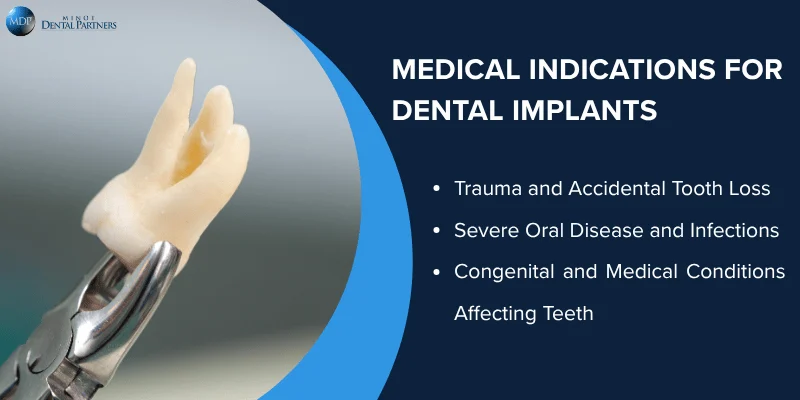
Trauma and Accidental Tooth Loss
A car accident, sports injury, or fall can knock out one or more teeth in seconds. When this happens, you do not just lose your smile. You lose the tooth root that keeps your jawbone active and strong.
If you do not replace missing teeth, the bone in that area can shrink over time. Nearby teeth may shift into the empty space. This can change your bite and make chewing painful.
In these cases, implants often become the most reliable form of tooth replacement. They anchor into your jawbone and act like natural roots.
If you cannot chew properly or speak clearly after trauma, your need goes beyond appearance. You need stable support to regain daily function.
Severe Oral Disease and Infections
Advanced gum disease and deep infections can destroy the tissues that hold your teeth in place. When this damage becomes severe, saving the tooth may no longer be possible.
After removal, you face gaps that affect chewing and jaw stability. Bone loss often continues if you leave those spaces empty. Over time, this can weaken nearby teeth and lead to further tooth loss.
Implants help stop that cycle. They stimulate the jawbone and reduce further shrinkage. Some experts explain in detail how implants protect bone and restore function in cases of serious disease.
If dentures feel unstable or painful due to bone loss, implants may also provide the support you need. At that point, treatment focuses on health and function, not looks.
Congenital and Medical Conditions Affecting Teeth
Some people are born with missing teeth due to genetic conditions. Others lose teeth because of medical treatments, tumors, or developmental disorders.
When teeth never form or must be removed early, your jaw may not develop as it should. This can affect speech, chewing, and facial support. In these cases, replacing teeth is not optional.
Implants often serve as a long-term solution because they support bone growth and provide strong anchors for crowns or overdentures.
If your condition limits your ability to eat a balanced diet or speak clearly, implants address a medical need. They help you regain daily function and protect your oral health for the future.
Clinical Factors That Define Medical Need
Your dentist looks at bone health, daily function, and failed treatment options when deciding if implants are medically necessary. The focus stays on restoring oral health, not improving appearance.
Bone Density and Jawbone Health
You need enough bone density in your jaw to support an implant. The implant must fuse with the bone through a process called osseointegration. If your jawbone is weak or shrinking, this process may fail without treatment.
When you lose a tooth, the jawbone in that area can start to shrink. Over time, this bone loss can change your bite and facial structure.
In some cases, replacing the tooth with an implant helps stop further bone loss and protects nearby teeth.
Dentists review X-rays or 3D scans to measure bone volume and strength.
If bone loss threatens your long-term oral health, an implant may move from optional to medically necessary.
Inadequate Alternatives to Implants
You may have other tooth replacement options, such as bridges or removable dentures. But these do not work well for everyone.
A dental bridge requires grinding down healthy teeth for support. If those teeth are already weak, this can raise the risk of decay or fracture. Dentures can slip, irritate gum tissue, and make oral hygiene harder.
In some cases, these options fail to restore normal function. Dentists may document this when they explain how to prove medical necessity for dental implants.
They often show that other treatments cannot protect your oral health or prevent more tooth loss.
If alternatives do not give stable support or long-term results, implants may become the safer medical choice.
Functional Impairments: Chewing, Speech, and Nutrition
Missing teeth can limit how well you chew. You may avoid hard foods like vegetables, nuts, or lean meats. Over time, this can affect your nutrition.
You might also notice speech changes. Gaps in certain areas of your mouth can affect how you form sounds. This can impact daily communication.
Dental professionals note that implants can restore chewing strength and reduce the risk of further tooth loss. When tooth loss causes real problems with eating or speaking, treatment moves beyond cosmetic concerns.
If your condition affects daily function and overall health, your dentist may classify implants as medically necessary rather than optional.
Dental Implant Procedure and Medical Justification
You need clear proof that your implant supports health, not appearance. That proof starts with a detailed exam, continues through each surgical step, and depends on proper healing and bone support.
Initial Consultation and Assessment
Your initial consultation builds the medical case for treatment. Your dentist in Minot reviews your health history, current symptoms, and past dental work.
You will likely get digital X-rays or a 3D scan. These images show bone loss, infection, or damage that affects chewing and speech. They also help measure bone height and density before dental implant surgery.
Your dentist documents:
- Missing teeth and cause of loss (trauma, decay, disease)
- Bone deterioration in the jaw
- Bite problems or shifting teeth
- Failed bridges or dentures
- Pain or difficulty chewing
If tooth loss relates to a medical condition, your records may support that link. Clear records matter because insurers often require proof that implants restore function, not just appearance.
Stages of Dental Implant Surgery
The dental implant procedure happens in planned stages. Your dentist or oral surgeon places a small titanium post into your jawbone during dental implant surgery.
This post acts as an artificial tooth root. It supports the future crown and keeps your jawbone active.
The main stages include:
- Implant placement – The surgeon inserts the post into the bone under local anesthesia.
- Healing period – The bone bonds to the implant.
- Abutment placement – A small connector attaches to the implant.
- Crown placement – A custom crown restores chewing function.
When implants replace teeth lost from injury or disease, they often qualify as medically necessary rather than cosmetic. Many clinicians note that implants improve chewing strength and reduce further tooth loss.
The Healing Process and Integration
Your healing process plays a key role in long-term success. After surgery, your jawbone slowly bonds to the implant in a process called osseointegration.
This bonding usually takes several months. During this time, you may wear a temporary tooth to protect the area and maintain function.
You should expect mild swelling and soreness for a few days. Good oral hygiene and follow-up visits help prevent infection.
Bone support is critical. If your bone is too thin or weak, your dentist may suggest grafting before or during implant placement. Strong integration keeps the implant stable under daily chewing forces.
When healing completes and your final crown is placed, the implant works like a natural tooth root. It restores bite balance and helps protect the surrounding bone from further loss.
Proving and Documenting Medical Necessity for Insurance
Insurance companies focus on function, not appearance. You must show that your dental implants treat a medical problem and restore basic oral function, not just improve your smile.
What Is a Medical Necessity Letter
A medical necessity letter explains why your dental implants are required to treat an illness or injury. Your oral surgeon, dentist, or physician writes and signs it.
The letter should clearly state:
- Your diagnosis (such as jaw fracture, bone loss, or cancer treatment damage)
- The symptoms you have, like pain, infection, or trouble chewing
- Why other dental services, such as removable dentures, will not work for you
- How dental prosthetics like implants will restore normal function
Ask your provider to use clear medical terms and include diagnosis codes. A strong letter connects your implants to a covered medical condition.
Keep the tone factual. The goal is to prove medical necessity for dental implants, not to describe cosmetic benefits.
Documentation Required by Insurance
Insurance companies rely on records, not opinions. You need detailed documentation to support your claim.
Most plans request:
- Recent X-rays or CT scans
- Clinical notes that describe bone loss, trauma, or disease
- A full treatment plan with dates and procedure codes
- Records of past treatments that failed
Your provider may need to include ICD-10 diagnosis codes and CPT or ADA procedure codes. These codes show that your treatment falls under covered medical services, not routine dental services.
Claims often succeed when you submit them through a provider familiar with medical billing.
Always request pre-authorization before surgery. Written approval reduces the risk of denial later.
Common Insurance Definitions and Exclusions
Insurance policies define medically necessary in specific terms. Most plans require that the treatment:
- Diagnoses or treats a disease or injury
- Follows accepted medical standards
- Is not mainly cosmetic
Many policies exclude dental prosthetics unless they relate to trauma, cancer, or a congenital defect. Some exclude routine tooth loss from decay or gum disease.
Read your policy’s section on dental services and oral surgery. Look for language about reconstructive care, accident coverage, or treatment linked to systemic illness.
When you match your documentation to the exact policy wording, you give your claim a stronger foundation.
Cost Considerations and Access to Medically Necessary Implants
When implants restore your ability to chew, speak, or prevent bone loss, cost becomes a health issue, not a cosmetic choice. You need clear numbers, realistic insurance expectations, and a trusted dental clinic to make the right decision.
Dental Implant Cost Versus Other Options
The dental implant cost is higher upfront than a bridge or denture. A single implant often includes the post, abutment, crown, imaging, and surgery. Bone grafting can add to the total implant cost if you have bone loss.
Bridges usually cost less at first. However, they require shaving down nearby teeth. Dentures cost even less, but they may slip and do not stop jawbone shrinkage.
Over time, you may replace bridges or dentures more often than implants. Implants can last many years with proper care. When you compare the long-term cost of dental implants to repeat treatments, the gap may shrink.
Focus on value, not just price. If you cannot chew well or keep your jaw stable, a lower-cost option may not solve the real problem.
Potential for Insurance and Financial Aid
Insurance may cover implants when they are medically necessary, not cosmetic. Many plans require proof that the implant restores function, such as chewing or speech.
You may need a detailed letter from your dentist. A medical necessity letter for dental implants explains how missing teeth affect your health. Clear records and imaging help support your claim.
Some policies cover implants after accidents or specific health conditions.
If insurance does not pay in full, ask about:
- Payment plans
- Third-party financing
- Health savings accounts (HSA)
- Flexible spending accounts (FSA)
These tools can spread out the cost and improve access to care.
Selecting the Right Dental Clinic

Choose a dental clinic that explains cost considerations in plain terms. You should receive a written treatment plan with each fee listed clearly.
Ask what the total cost includes. Confirm whether imaging, sedation, temporary teeth, and follow-up visits are part of the estimate.
Look for a clinic that uses modern imaging and documents medical need. This step can help with insurance approval and protect your long-term results.
You should also feel comfortable asking questions. A good provider reviews risks, benefits, and alternatives without pressure. When implants are medically necessary, you deserve clear answers and fair pricing.
Frequently Asked Questions
You may wonder when implants move from a cosmetic choice to a medical need. Coverage often depends on clear proof of health problems, proper records, and specific insurance rules.
When would dental implants be considered medically necessary rather than optional?
Dental implants become medically necessary when tooth loss affects your ability to chew, speak, or maintain jaw health. If you lost teeth due to trauma, severe decay, advanced gum disease, or cancer treatment, your dentist may classify implants as a health need.
Insurance companies often look for proof that the implant will restore function, not just appearance. Fixing bite problems or preventing further bone loss can support a medical claim.
If you simply want to improve how your smile looks, insurers usually treat implants as optional.
What documentation does my doctor or dentist need to write to prove medical necessity for implants?
Your dentist must provide detailed clinical notes. These notes should explain your diagnosis, how you lost the tooth, and how the missing tooth affects your health.
X-rays, periodontal charts, and photos often support the claim. Many insurers also require a formal letter that explains why other treatments, such as bridges or dentures, will not work for you.
How can I increase the chances that my medical insurance will cover dental implants?
Start by asking your dentist to submit a pre-authorization request. This lets your insurer review the case before treatment begins.
Make sure your records clearly show functional problems like difficulty chewing or speech changes. Claims tied to injury or disease often have stronger support.
Do Medicaid plans ever cover dental implants, and what requirements typically apply?
Some state Medicaid programs may cover implants, but rules vary. Many states limit coverage to cases involving trauma, severe infection, or major health conditions.
You usually must show that less costly options will not restore function. Approval often requires detailed records and prior authorization.
Because Medicaid rules change by state, you should check your state’s dental policy manual or speak directly with your plan representative.
Can Medicare cover dental implants in any medically necessary situations?
Original Medicare usually does not cover routine dental care, including implants. However, it may pay for certain hospital services tied to a larger medical procedure.
For example, if implants are part of reconstructive surgery after an accident or tumor removal, some related medical costs might qualify. The dental portion itself often remains excluded.
Medicare Advantage plans may offer limited dental benefits, so you should review your specific plan details.
Are dental implants safe for people with autoimmune conditions, and what extra precautions might be needed?
Many people with autoimmune conditions can receive implants safely. Your dentist and physician must first review your medical history and current medications.
Conditions such as lupus or rheumatoid arthritis may affect healing. If you take immune-suppressing drugs, your provider may adjust timing or prescribe preventive antibiotics.
Close monitoring during healing helps reduce infection risk and supports better outcomes.