


Losing a single tooth puts you at a crossroads between two common replacement options: a dental implant or a partial denture.
Both choices fill the gap in your smile, but they work differently and come with distinct costs over time.
Understanding which option, single tooth implant vs partial denture cost saves you more money in the long run requires looking beyond the initial price tag.
A single tooth implant typically costs more upfront but often saves money over 15 to 20 years because it requires less maintenance and fewer replacements than a partial denture.
Partial dentures start with a lower price, but they need regular adjustments, relines, and eventual replacements as your mouth changes.
They also don’t prevent bone loss at the missing tooth site, which can lead to additional dental work down the road.
The right choice for your wallet depends on factors like your bone health, how long you plan to keep the replacement, and whether you’re comfortable with surgery.
This guide breaks down the real costs, maintenance requirements, and long-term tradeoffs between dental implants and partial dentures so you can make a confident decision about your tooth replacement.
Key Takeaways
- Single tooth implants cost more initially but usually save money over time due to fewer repairs and replacements
- Partial dentures require ongoing maintenance like relines and adjustments that add to long-term costs
- Implants help preserve jawbone while partial dentures allow continued bone loss at the missing tooth site
Table of Content
- How Single Tooth Implants and Partial Dentures Work
- Comparing Stability, Comfort, and Function
- Bone Health and Preservation Benefits
- Maintenance, Longevity, and Possible Complications
- Costs and Long-Term Financial Considerations
- Frequently Asked Questions
How Single Tooth Implants and Partial Dentures Work
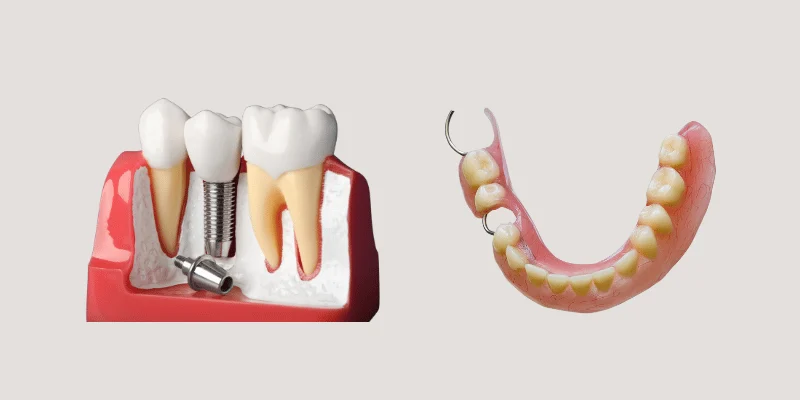
A dental implant becomes part of your jawbone through a surgical process, while a partial denture sits on top of your gums as a removable appliance.
Understanding how each option functions helps you see why their costs and benefits differ over time.
Dental Implant Procedure: From Implant Post to Crown
The tooth implant process happens in multiple stages over several months. Your dentist first places a titanium implant post into your jawbone where the tooth root used to be.
This requires minor surgery with local anesthesia.
After placement, you wait three to six months for healing. During this time, the implant post fuses with your bone. Once healed, your dentist attaches an abutment to the post.
The abutment is a small connector piece that sticks up through your gums.
Finally, your dentist places an implant crown on top of the abutment. The crown looks and works like a natural tooth.
The entire process takes four to nine months from start to finish, depending on your healing time and whether you need any bone grafting before the implant can be placed.
Process and Types of Partial Dentures
A single-tooth denture consists of an acrylic base with a prosthetic tooth that clips or rests against your surrounding teeth and gum tissue. Your dentist takes impressions of your mouth to create a custom fit.
The lab builds your partial denture to match your natural teeth in color and shape.
You can get your removable partial denture within two to four weeks. The appliance uses metal clasps or precision attachments to grip onto nearby teeth for stability. Some types use flexible resin instead of rigid acrylic for the base.
You remove the partial denture daily for cleaning and at night before bed. The denture puts pressure on your gums and the teeth it clips onto rather than integrating with your jawbone.
Role of Osseointegration in Implants
Osseointegration is the process where your jawbone grows around and fuses to the titanium implant post. This biological bond makes the implant as stable as a natural tooth root.
The titanium material triggers bone cells to attach directly to its surface without forming scar tissue in between.
This fusion typically takes three to six months to complete. Successful osseointegration depends on having enough healthy bone density and avoiding infection during healing.
Smoking, uncontrolled diabetes, and certain medications can prevent proper bone integration.
Once osseointegration is complete, your implant can handle normal chewing forces. The implant also stimulates your jawbone like a natural root, which helps prevent bone loss over time.
Removable Partial Denture vs Fixed Implant
A removable partial denture comes out of your mouth for cleaning and sleeping, while single tooth implants stay permanently fixed in place.
You brush and floss around your implant just like natural teeth, but you must soak your partial denture in cleaning solution overnight.
The partial denture can shift slightly when you eat or talk, especially with sticky foods. Your implant crown stays completely stable because it’s anchored in bone.
You need to replace or reline your partial denture every five to seven years as your gums and bone change shape.
Your tooth implant can last 25 years or longer with proper care.
The removable appliance requires more frequent adjustments and eventual replacement, while the implant typically only needs a new crown after 10 to 15 years if the porcelain wears down.

Comparing Stability, Comfort, and Function
A dental implant stays fixed in your jaw and handles full chewing pressure, while a partial denture sits on your gums and can shift during meals.
These differences affect everything from what you can eat to how natural your replacement tooth feels.
Chewing Forces and Daily Life
Dental implants can handle the same chewing force as your natural teeth because the titanium post fuses directly to your jawbone. You can bite into apples, eat steak, and chew sticky foods without worry.
Partial dentures work differently. They rest on your gum tissue and clip onto nearby teeth with metal clasps. When you bite down, the denture can move slightly or press against your gums.
Many people with partial dentures avoid hard or sticky foods because the appliance can shift or become uncomfortable.
Studies show that dental implants restore function closest to natural teeth compared to any other option. You brush and floss an implant just like your other teeth.
With a partial denture, you need to remove it daily for cleaning and soak it overnight.
Impact on Surrounding Teeth
When you choose an implant to replace a single missing tooth, your other teeth stay untouched. The implant stands alone in the gap without needing support from neighboring teeth.
A partial denture requires metal clasps that grip your adjacent teeth for stability. These clasps can put pressure on the teeth they attach to over time.
The clasps may also be visible when you smile, depending on where the missing tooth is located.
Your natural teeth can shift into the empty space left by a missing tooth. Both implants and partial dentures prevent this shifting, but only an implant provides stimulation to the underlying bone to help maintain its volume.
Taste, Speech, and Comfort Factors
An implant feels like your own tooth once it heals. Most patients forget it’s there after a few months. Nothing covers your palate, so you can taste food normally and speak without any changes to your voice.
Partial dentures can affect your daily comfort in ways you might not expect. The acrylic base often covers part of your palate, which can slightly dull your sense of taste.
Some people notice minor speech changes during the first few weeks while they adjust to having an appliance in their mouth.
The adaptation period for partial dentures typically lasts several weeks. Many patients report that the denture feels bulky at first.
After implant placement and healing, you won’t feel any foreign object in your mouth when you restore your smile with this permanent option.
Bone Health and Preservation Benefits
When you lose a tooth, the jawbone underneath begins to shrink without the root to keep it active. Implants provide the stimulation your bone needs to stay dense, while partial dentures sit on top without stopping this loss.
Preventing Bone Loss After Tooth Extraction
Your jawbone needs pressure from tooth roots to maintain its structure. When you extract a tooth, bone at the missing site continues to resorb under a partial denture because there is no root stimulation.
Studies show you can lose 25% of bone width in the first year after tooth loss. This resorption changes your facial shape over time and makes your jaw ridge shrink.
A dental implant acts like a natural root. The titanium post transfers chewing forces into your jawbone, which signals your body to keep the bone tissue alive.
This process of jawbone preservation helps maintain the ridge height and width at that specific location.
Partial dentures rest on your gums and remaining teeth but do not stop bone loss underneath. The gap where your tooth used to be continues to shrink even while you wear the denture daily.
Bone Stimulation and Density Maintenance
Your jawbone responds to mechanical load through a process called osseointegration. When you place an implant, the bone cells grow around and fuse to the titanium surface over several months.
Once healed, every time you chew, the implant transfers force into your bone. This bone stimulation maintains bone density at that site the same way exercise keeps your muscles strong.
Without this load, osteoclast cells break down bone faster than osteoblast cells can rebuild it. The result is progressive bone resorption that accelerates over years.
A partial denture does not create this stimulation. Your jawbone under the denture continues losing density because it interprets the lack of pressure as a signal that the bone is not needed anymore.
Understanding Bone Resorption and Grafting
Bone resorption happens when your body removes bone tissue faster than it replaces it. After tooth loss, this process is irreversible without intervention.
If you wait years before choosing an implant, you may not have enough bone left. Your dentist will need bone grafting to rebuild the ridge before placing the implant post.
Common grafting materials include:
- Your own bone from another jaw area
- Processed donor bone
- Synthetic bone substitutes
- Combination approaches
Grafting adds 4-6 months to your treatment timeline and increases upfront costs. The graft must heal and integrate before your dentist can place the implant.
Adequate bone volume is required for implant success, which is why earlier placement protects both your oral health and your budget.
If you choose a partial denture first, the ongoing bone loss may require grafting later if you switch to an implant.
Maintenance, Longevity, and Possible Complications
Single tooth implants typically last longer than partial dentures but require different care routines. Both options need regular dental check-ups and daily cleaning to prevent complications and extend their service life.

How Long Do Each Option Last?
A single tooth implant can last 20 to 30 years or even a lifetime with proper care.
The implant post fuses with your jawbone through a process called osseointegration, creating a stable foundation. Most implant failures happen in the first few years after placement.
Partial dentures usually need replacement every 5 to 8 years. The acrylic base and metal clasps wear down over time from daily use.
Your gums and jawbone also change shape as bone loss continues, which means your partial denture won’t fit as well after several years.
The crown on top of an implant may need replacement every 10 to 15 years due to normal wear. Partial dentures require more frequent adjustments and relines to maintain a proper fit as your mouth changes.
Care and Dental Check-Ups
You brush and floss around an implant just like a natural tooth. Use a soft-bristled toothbrush and non-abrasive toothpaste twice daily. Floss carefully around the implant crown to remove plaque and food particles.
Partial dentures need removal for cleaning after meals. Brush them with a denture cleaner and soak them overnight in a cleaning solution.
You also need to clean your natural teeth and gums thoroughly before putting the partial denture back in.
Regular dental check-ups are essential for both options. Your dental specialist will examine the implant for signs of infection and check the stability of the implant post.
For partial dentures, your dentist looks for worn clasps, cracks in the base, and areas where the fit has changed.
Potential Risks and Implant Complications
Implant complications include infection around the implant site, implant failure, and nerve damage. Peri-implantitis is an infection that can develop around the implant post if bacteria build up.
Smoking and poor oral health increase your risk of these problems.
Bone loss can cause an implant to loosen over time. Some patients experience pain or numbness if the implant affects nearby nerves during placement.
Partial dentures can cause sore spots where they rub against your gums.
The metal clasps may damage the teeth they attach to over years of use. Food can get trapped under the denture and lead to decay on your remaining natural teeth if you don’t clean properly.
Costs and Long-Term Financial Considerations
A single tooth implant typically costs more upfront, but partial dentures require ongoing expenses that add up over time. Understanding both the visible and hidden costs helps you make a smarter financial decision.
Initial vs Lifetime Investment
When you need to replace a missing tooth, the price difference between options is obvious right away. A single dental implant costs $3,000 to $6,000, including the post, abutment, and crown.
A partial denture runs $700 to $2,500 depending on materials and how many teeth it replaces.
That gap shrinks when you look at how long each option lasts. Dental implants can function for 25+ years with proper care, while partial dentures need replacement every 5 to 7 years.
Over 20 years, you might need three or four partial dentures at $1,500 each, totaling $4,500 to $6,000. A single tooth implant stays put for that entire period with minimal extra costs.
Hidden Expenses: Repairs, Adjustments, and Replacements
Partial dentures create ongoing costs beyond the initial purchase. You’ll need regular adjustments as your mouth changes shape, especially during the first year. Clasps break, acrylic cracks, and the fit loosens over time.
Budget for these common expenses:
- Professional adjustments every 6-12 months
- Denture adhesives and cleaning solutions monthly
- Repair costs for broken clasps or cracked bases
- Complete replacement every 5-7 years
Single tooth implants integrate with your jawbone and rarely need repairs once healed. Your main costs are regular dental cleanings and checkups, which you’d need anyway.
Planning for Future Tooth Replacement Needs
Choosing tooth replacement options affects your other teeth too.
Partial dentures put pressure on neighboring teeth through metal clasps, which can damage them over time. You might face additional tooth loss and more expensive restoration work later.
Implants don’t rely on other teeth for support. They actually help preserve jawbone density in the area where your tooth is missing. This keeps your facial structure stable and protects surrounding teeth.
If you lose more teeth later, having implants already in place makes future treatment easier. Your dentist can often add to existing implant work. With partials, you’ll need a completely new appliance each time your mouth changes.
Frequently Asked Questions
Upfront costs differ greatly between these two options, but long-term expenses tell a different story. Implants protect bone and neighboring teeth while partial dentures require regular adjustments and eventual replacements.
What usually costs more upfront: a single dental implant or a partial denture?
A single dental implant costs more at the start than a partial denture. Most implants run between $3,000 and $6,000 per tooth, depending on your location and the specific procedure you need.
Partial dentures typically cost $300 to $5,000 upfront. The exact price depends on the materials used and how many teeth need replacement.
Your dental implant costs more initially but often saves money over 10 to 20 years. Partial dentures need replacements every 5 to 8 years, which adds up over time.
Which option tends to need fewer repairs or replacements over the years?
Dental implants need fewer repairs and replacements than partial dentures. An implant can last 25 years or longer with proper care, and many last a lifetime.
Partial dentures wear out faster because you remove them daily and they experience constant pressure. You’ll likely need adjustments every few years as your gums change shape.
Most partial dentures need complete replacement every 5 to 8 years.
The crown on your implant might need replacement after 10 to 15 years. That’s still much less frequent than replacing an entire partial denture multiple times.
How do implants and partial dentures compare for chewing comfort and stability—especially for back teeth?
Implants feel more stable when you chew because they anchor directly into your jawbone. You can bite with about the same force as your natural teeth, which makes eating all types of food easier.
Partial dentures move slightly when you chew, especially on harder foods. Back teeth handle most of your chewing force, so stability becomes even more important in those areas.
Many people with partial dentures avoid sticky or hard foods because the denture can shift or come loose.
Your implant won’t slip when you eat or talk. Partial dentures can feel bulky in your mouth and may take weeks or months to get used to.
Will a partial denture affect the health of nearby teeth compared to an implant?
A partial denture can put extra stress on the teeth that hold it in place. The metal clasps that keep your denture secure can wear down the enamel on neighboring teeth over time.
Your partial denture also creates small spaces where food particles and bacteria can hide. This increases your risk of cavities and gum disease on the teeth next to the denture.
An implant stands alone and doesn’t rely on other teeth for support. It actually helps preserve your bone and protect nearby teeth by preventing the jawbone from shrinking.
When you lose a tooth, the bone underneath starts to deteriorate without the stimulation from chewing.
What ongoing maintenance and cleaning costs should I expect with each option?
Your dental implant requires the same basic care as natural teeth. You’ll brush twice daily, floss once a day, and visit your dentist every six months. These regular checkups usually cost $75 to $200 without insurance.
Partial dentures need special cleaning supplies beyond regular toothpaste and floss. You’ll need denture cleaner, a soaking solution, and a separate brush designed for dentures.
These supplies typically cost $10 to $30 per month.
Professional adjustments and relines for partial dentures cost $200 to $500 every few years. You might also need repairs if the denture cracks or if clasps break, which can add $100 to $300 per repair.
Are dental implants or partial dentures usually a better fit for older adults with bone loss or other health concerns?
Partial dentures work better if you have significant bone loss because they don’t require enough bone to support an implant. Your dentist can fit you with a partial denture even if your jawbone has thinned considerably.
Dental implants need adequate bone density to stay secure. If you’ve experienced bone loss, you might need a bone graft before getting an implant, which adds time and cost to the process.
Your overall health matters too. Conditions like uncontrolled diabetes or osteoporosis can make implant surgery riskier and slow down healing. Certain medications like blood thinners may complicate the implant procedure.
Partial dentures offer a simpler option if you have health conditions that make surgery risky. You can get a partial denture without any surgical procedures or healing time.