

Getting All-on-X dental implants changes your daily life in ways you might not expect until after you finish healing.
Many people wonder what it will really feel like to live with these permanent teeth once the initial recovery period ends.
The questions about eating, speaking, and caring for your new smile often matter more than the surgery itself.
Most patients notice that their All-on-X dental implants feel and function like natural teeth within a few months of completing treatment, with restored chewing ability and confidence in social situations.
The adjustment period for full-arch dental implants involves learning new cleaning techniques and getting used to how your restoration feels, but these changes become second nature quickly.
You can expect to eat most of your favorite foods again and smile without worrying about dentures slipping or teeth failing.
Understanding what daily life looks like with dental implants helps you prepare for the transition and set realistic expectations.
From your morning hygiene routine to enjoying dinner with family, living with All-on-X becomes normal faster than most patients anticipate.
The key is knowing what to expect and following the right care practices to protect your investment.
Key Takeaways
- All-on-X implants restore normal eating and speaking abilities after the initial healing period
- Daily care requires simple cleaning routines similar to natural teeth with some specialized techniques
- Full-arch implant treatment can last 20 years or longer with proper maintenance and regular checkups
Table of Content
- Immediate Changes Patients Notice After Recovery
- Adapting to Daily Life With All-on-X Implants
- Ongoing Oral Care and Hygiene Practices
- Functionality and Longevity of All-on-X Restorations
- Long-Term Adjustments and Potential Challenges
- Frequently Asked Questions
Immediate Changes Patients Notice After Recovery
Once your final restoration is in place, the transformation becomes fully apparent in both appearance and function.
You’ll experience noticeable improvements in confidence, comfort, and your ability to perform everyday activities that may have been challenging before.
Regaining a Confident Smile
Your permanent teeth look and feel completely natural once the final prosthesis replaces your temporary bridge. The color, shape, and alignment are customized to fit your facial features and give you a balanced smile.
Most patients report feeling more comfortable in social situations immediately after receiving their final restoration.
You’ll notice people respond differently when you smile freely without worrying about gaps or ill-fitting dentures.
The full-arch restoration changes how you see yourself in photos and mirrors. You no longer feel self-conscious about covering your mouth when you laugh or avoiding close-up pictures.
Your new teeth stay firmly in place, which eliminates the embarrassment and anxiety that came with removable dentures. You won’t experience slipping or clicking sounds when you talk or eat in public.
Friends and family often comment on the positive change in your demeanor. The psychological boost from having a complete, attractive smile affects how you interact with others and carry yourself.
First Impressions With Permanent Teeth
The permanent teeth feel more substantial and natural than the temporary bridge you wore during healing. Your final prosthesis is made from stronger materials that withstand normal chewing forces better.
You’ll notice the permanent teeth fit more precisely against your gums. The contours and spacing are refined based on feedback from wearing your temporaries for several months.
The texture of your final restoration feels smooth against your tongue. Most patients adapt to the sensation within a few days and stop thinking about the All-on-X implants as something foreign in their mouth.
Your bite feels stable and even when your jaws come together. The dentist adjusts the alignment during final placement to ensure comfortable contact between upper and lower teeth.
Eating and Speaking With Full-Arch Restoration
Eating becomes significantly easier once you receive your permanent teeth. You can bite into foods that were off-limits during the healing period, though you’ll still need to be mindful of extremely hard items.
Most patients successfully eat foods like salads, sandwiches, and cooked vegetables within the first week of getting their final prosthesis.
Tougher meats like steak become manageable with practice over the following weeks.
Speaking clearly improves as you adjust to your permanent teeth. Your tongue learns where to position itself for different sounds, and any initial lisp or altered speech typically resolves within two to three weeks.
The All-on-4 or All-on-6 configuration provides stable support that doesn’t shift during conversation. You won’t experience the speech problems that removable dentures often cause.
Taste perception returns to normal or improves compared to traditional dentures. Your final restoration doesn’t cover your palate, allowing you to enjoy the full flavor of foods and beverages.
Adapting to Daily Life With All-on-X Implants
After your All-on-X recovery is complete, you’ll notice how the permanent teeth feel and function in everyday situations. The way you eat, speak, and interact with others will settle into a new normal over the first few months.
Comfort and Fit of the Final Prosthesis
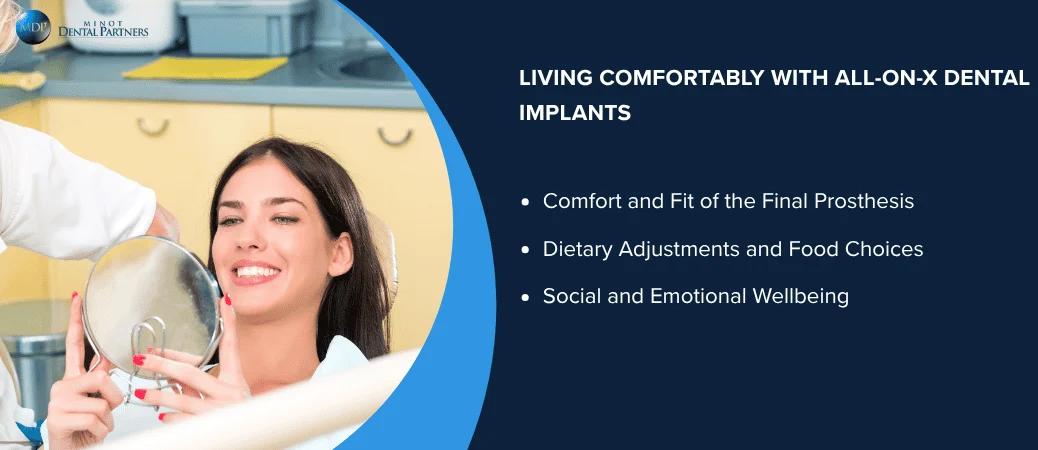
Your final prosthesis typically feels more stable and natural than the temporary set you wore during healing.
The bridge is custom-made to fit your mouth precisely, and most patients report feeling comfortable within the first week of wearing their permanent teeth.
You might notice slight pressure or tightness initially as your mouth adjusts to the new restoration. This sensation usually fades within a few days.
The implants themselves don’t have nerve endings, so you won’t feel them the way you felt natural tooth roots.
Your tongue and cheeks need time to adapt to the shape and position of the bridge. Speaking may feel slightly different at first, but most people adjust quickly with normal conversation.
If you experience persistent rubbing or sore spots, your dentist can make small adjustments to improve the fit.
The weight and feel of your All-on-X implants will become familiar with daily wear. Unlike removable dentures, your new teeth stay firmly in place without adhesives or worry about slipping.
Dietary Adjustments and Food Choices
You can eat most foods with your permanent teeth, but some items require caution. Hard foods like ice, unshelled nuts, and hard candies can damage the prosthesis or loosen screws. Sticky foods such as taffy or caramel may also cause problems.
Foods to enjoy:
- Cooked vegetables and fruits
- Tender meats and fish
- Pasta and rice
- Soft breads and sandwiches
- Most typical dinner meals
Foods to avoid or modify:
- Raw carrots and apples (cut into smaller pieces)
- Tough steaks (choose tender cuts)
- Corn on the cob (cut kernels off)
- Crusty bread (soften or tear into pieces)
Your bite strength returns gradually as you grow confident with your full-arch implant treatment. Many patients find they can eat a wider variety of foods compared to what they managed with failing teeth or dentures before surgery.
Social and Emotional Wellbeing
Your confidence often improves significantly once you adjust to your new smile. You won’t need to worry about gaps, loose teeth, or dentures shifting when you talk or laugh.
Social situations become easier because you can eat comfortably at restaurants and gatherings. You don’t need to excuse yourself to clean or adjust removable appliances, and you can smile freely in photos without self-consciousness.
Patient reviews show that some experience an adjustment period where the teeth feel unfamiliar or “too perfect.” This reaction is normal and typically resolves as you get used to your appearance.
Friends and family may comment positively on your smile, which reinforces your decision to complete treatment.
Your oral hygiene routine becomes part of your daily habits, just like brushing natural teeth. The maintenance doesn’t feel burdensome once you establish a rhythm with cleaning tools and techniques.
Ongoing Oral Care and Hygiene Practices
Daily cleaning and regular checkups keep your All-on-X implants healthy for years. You’ll use specific tools to reach under the bridge and protect the gums around each implant.
Brushing and Cleaning Around Implants
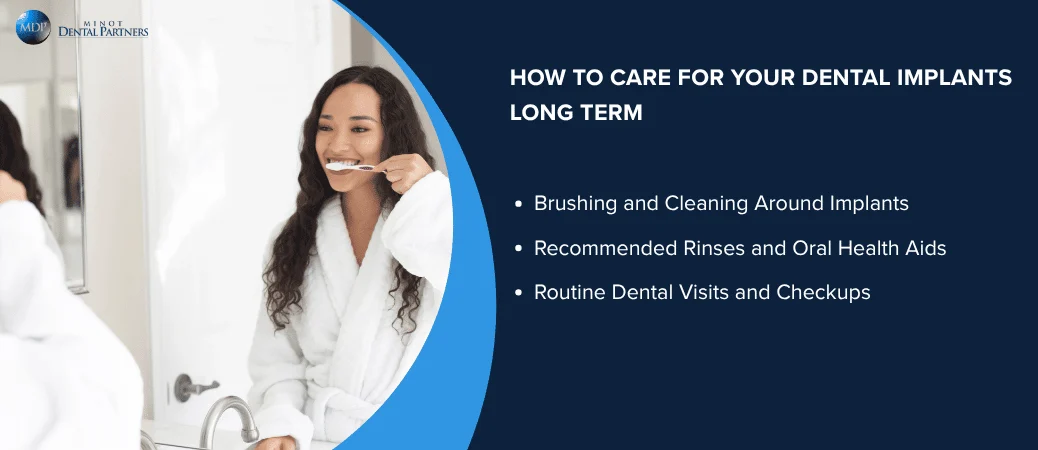
You need to brush twice daily with a soft-bristled toothbrush and fluoride toothpaste. Focus on the areas where your gums meet the implants and prosthesis.
The underside of your bridge requires special attention. Use interdental brushes or floss threaders to sweep along the base of the prosthesis where food particles collect.
Studies show that adding interdental cleaning to brushing reduces plaque and gingivitis more than brushing alone.
A water flosser helps flush debris from hard-to-reach spots around your implants. These devices are safe and effective when used as directed.
Clean every surface you can reach. Plaque buildup leads to gum inflammation around implants, which can progress to bone loss if left untreated. Your daily routine directly affects how long your implants last.
Recommended Rinses and Oral Health Aids
Your dentist may prescribe a chlorhexidine rinse for the first 1-2 weeks after surgery. Use it gently twice daily, then let it fall from your mouth rather than spitting forcefully.
Salt water rinses often start after the first 24 hours. Mix warm water with salt and swish gently to keep tissues clean while healing. These simple rinses reduce irritation during the early recovery period.
After healing is complete, you can use antimicrobial mouthwashes as part of your daily routine. Ask your dental team which products work best for implant care.
Some patients benefit from prescription-strength fluoride toothpaste. Your specific oral health needs determine which additional products help maintain your implants.
Routine Dental Visits and Checkups
You’ll need dental exams and checkups every 2-6 months based on your individual risk factors. History of gum disease, smoking, diabetes control, and manual dexterity all affect your schedule.
Your dental team will take baseline X-rays after your final bridge is placed. These images document the bone level around each implant and serve as comparison points for future visits.
Follow-up X-rays typically happen every 1-2 years or when symptoms appear. Your hygienist will check pocket depths around the implants and remove any calculus buildup you can’t clean at home.
Professional teeth cleanings protect osseointegration by preventing infection. Your dentist watches for early signs of peri-implant disease, which is easier to treat when caught quickly.

Functionality and Longevity of All-on-X Restorations
All-on-X implants work through a process where titanium posts fuse with your jawbone over time.
The prosthetic teeth attached to these posts are built to handle daily use for many years, though they may eventually need replacement.
How Implants Integrate With the Jawbone
When your dentist places All-on-X implants, your body starts a natural healing process called osseointegration. This is when your jawbone grows around the titanium posts and holds them in place.
Osseointegration typically takes three to six months to complete. During this time, bone cells attach directly to the implant surface.
The titanium material is biocompatible, which means your body accepts it without rejection.
Cross-arch stability is a key feature of All-on-X dental implants. The rigid arch form reduces movement during healing. This is why you can often get temporary teeth on the same day as your surgery.
Implant integration strengthens over time. The bone continues to adapt and remodel around the posts even after the initial healing period. This creates a strong foundation for your full-arch restoration.
Durability of Full-Arch Implant Solutions
The titanium posts in your mouth can last a lifetime with proper care. All-on-X implants are designed to last around 20 years on average, and many people get even longer use from them.
Your prosthetic teeth are a different story. These may need replacement after 10 to 15 years due to normal wear. The materials used for the teeth experience daily pressure from chewing and grinding.
Long-term studies show survival rates above 95% for full arch implant restorations. Your results depend on several factors:
- Quality of your bone density
- Number of implants placed
- Your oral hygiene routine
- Regular dental checkups
- Avoiding tobacco use
Zirconia prostheses show less plaque buildup than older acrylic-metal designs. This can mean fewer complications around your implants over time.
Comparing All-on-X to Traditional Dental Implants
All-on-X uses four or more implants to support a complete arch of teeth. Traditional dental implants replace individual teeth one at a time.
Load distribution works differently between these options. With All-on-X, the force from chewing spreads across multiple implants connected by a rigid bar. Single implants bear all the pressure on their own.
All-on-X offers immediate function in most cases. You leave the office with temporary teeth the same day. Traditional implants usually require months of healing before attaching the crown.
The graftless approach used in All-on-X places tilted implants in your existing bone. This avoids bone grafting surgery that single implants often need when bone volume is low.
Maintenance differs too. You clean All-on-X with special tools like water flossers and interdental brushes. Single implants are cleaned like natural teeth with regular floss.
Long-Term Adjustments and Potential Challenges
Most patients adapt well to their all-on-x dental implants within a few months, but some experience minor issues that need attention.
Knowing what changes to expect and how to handle small problems helps you protect your investment and keep your smile healthy.
Adaptation Over Time
Your mouth continues to adjust even after all-on-x recovery is complete. You may notice changes in how your final restoration feels as your jaw bone fully integrates with the implants over the first year.
Some patients find their bite feels slightly different as swelling fully resolves and tissues settle. Your dentist can make small adjustments to the prosthesis if certain teeth feel too high or if you notice uneven contact when you chew.
Speech patterns usually improve with practice, but a few people need several months to feel completely natural when talking. Reading aloud at home helps speed up this process.
Common long-term changes:
- Slight gum line changes as tissue matures
- Minor settling of the prosthesis (usually within the first 6 months)
- Gradual improvement in chewing comfort and confidence
Addressing Minor Complications

Minor issues with all-on-x implants can happen even with good care. Small chips in the acrylic teeth or loose screws are the most common technical problems you might face.
Contact your dental office right away if you notice persistent pain, swelling, bad taste, or if the bridge feels loose. These are red flags that need professional attention.
Early treatment prevents bigger problems down the road.
Some patients develop gum inflammation around the implants (peri-implant mucositis) if plaque builds up. Your hygienist can remove the buildup and show you better cleaning techniques.
Catching inflammation early stops it from progressing to bone loss.
If you grind or clench your teeth, wear your night guard every night. Bruxers face higher implant failure risk, so protecting your full-arch implant treatment from excessive force matters.
Maintaining Long-Term Outcomes
Daily cleaning under the bridge prevents most long-term problems with your all-on-x dental implants. Use interdental brushes or floss threaders to sweep under the prosthesis twice daily, and add a water flosser to flush away plaque.
Your maintenance schedule depends on your risk factors. Most patients need professional cleanings every 3 to 6 months. People with a history of gum disease, diabetes, or who smoke need more frequent visits.
Your dentist will take X-rays every 1 to 2 years to check the bone around your implants. These images catch problems before you notice symptoms.
Key maintenance habits:
- Brush twice daily with a soft toothbrush
- Clean under the bridge with interdental brushes daily
- Attend scheduled checkups every 2 to 6 months
- Don’t chew ice, hard candy, or use your teeth as tools
- Avoid smoking, which increases failure risk
Frequently Asked Questions
Most people considering full-arch implants want to know what daily life really feels like after the healing period ends.
These common questions address the practical details about chewing, appearance, comfort, cleaning, and confidence.
What does it feel like to chew and bite with full-arch implants once you’re fully healed?
Full-arch implants restore approximately 70 to 80 percent of natural chewing force. You can bite into apples, eat steak, and enjoy corn on the cob without worrying about your teeth shifting or slipping.
The feeling is similar to having your natural teeth back. The implants attach firmly to your jawbone, so they don’t move when you bite down.
You’ll still want to avoid extremely hard foods like ice or hard candy. But your diet opens up significantly compared to what you could eat with dentures or failing teeth.
Most people notice they can chew more thoroughly and enjoy a wider variety of foods. This leads to better nutrition and more enjoyment at meals.
How natural do full-arch implant teeth look and sound in everyday conversations?
Modern implant restorations look very natural in everyday situations. The teeth are custom-made to match natural tooth shapes and colors that suit your face.
Your speech sounds normal because the restoration stays firmly in place. You won’t hear clicking sounds or worry about teeth shifting while you talk.
Most people report feeling comfortable speaking in public without self-consciousness. The stability of the implants means you can laugh, smile, and speak naturally in both personal and professional settings.
Friends and acquaintances typically can’t tell the difference between well-made implant teeth and natural ones. The appearance blends in with your facial features and looks age-appropriate.
Do you still experience any soreness, pressure, or tightness months after recovery?
After the healing period ends, most people don’t experience ongoing soreness or discomfort. The initial swelling and discomfort typically peak within 48 to 72 hours after surgery and then fade over the following weeks.
Once your permanent restoration is in place and you’ve adjusted to it, your implants should feel comfortable throughout the day.
Any lingering tightness from the healing phase goes away as the implants fully integrate with your bone.
Some people notice minor sensitivity during temperature changes when eating very hot or cold foods. This is usually mild and doesn’t interfere with daily activities.
If you experience persistent soreness months after recovery, it’s important to contact your dental provider. This could indicate an issue that needs attention.
How do you clean and care for implant-supported teeth day to day after healing?
Daily cleaning focuses on removing plaque and food particles from around the restoration and along the gum line. You’ll brush all accessible surfaces of your restoration twice daily with a soft-bristled toothbrush or electric toothbrush.
Water flossers work well for removing debris from hard-to-reach areas beneath the prosthesis. Interdental brushes help clean between the restoration and your gums.
The routine is generally simpler than caring for multiple individual implants or natural teeth prone to gum disease. You don’t need to floss between each tooth like you would with natural teeth.
Professional maintenance appointments typically happen every three to six months. These visits allow your dental team to examine the implants, assess tissue health, and provide professional cleaning.
Will food still get trapped under the bridge, and what’s the easiest way to manage it?
Some food particles can get trapped between the restoration and your gum tissue. This is normal and manageable with the right cleaning tools.
A water flosser is usually the easiest way to remove trapped food after meals. You can use it quickly at home or even bring a portable version when traveling.
Interdental brushes also work well for cleaning around the prosthesis. Your dental team will show you the specific techniques that work best for your restoration design.
Rinsing with water after meals helps dislodge loose particles. Many people find this simple step prevents most food buildup throughout the day.
The amount of food that gets trapped varies based on your restoration design and how well it fits. If you notice excessive food accumulation, your dental provider may need to adjust the restoration.
How do full-arch implants affect confidence and daily life compared with dentures?
The fixed nature of implant restorations eliminates worries about teeth slipping during meals or conversations. You don’t need to use adhesives or remove your teeth at night.
Social confidence typically increases substantially after full-arch restoration. People report feeling comfortable smiling, laughing, and speaking in public without dental concerns limiting their participation.
Eating becomes more enjoyable because you can bite into foods without fear of dentures shifting. You can go to restaurants and social gatherings without anxiety about your teeth.
Many people notice they speak more freely and smile more openly after getting full-arch implants. The stability and natural appearance allow you to engage fully in activities you may have avoided before.
The ability to eat a normal diet also improves quality of life and nutritional intake. You’re no longer limited to soft foods or items that won’t dislodge dentures.