


You’ve scheduled your All-on-X dental implant surgery and probably heard about swelling, soft foods, and a few days of discomfort.
What your dentist might not have mentioned is how surprisingly fast you’ll leave with temporary teeth, how much your taste might change during healing, or that the hardest part isn’t the first week but the months of waiting while your bone integrates with the implants.
Most patients expect All-on-X recovery to follow a simple timeline of pain and healing, but the reality includes unexpected challenges like learning to speak clearly with new teeth, managing food limitations for three to six months, and dealing with the mental adjustment of having a fixed restoration in your mouth.
The All-on-X aftercare process extends beyond basic instructions to include emotional adaptation and lifestyle changes that catch many people off guard.
This guide covers everything about all-on-x dental implants recovery timeline, including the surprising parts that patients wish they’d known before surgery.
You’ll learn about the complete healing timeline from day one through final restoration, the daily care routines that become second nature, and the unexpected hurdles that require patience and planning.
Key Takeaways
- All-on-X recovery includes immediate temporary teeth placement but requires three to six months of dietary restrictions and lifestyle adjustments before final restoration
- The most challenging aspects are often psychological adaptation to new teeth and managing food limitations rather than physical pain, which typically resolves within two weeks
- Daily cleaning routines differ significantly from natural teeth or dentures, and proper maintenance throughout the recovery period directly impacts long-term implant success
Understanding the All-on-X Dental Implants Recovery Timeline
Recovery from all-on-x implants follows a predictable pattern spanning several months, though your experience in the first week differs significantly from what most patients imagine. The timeline includes distinct healing phases, immediate challenges with temporary teeth, and variables that speed up or slow down your progress compared to traditional dental implant surgery.
Typical Phases of Recovery
Your all-on-x recovery progresses through distinct biological stages from surgery day through complete bone integration. The first phase lasts 7-14 days and focuses on soft tissue healing around implant sites. You’ll experience the most discomfort during this period as swelling peaks and surgical sites begin closing.
The second phase spans weeks 3-8 and involves internal healing you can’t see or feel. Your gums look normal and you feel fine, but bone hasn’t finished fusing with implants yet. This plateau frustrates many patients because nothing seems to be happening.
The final phase runs from month 3 to month 6 as osseointegration completes. Your jawbone grows into the microscopic surface of each implant, creating permanent stability. Whether you received all-on-4, all-on-5, or all-on-6 treatment, this fusion process takes the same amount of time.
After 3-6 months, your dentist confirms integration is complete and takes impressions for your permanent fixed bridge. You’ll wear temporary teeth throughout the entire healing timeline, which surprises patients who expect to switch sooner.
Immediate Post-Surgery Expectations
You leave surgery with temporary teeth already attached to your new implants. These aren’t removable dentures you take out at night. They stay in your mouth permanently during healing, and you clean around them rather than removing them.
Your face will feel numb for 4-6 hours after surgery from local anesthesia. Swelling doesn’t appear immediately. Most patients look normal leaving the dental office but wake up the next morning with significant facial puffiness that peaks on day 2.
Pain reaches its worst point 24-48 hours after surgery once anesthesia fully wears off. You’ll need prescription pain medication for the first 2-3 days, then most patients switch to over-the-counter options. The discomfort feels like pressure and soreness rather than sharp pain.
You can only consume liquids the first day. Protein shakes, broth, and smoothies protect your temporary restoration while tissues heal. This restriction surprises patients who expected to eat soft foods immediately after full mouth dental implants.
Bleeding and oozing of blood-tinged saliva is normal for 24 hours. You’ll have gauze to change as needed, and sleeping elevated on 2-3 pillows reduces both bleeding and swelling.
Key Factors Influencing Healing
Your overall health directly impacts how quickly you recover from dental implant surgery. Diabetics experience slower healing and higher inflammation that can extend the uncomfortable first week by several days. Smokers face significantly delayed recovery because nicotine restricts blood flow to healing tissues.
The number of implants affects your recovery timeline. All-on-4 uses four implants per arch while all-on-6 requires six. More implants means more surgical sites and typically more swelling, though the difference is less dramatic than most patients expect.
Whether you treated one arch or both matters significantly. Upper and lower full mouth implants doubles surgical trauma and extends the difficult first week. You’ll also find eating more challenging when both arches are healing simultaneously.
Your adherence to dietary restrictions protects healing implants. Patients who test their temporary teeth with crunchy or hard foods before tissues are ready risk complications that extend recovery. Following your dentist’s food guidelines exactly as prescribed prevents setbacks.
Some patients receive zygomatic implants anchored in cheekbone rather than jawbone when bone loss is severe. These specialized implants require the same healing time but may cause more facial swelling initially due to their placement higher in facial structures.
Comparison With Traditional Implants
Traditional dental implants for missing teeth require 3-6 months of healing before your dentist attaches any teeth. You wear removable dentures during this waiting period or have gaps in your smile. All-on-x implants give you fixed teeth immediately on surgery day, eliminating the denture phase entirely.
The recovery timeline length is actually similar for both approaches. Traditional implants need 3-6 months for osseointegration before final crowns are placed. All-on-x implants also need 3-6 months before permanent teeth replace your temporaries.
The difference is functionality during healing. With all-on-x, you have teeth you can use for light eating and speaking throughout recovery. Traditional implants leave you with removable dentures that slip and limit what you can eat.
Angled implants used in all-on-x procedures sometimes cause more initial discomfort than straight traditional implants because they engage more bone. However, this placement strategy is what allows immediate teeth attachment, so the tradeoff gives you better function during the months-long healing process.
Reach out to Minot Dental Partners in Minot, ND to speak with our team about every phase of your All-on-X dental implant recovery.
Immediate Post-Operative Recovery: The First Two Weeks
The first 48 hours after All-on-X surgery bring the most intense symptoms, with swelling peaking around day two and gradually improving throughout week one. Your temporary fixed bridge attaches immediately during surgery, so you leave with teeth in place while healing progresses beneath them.
Day-By-Day Symptom Timeline
Surgery Day brings numbness that lasts four to six hours after you leave. You’ll feel tired from the procedure and medication. Your face feels tight but visible swelling won’t show until morning. Some blood-tinged saliva is normal throughout the first day.
Day 1 is typically your most uncomfortable day. Swelling peaks and your face looks puffy, especially around the jaw. You might see bruising start to appear. Opening your mouth feels stiff and challenging. Pain increases as numbness wears off completely.
Day 2 keeps swelling at its highest point, though it may start decreasing slightly. Bruising becomes more visible as blood settles in facial tissues. The purple or dark marks look alarming but show normal healing.
Day 3 marks a turning point. Swelling noticeably decreases for most patients. Your mouth opens easier and energy returns. This is when recovery starts feeling manageable instead of overwhelming.
Days 4-7 bring steady improvement each day. Bruising fades from dark purple to yellow-green. External swelling continues dropping. Pain becomes mild enough that many patients switch from prescription medication to over-the-counter options.
Week 2 shows your face looking almost normal again. External swelling resolves completely, though internal healing continues. Most discomfort is gone. You feel confident returning to regular activities with dietary modifications.
Managing Swelling and Bleeding
A review of post-operative edema (swelling) after dental implant and related oral surgeries notes that cold application (ice packs or cryotherapy) is commonly used to limit swelling and reduce the inflammatory response following surgical procedures like implant placement.
Ice packs work best during the first 48 hours when swelling builds. Apply them for 20 minutes on, then 20 minutes off while you’re awake. This cycle reduces inflammation and provides comfort. After two days, you can switch to warm compresses if you prefer.
Sleep with your head elevated using two or three pillows. Keeping your head above your heart reduces blood flow to surgical sites. This minimizes both swelling and throbbing pain. Many patients use recliners for the first three nights.
Light bleeding or blood-tinged saliva is expected for the first 24 hours. If you see continuous blood flow rather than just pink-tinted saliva, bite down gently on clean gauze for 20 minutes. Don’t spit forcefully or rinse vigorously as this disrupts blood clot formation at surgical sites.
Avoid activities that increase blood pressure during the first week. Don’t bend over, lift heavy objects, or exercise. These actions can trigger bleeding and increase swelling.
Pain Relief and Medication Tips
Pain management starts before your anesthesia wears off. Taking medication on schedule prevents pain from becoming severe. Set alarms for your doses during the first three days rather than waiting until you feel uncomfortable.
Most doctors prescribe stronger medication for days one through three when discomfort peaks. You’ll transition to ibuprofen or acetaminophen as pain decreases. Some patients need prescription pain relief for five to seven days while others switch to over-the-counter options by day three.
Medication schedule strategy: Alternate ibuprofen and acetaminophen every three hours. Take ibuprofen at 8am, acetaminophen at 11am, ibuprofen at 2pm, and so on. This provides consistent pain relief without exceeding safe doses.
Watch for side effects from prescription pain medication. Opioids cause constipation, nausea, and drowsiness. Take stool softeners if prescribed them. Eat small amounts with your medication to prevent stomach upset. Never drive or operate machinery while taking prescription pain relievers.
Contact your dental team if pain increases after day three or doesn’t respond to prescribed medication. Worsening pain can signal infection or complications that need evaluation.
Dietary Restrictions and Soft Foods
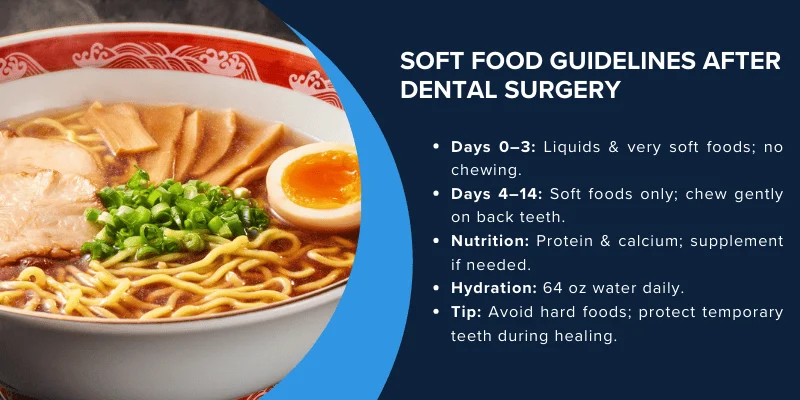
Your temporary teeth need protection during healing, so dietary restrictions follow a specific progression. Days 0-3 mean liquids and very soft foods only.
Protein shakes, broth, blended soups, smoothies, yogurt, pudding, and mashed potatoes work well. Nothing should require chewing. Keep foods room temperature or cool to avoid irritating tissues.
Days 4-14 let you add soft foods like cottage cheese, soft pasta, ground meat in sauce, flaky fish, and well-cooked vegetables. Cut everything into small pieces. Chew gently using back teeth and avoid putting pressure on your front temporary bridge.
Your body needs protein to repair tissue and calcium for bone integration with implants. If solid food feels difficult, supplement with protein shakes or Greek yogurt. Drink at least 64 ounces of water daily even when eating is challenging.
Common mistakes include testing your temporary teeth with foods they’re not ready for or skipping meals out of frustration. Your temporary bridge serves an important function but isn’t designed for full chewing force. Following restrictions protects your investment and prevents damage during vulnerable healing periods.
Critical Healing Milestones: Weeks Three to Twelve
During weeks three to twelve, your body shifts from surface healing to deep bone integration. This period determines whether your implants will last for decades or face early complications.
Soft Tissue Healing and Osseointegration
Your gums should be mostly healed by week three, but the real work happens beneath the surface. Osseointegration is when your jawbone fuses with the titanium implant posts. This process takes three to six months to complete.
During the osseointegration phase, your bone cells grow around the implant surface to create a stable foundation. You won’t feel this happening, but it’s the most critical part of implant recovery.
If you had bone grafting during your surgery, your healing timeline may be longer. The grafted bone needs extra time to integrate with your natural jawbone before the implants can fully stabilize.
Your dentist will monitor bone integration through X-rays and physical examinations. Most patients see significant bone healing by week eight, though complete integration takes longer.
Transitioning Diet and Activity
You can start adding more variety to your meals around week four or five. Begin with soft proteins like scrambled eggs, flaky fish, and well-cooked chicken cut into small pieces.
By week six, many patients can handle steamed vegetables, soft pasta, and tender meats. Avoid hard, crunchy, or sticky foods that could stress your implants during the dental implant healing process.
Don’t rush to eat tough foods even if you feel great. Your implants might feel solid, but the bone connection is still forming. Biting into hard foods too soon increases your implant failure risk.
You can gradually return to normal activities during this period. Light exercise is fine by week four, but avoid contact sports or activities that could result in facial trauma until your dentist clears you.
Schedule an appointment at Minot Dental Partners to walk through the full All-on-X dental implants recovery timeline and make your treatment plan feel clear and manageable.
Recognizing Signs of Healthy Recovery
Healthy healing looks like:
- Reduced swelling and no new inflammation
- Pink gums that aren’t red or puffy
- No persistent pain or throbbing
- Implants that feel stable when you touch them gently
- Ability to eat soft foods without discomfort
Your temporary teeth should fit comfortably without causing sore spots. Some minor adjustments are normal, but ongoing irritation needs attention.
Check your gums daily for changes in color or texture. Healthy tissue appears pink and firm, not dark red or swollen.
Potential Complications and How to Respond
Implant complications are rare but need immediate attention. Contact your dentist right away if you notice any warning signs during implant recovery.
Signs of problems include:
- Implants that feel loose or move
- Severe pain that doesn’t improve with medication
- Pus or drainage around the implant sites
- Fever above 101°F
- Swelling that gets worse after week two
Infection is the most common complication during this phase. Your dentist may prescribe antibiotics if bacteria enter the surgical sites. Poor oral hygiene increases your risk of infection and implant failure.
Smoking dramatically slows bone healing and increases implant complications. If you smoke, quitting now can still improve your outcomes even weeks after surgery.
Some patients experience nerve sensitivity or numbness that persists beyond the first few weeks. This usually resolves on its own, but your dentist should evaluate any lasting numbness.
Long-Term Recovery: Final Restoration and Adjustment
The permanent fixed bridge arrives months after surgery once your titanium implants fully integrate with your jawbone. This final phase involves custom smile design work, precise fitting appointments, and learning to live with teeth that don’t come out at night.
When to Expect Your Permanent Fixed Bridge
Most patients receive their permanent restoration between three and six months after implant placement. The exact timing depends on how well your bone integrates with the titanium implant posts. Your dentist confirms integration through clinical examination and sometimes imaging before moving forward.
Upper jaw implants typically need four to six months because the bone is less dense. Lower jaw implants often finish integration in three to four months due to denser bone structure. Smokers and diabetics may need additional healing time before the permanent bridge is ready.
Once your dentist confirms the implants are stable, the final restoration process begins. You’ll continue wearing your temporary teeth during fabrication of the permanent bridge, which takes two to three weeks from start to finish.
Smile Design and Final Fitting Process
Your permanent bridge starts with digital scans of your mouth and temporary restoration. These scans capture the exact position of each dental implant and show how your bite comes together. The lab uses this information to design teeth that fit your face shape, lip line, and personal preferences.
You’ll discuss tooth color, shape, and size during the design phase. The lab creates a prototype that you can preview before final fabrication. This preview appointment lets you see how the teeth look and request adjustments to length, width, or shade.
The final fitting appointment takes one to two hours. Your dentist removes the temporary bridge, cleans around the implant sites, and places your permanent fixed teeth. Small adjustments to bite alignment happen during this visit using precise measurements and articulating paper to identify pressure points.
Adapting to Fixed Teeth in Daily Life
Your permanent restoration requires an adjustment period even though you’ve worn temporary teeth for months. The final bridge feels different because it’s made from stronger materials and fits more precisely than the temporaries.
Speaking clearly takes a few days of practice. Reading aloud helps your tongue adapt to the new contours. Eating expands gradually from soft foods to regular textures over the first week with your permanent teeth.
Daily care includes:
- Brushing around the bridge twice daily with a soft toothbrush
- Using a water flosser to clean under the restoration
- Scheduling professional cleaning every three to six months
You can eat foods that were impossible with dentures or failing teeth. Apples, steak, corn on the cob, and nuts become normal parts of your diet again. The permanent fixed teeth don’t move or slip during meals like traditional dentures.
All-on-X Aftercare and Daily Maintenance Essentials
Proper daily cleaning prevents infection around implant sites while professional checkups catch problems early. Using the right tools like water flossers and interdental brushes protects your investment for decades.
Oral Hygiene Routines for Implants
Your All-on-X implants need cleaning twice daily just like natural teeth. Brush gently along the gumline where the prosthesis meets your gums using a soft-bristled toothbrush. This area collects food particles and bacteria that can cause peri-implant mucositis, which is inflammation around implants similar to gum disease.
Daily cleaning routines should include brushing all surfaces of your restoration and the tissue contact areas underneath. Tilt your brush at a 45-degree angle to reach under the prosthesis where debris hides. Spend at least two minutes on each arch if you have implants on both upper and lower jaws.
A saltwater rinse after meals helps reduce bacteria and soothe tissues during the first few weeks of healing. Mix half a teaspoon of salt in eight ounces of warm water and swish gently for 30 seconds. Your dentist may prescribe a chlorhexidine rinse if you show signs of inflammation or infection risk.
Tools for Cleaning and Prevention

Water flossers are essential tools for All-on-X maintenance because they flush debris from hard-to-reach areas under your prosthesis. Use a water flosser at medium pressure once daily, directing the stream along the gumline and between the prosthesis and your tissue. This removes food particles that brushing alone misses.
Interdental brushes clean the spaces between implant attachments and under the restoration more effectively than traditional floss. These small cone-shaped brushes come in various sizes to fit different gap widths. Gently insert the brush and move it back and forth without forcing it into tight spaces.
Your cleaning toolkit should include:
- Soft-bristled or electric toothbrush
- Water flosser for daily irrigation
- Interdental brushes in appropriate sizes
- Non-abrasive toothpaste (avoid whitening formulas)
- Antimicrobial mouth rinse as directed
Avoid metal tools or abrasive cleaners that scratch your prosthesis surface. Scratches create rough areas where bacteria accumulate and compromise your oral health.
Professional Maintenance Visits
You need checkups every three to six months to monitor implant health and catch complications early. Your dental team examines tissues around each implant for signs of peri-implantitis, which is a serious infection that can lead to implant failure if untreated. These visits include professional cleaning that removes buildup you can’t reach at home.
During maintenance visits, your dentist checks the fit of your prosthesis and tightens screws if needed. Loose components allow bacteria to enter and create inflammation. X-rays taken periodically show bone levels around implants to confirm osseointegration remains stable.
Professional cleanings use specialized instruments designed for implants that won’t damage titanium surfaces or porcelain. Your hygienist removes calculus deposits and polishes your restoration to keep it looking and functioning properly.
Bite Protection and Night Guard Use
A night guard protects your All-on-X restoration if you grind or clench your teeth during sleep. Bruxism creates excessive force on implants that can loosen screws, crack prosthetic teeth, or stress the implant-bone connection. Most patients don’t realize they grind until their dentist notices wear patterns on their restoration.
Custom night guards cushion your bite and distribute pressure evenly across all implants. Over-the-counter guards don’t fit properly with All-on-X prosthetics and may cause more problems than they solve. Your dentist takes impressions to fabricate a guard that fits precisely over your restoration.
Wear your night guard every night if prescribed. Clean it daily with a soft brush and mild soap, then store it in its protective case. Replace the guard when it shows signs of wear or no longer fits snugly.
What Patients Don’t Expect During Recovery
Recovery from All-on-X surgery involves physical healing that most patients anticipate, but the emotional adjustments, mistaken assumptions about the process, and unexpected daily challenges often catch people off guard. Understanding these hidden aspects helps you prepare mentally and practically for what lies ahead.
Emotional Adaptation and Surprises
Your mouth feels different immediately after surgery, and this sensation can trigger unexpected emotional responses. Many patients report feeling overwhelmed when they first see their temporary teeth or experience the bulk of the restoration against their tongue and cheeks.
The adjustment period involves more than physical healing. You might feel self-conscious about speaking differently or worry that others notice changes in your appearance. These concerns typically fade within two to three weeks as you adapt to your new teeth.
Some patients experience unexpected grief over losing their natural teeth, even when those teeth were failing. This emotional response is normal and doesn’t mean you made the wrong choice. The feeling usually passes once you begin enjoying the benefits of your new smile.
Energy levels during early implant recovery often surprise patients who expected to feel normal quickly. Your body uses significant resources to heal surgical sites and integrate implants with bone, which can leave you feeling tired for the first week or two.
Common Misconceptions
Most patients assume they’ll eat normally within days of surgery, but the soft food diet actually lasts three to six months. This extended timeline protects your temporary teeth and allows proper bone integration before you can handle full chewing force.
Clinical evidence on dental implant healing and osseointegration supports the underlying reason for extended dietary precautions, because the bone needs time to fuse with the implant, and this is the stage that takes the longest (3–6 months), not just the soft-tissue healing.
The idea that temporary teeth function like permanent ones causes problems when patients test them with hard foods too early. Your temporaries are designed for appearance and light function, not for biting into apples or chewing steak.
Many people believe swelling and bruising mean something went wrong. These are actually normal healing responses that peak around day two and gradually resolve over the following week.
Pain expectations vary widely, with some patients fearing unbearable discomfort while others expect no pain at all. The reality falls between these extremes. Most people describe manageable soreness similar to multiple tooth extractions that improves steadily after the first three days.
The timeline for final teeth surprises patients who thought they’d receive their permanent restoration immediately. Bone integration requires three to six months before your implants can support the forces of permanent prosthetics.
Unforeseen Challenges and Tips
Speaking clearly with new teeth takes practice that most patients don’t anticipate. Certain sounds like “s” and “th” feel different at first because your tongue adjusts to the restoration’s shape and position.
Practice reading aloud for 10-15 minutes daily during your first two weeks. This speeds up adaptation and builds confidence before you return to work or social activities.
Sleeping positions become limited when you need to keep your head elevated. Side sleepers struggle with this requirement, which lasts about one week to minimize swelling and bleeding.
The cleaning routine for temporary teeth differs from natural tooth care. You can’t remove your restoration to clean it, so you must learn to clean around it while it stays in your mouth.
Meal planning requires more thought than expected. Having soft foods prepared before surgery prevents stress when you’re uncomfortable and don’t want to cook. Stock up on protein shakes, broths, yogurt, mashed potatoes, and scrambled eggs.
Temperature sensitivity catches some patients off guard. Very hot or cold foods can feel uncomfortable against healing tissues during the first few weeks of dental implant recovery.
Long-Term Success and Avoiding Setbacks
Implant failure risk increases when patients don’t follow dietary restrictions during the integration period. Biting hard foods before bone fully integrates can create micro-movements that prevent proper healing.
Smoking during recovery significantly impacts success rates. Nicotine restricts blood flow to healing tissues and can prevent implants from integrating properly with your jawbone.
Infection remains a concern throughout the healing process, not just the first week. Poor oral hygiene or skipping prescribed antibiotics can lead to problems that jeopardize your implants months after surgery.
Regular follow-up appointments aren’t optional. These visits let your dental team monitor healing, adjust temporary teeth if needed, and catch potential problems before they become serious.
The commitment to oral hygiene must continue after you receive final teeth. Daily cleaning around your implants and regular professional maintenance protect your investment for decades. Neglecting care after recovery can lead to peri-implantitis, an infection that damages bone around implants.
Your diet after final teeth placement still requires some awareness. While you can eat most foods, extremely hard items like ice or hard candies can damage prosthetics just as they would natural teeth.
Take the next step toward confident healing. Complete our quick New Patient Form to start your All-on-X implant evaluation and receive tailored recovery guidance from our dental team.
Frequently Asked Questions
Recovery from All-on-X surgery brings questions that don’t always come up during your consultation. Most patients want to know about timelines, unexpected sensations, and daily life adjustments during healing.
How long does it typically take to fully recover after an All-on-X dental implant procedure?
Full recovery from All-on-X surgery takes three to six months for complete bone integration. Your temporary teeth are placed immediately during surgery, so you leave with a complete smile the same day.
The first week brings the most noticeable discomfort and swelling. Most patients feel significantly better by day three or four.
External healing of your gums happens within two weeks. You’ll look normal again and feel comfortable with basic activities.
The longer timeline reflects internal healing where your jawbone fuses with the titanium implants. This process called osseointegration happens gradually over several months. You won’t feel this happening, but it’s essential for long-term implant success.
After bone integration completes between months three and six, your dentist will place your permanent teeth. Once you receive your final restoration, all diet restrictions lift and recovery is complete.
What are some unexpected aspects of the recovery process from All-on-X dental implants?
Many patients don’t expect to leave surgery with temporary teeth already in place. You won’t have a gap or empty mouth during healing. These temporaries stay in your mouth permanently and you clean around them rather than removing them.
The temporary teeth feel bulkier than natural teeth at first. Your tongue notices the difference and your speech may sound slightly off for a few days. Most patients adjust within a week.
Swelling peaks on day two rather than immediately after surgery. You might feel okay the first evening, then wake up the next morning looking more swollen than you expected.
The sensation of having teeth again after years of dentures or failing teeth can feel strange. Your brain needs time to adjust to the new feeling in your mouth. Some patients describe it as exciting but weird.
Managing pain often requires staying ahead of it with medication rather than waiting until discomfort becomes severe. Taking pills on schedule works better than taking them only when pain hits.
Fatigue during the first week surprises many patients. Your body uses significant energy for healing, which makes you tired even though you’re resting at home.
Can you describe any day-to-day changes I might experience during my first month after All-on-X surgery?
Day one brings peak numbness from anesthesia that lasts four to six hours. You’ll feel pressure and tightness in your face even though visible swelling hasn’t appeared yet.
Day two usually marks your most uncomfortable day. Swelling reaches its maximum, your face feels stiff, and opening your mouth takes effort. Bruising may start appearing along your jawline.
By day three, you’ll notice a turning point. Swelling begins decreasing and pain becomes more manageable. Your energy returns and daily activities feel less challenging.
Days four through seven show steady improvement each day. You can open your mouth wider, eat a greater variety of soft foods, and reduce pain medication. Many patients return to work during this week if their job doesn’t involve physical labor.
Week two brings significant relief. External swelling disappears almost completely and your face looks normal again. You feel confident managing your new teeth and establishing cleaning routines.
Weeks three and four settle into a plateau. You feel mostly normal with dietary restrictions. Life returns to regular routines except you’re still eating soft foods and adjusting to speaking clearly with your temporary teeth.
Are there specific foods or activities I should avoid during my All-on-X dental implants healing period?
The first three days require liquids and very soft foods only. Protein shakes, broth, smoothies, yogurt, and mashed potatoes protect your surgical sites and temporary teeth during the most vulnerable healing period.
Days four through fourteen allow soft foods that don’t require real chewing. Scrambled eggs, cottage cheese, soft pasta, ground meat in sauce, and well-cooked vegetables work well. Cut everything into small pieces and chew gently using your back teeth.
For weeks three through eight, you can eat expanded soft foods like tender chicken, soft sandwiches, cooked rice, and soft fruits. Avoid hard, crunchy, or chewy foods that stress your temporary teeth.
Activities to avoid during the first week include bending over, heavy lifting, or strenuous exercise. These activities increase blood pressure and can trigger bleeding from surgical sites.
Don’t smoke during recovery. Smoking dramatically slows healing and increases your risk of implant failure.
Avoid using straws for the first 24 hours despite old advice about suction. Modern All-on-X procedures don’t create the same concerns as traditional extractions, but some dentists still recommend caution.
Skip alcohol while taking pain medication. The combination affects your coordination and judgment.
Stay away from extremely hot foods or drinks during the first week. Heat can increase bleeding and irritate healing tissues.
What kind of maintenance should I expect to do at home to ensure the best recovery for my All-on-X implants?
Daily cleaning starts 24 hours after surgery. You’ll brush your temporary teeth gently with a soft toothbrush, focusing on where the teeth meet your gums. Your temporary teeth don’t come out, so you clean around them while they stay in your mouth.
Rinsing with warm salt water three to four times daily helps keep surgical sites clean. Mix one teaspoon of salt in eight ounces of warm water and swish gently.
Use a water flosser on low pressure to clean under and around your temporary teeth. This removes food particles that brushing can’t reach. Start gently and increase pressure as healing progresses.
Take all prescribed medications on schedule. This includes antibiotics to prevent infection and pain medication to manage discomfort.
Apply ice packs for 20 minutes on and 20 minutes off during the first 48 hours. This reduces swelling and provides comfort.
Sleep with your head elevated on two to three pillows for the first three to four nights. Elevation reduces swelling and throbbing pain.
Attend all follow-up appointments. Your dentist needs to check healing progress, adjust temporary teeth if needed, and confirm osseointegration before placing permanent teeth.