
Failed dental implant osseointegration occurs when an implant does not form a stable bond with the surrounding jawbone.
Your dentist first confirms whether the implant itself has failed, evaluates the site, and determines whether removal and replacement are necessary.
Depending on the condition of the bone and surrounding tissues, a replacement implant may be placed immediately or after healing.
In most single-tooth dental implant cases, a redo means removing the loose implant gently, fixing whatever caused the first failure, and placing a new implant once the bone can hold it firmly, sometimes on the same day and sometimes after weeks or months of healing or grafting.
The word for that bond is osseointegration. It describes a direct structural and functional connection between living bone and the implant surface.
Failed osseointegration means that connection never formed, so the implant sits in soft tissue and can’t carry a tooth.
You may feel let down, and that’s fair. A second attempt still has solid odds when the plan changes to match what went wrong the first time.
Key Takeaways
- A loose crown and a loose implant are different problems, so the first step is finding which part moves.
- Same-day replacement works only when the site is clean and enough firm bone remains.
- Second implants succeed in most published cases, though the studies are small and the odds run a bit lower than for first implants.
Table of Content
- What Happens When a Single Implant Does Not Bond?
- How Is the Failed Implant Removed?
- Can a Replacement Implant Go in Right Away?
- How Long Does the Redo Process Take?
- What Changes the Second Time Around?
- Making a Plan for a Second Implant
- Frequently Asked Questions
What Happens When a Single Implant Does Not Bond?
An implant that has failed to osseointegrate may remain mobile and cannot reliably support a restoration.
Once true implant failure is confirmed, removal and reassessment are generally necessary. However, reduced stability during normal early healing does not always mean osseointegration has failed.
Dental implant failure comes in two main kinds. Dental implant failure is commonly classified as early or late.
Early failure occurs before stable osseointegration is achieved, while late failure happens after an implant has initially integrated.
Late failure may involve peri-implantitis, excessive mechanical loading, or other biological and technical complications.
You may hear the phrase “dental implant rejection.” True allergy to titanium is rare. What people call rejection is almost always a healing problem, such as infection, too much pressure, or bone that was too soft.
Two gum conditions are worth knowing:
- Mucositis: red, puffy gums that bleed around the implant, with no bone loss. It can be reversed with cleaning.
- Peri-implantitis: the same gum swelling plus loss of supporting bone around the implant. Smoking and a history of gum disease are the main risk factors.
If you want a full list of symptoms, see our guide to the early signs of dental implant failure.
How Does the Dentist Confirm the Implant Failed to Integrate?
Movement is the clearest sign. A bonded implant feels as solid as bone. Your dentist will press on it gently, and may try to turn it with a small instrument. If it spins or shifts, it hasn’t bonded.
Imaging comes next:
- Dental X-rays show a dark line around the implant when bone hasn’t attached.
- A 3D CBCT scan maps how much bone surrounds the site and where nearby nerves and the sinus sit.
- A stability reading with a handheld device gives a number for how firm the implant is.
Pain alone doesn’t confirm failure. Some soreness after surgery is normal. What raises concern is pain that gets worse, or returns after you felt better.
Is the Implant Loose, or Is It the Crown or Abutment?
This is the most important check before anyone talks about removal. An implant has three parts: the post in the bone, the abutment (a connector), and the crown on top. Any one of them can wiggle.
| What feels loose | Likely cause | Usual fix |
| Crown only | Cement washed out or screw loosened | Re-cement or retighten |
| Crown and abutment together | Abutment screw loosened | Tighten or replace screw |
| Whole unit, including the post | Implant never bonded or lost bone | Removal and redo |
A loose screw is common and easy to fix. In practice, many patients who come in worried about failure leave with a tightened screw and a stable tooth.
If your implant feels loose after surgery, or your crown feels off weeks after placement, get it checked before assuming the worst.
How Is the Failed Implant Removed?
An implant that has not integrated may be easier to remove than one firmly attached to the jawbone. However, the procedure depends on the implant’s stability, surrounding bone, and presence of infection.
The clinician aims to remove the failed implant while preserving as much healthy bone as possible for future treatment.

What Happens During Removal?
Your dentist or oral surgeon numbs the area. Since the implant sits in soft tissue, it can often be unscrewed by hand or with a small wrench.
Removal of an implant that never bonded is relatively straightforward because the implant is not osseointegrated.
After the implant is out, the surgeon cleans the socket. That means scraping away the soft tissue that formed where bone should have grown, and rinsing out any infection.
Most people describe the visit as easier than the first dental implant surgery. If you feel anxious, ask about sedation dentistry for dental implant surgery. Expect mild soreness for a few days and soft foods for a short while.
What Does the Clinician Check Before Planning Another Implant?
Before a new plan, the clinician looks hard at the empty site and at your health. Useful questions include:
- Is there infection left in the socket or nearby teeth?
- How much bone is left, and how thick are the walls?
- Was the first implant in the best spot for the crown?
- Did a temporary tooth or your bite put pressure on it while healing?
- Have smoking, blood sugar, or medications changed?
You should also ask your own questions. At Minot Dental Partners, the second plan starts with a fresh review, much like a new dental implant consultation process, so the redo isn’t a copy of the first surgery.

Can a Replacement Implant Go in Right Away?
Sometimes, yes, but only when the site is clean and the jawbone can grip a new implant tightly. When infection or bone loss is present, waiting or grafting first gives the new implant a better start.
When Is Same-Day Replacement Possible?
Same-day placement works when a few things line up:
- No active infection after cleaning
- Enough healthy bone to hold the new implant firmly from day one
- Room to use a slightly wider or longer implant, or a new angle, to reach fresh bone
That first-day grip is called primary stability. Research notes that immediate implants can show a temporary “stability dip” during early healing, so your dentist needs a strong starting grip to ride through it.
Curious whether you’d qualify? Our page on who qualifies for same day dental implants covers the basics.
When Is It Better to Let the Site Heal First?
Waiting is the safer choice when the socket held infection, when bone walls are thin or missing, or when the cause of failure is still unclear. Placing a new implant just to save time adds risk if the original problem remains.
Healing first lets new bone fill the socket and the gums close over it. Most dentists wait several weeks to a few months, then take a fresh scan before placing the new implant.
When Might a Bone Graft or Sinus Lift Be Needed?
A bone graft may be recommended when the failed implant has left insufficient bone to support a replacement.
The need for grafting depends on the amount, shape, and quality of the remaining jawbone, along with the planned implant position.
A sinus lift applies only to upper back teeth. The sinus floor is gently raised and graft placed under it to add height.
Studies of replacement in sinus-grafted sites reported 100% survival in additionally grafted sites and 92% in non-grafted ones, though these were small groups.
How Long Does the Redo Process Take?
A redo can take as little as three to four months with same-day replacement, or close to a year when grafting and healing come first. The bone’s pace sets the timeline more than anything your dentist schedules.
How Do Grafting and Healing Change the Timeline?
Here’s a typical range for a single implant:
| Path | Steps | Rough total time |
| Same-day replacement | Remove and place, then bonding period | About 3 to 6 months |
| Heal first | Socket healing, new implant, bonding | About 5 to 9 months |
| Graft first | Graft maturing, new implant, bonding | About 8 to 12 months |
Upper jaw sites often take longer because the bone is softer. A sinus lift adds time as well. Your dentist may recommend a longer healing period for a replacement implant, depending on bone quality, implant stability, grafting needs, and other clinical factors.
When Can the New Implant Support a Crown?
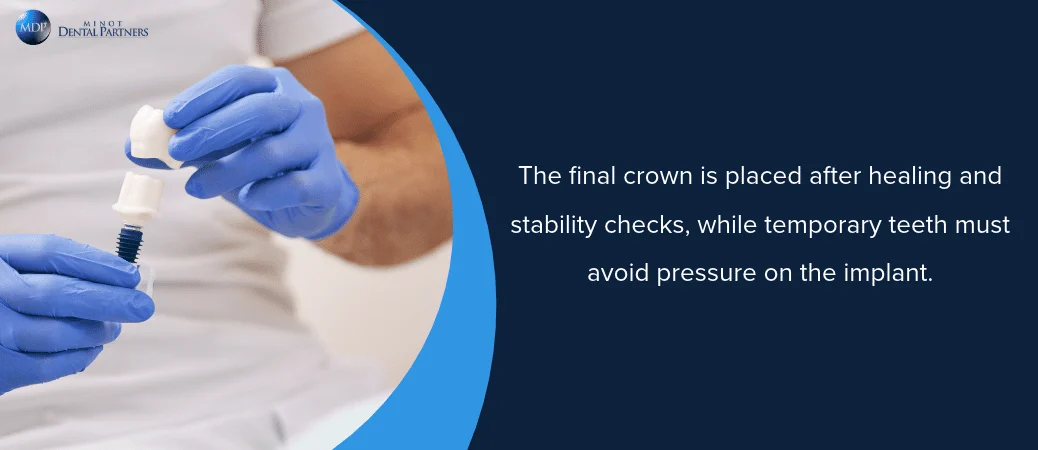
The final crown is typically placed after the clinician determines that the implant has achieved adequate stability and the surrounding tissues have healed appropriately. Clinical examination, imaging, and stability measurements may help guide this decision.
Your dentist will recheck movement, take an X-ray, and may take a stability reading. If the numbers look good, an impression or scan is taken for the final crown.
During healing you may wear a temporary tooth that stays clear of your bite. That matters, because pressure on a healing implant is a known cause of failure.
What Changes the Second Time Around?
The second plan targets the specific reason the first implant failed. That can mean a different implant size or angle, a graft, a longer healing time, or changes to your health habits.
How Is the Cause of the First Failure Addressed?
Each likely cause has a matching fix:
- Infection: the site is cleaned well, and nearby gum disease is treated first. If you’ve had gum problems, read about dental implants after periodontal disease.
- Soft or thin bone: grafting, or a wider implant placed into denser bone.
- Too much pressure: a temporary tooth kept out of the bite, plus a night guard if you clench. See how teeth grinding affects dental implants.
- Smoking or high blood sugar: quitting or cutting back around surgery, and working with your doctor on diabetes control.
Good oral hygiene carries a lot of weight here. Brush gently around the site, use any rinse your dentist prescribes, and keep every follow-up visit. Some failures have no clear cause, and that isn’t your fault.
Making a Plan for a Second Implant

A failed implant is a setback you can recover from. Confirm first that the implant itself is loose, then let your dentist remove it gently and study why it failed.
From there, the choice between same-day replacement, healing first, or grafting comes down to your bone and how clean the site is. Expect a few months for a simple redo and up to a year with grafting.
Before committing to another implant, ask what will change in the treatment plan.
At Minot Dental Partners, Dr. Kyle Perkins can help you review your concerns, discuss the findings from your examination, and explore appropriate options for replacing a failed dental implant.
Frequently Asked Questions
What happens if a dental implant never integrates with the bone?
It stays loose and has to be removed, since bone won’t attach to it later. After removal, the site is cleaned and either receives a new implant or heals first.
Can a failed implant be removed and replaced on the same day?
Yes, when the socket is free of infection and enough firm bone remains to hold the new implant tightly. If either is missing, your dentist will wait or graft first.
How long do I have to wait after a bone graft to get another implant?
Most grafts need a few months to mature, and larger grafts or sinus lifts need longer. Your dentist will take a new scan to confirm the bone is ready.
Is a second dental implant less likely to succeed?
Slightly, according to published reviews, but most second implants still succeed. Fixing the cause of the first failure gives you the best odds.
How can my dentist tell whether the replacement implant has integrated?
Your dentist checks that the implant doesn’t move, looks for bone contact on an X-ray, and may take a stability reading. A firm implant with healthy gums is ready for its crown.