



Walking into your first dental implant consultation might feel a bit nerve-wracking, but knowing what to expect can turn that anxiety into confidence
Your first implant consultation or a first dental visit typically includes a detailed oral examination, advanced imaging like 3D scans, a review of your medical history, and a personalized treatment plan discussion that covers costs, timeline, and whether you’re a good candidate for implants.
This appointment usually lasts between 60 to 90 minutes and gives you a chance to ask questions and understand all your options.
Understanding what happens during a dental implant consultation helps you prepare the right documents and questions ahead of time.
You’ll meet with your dental team, get a clear picture of your bone health, and learn about the steps involved in getting your new smile. Most practices want this visit to feel informative and pressure-free, so you can make the best decision for your situation.
This guide breaks down each part of your consultation visit so you know exactly what will happen from the moment you arrive until you leave with your treatment plan.
You’ll learn what to bring, what questions to ask, and how to make the most of this important first step toward replacing your missing teeth.
Key Takeaways
- Your consultation includes a thorough exam, imaging tests, and a personalized plan based on your specific needs
- You’ll receive clear information about costs, treatment timeline, and whether additional procedures like bone grafting are needed
- The visit focuses on education and answering your questions so you can make an informed decision without pressure
Preparing for Your First Dental Implant Consultation
Getting ready for your implant consultation involves collecting your dental records, following any pre-appointment instructions, and knowing what documents to bring.
Taking these steps helps your dentist create a personalized treatment plan and makes your visit more productive.
Gathering Dental Records and Medical History
Your dentist needs a complete picture of your dental history to plan safe and effective treatment.
Contact your previous dental offices and request copies of recent X-rays, treatment notes, and any records of past surgeries or extractions.
Make a list of all medications you currently take, including supplements and over-the-counter drugs. Write down any medical conditions you have, such as diabetes, heart disease, or osteoporosis.
Include information about allergies to medications or materials.
If you’ve had dental implants before, bring those records too. Your dentist will want to know about any complications or concerns from previous procedures.
This background helps identify potential challenges early and allows for better planning.
Pre-Consultation Instructions and Managing Dental Anxiety
Most first dental implant consultations don’t require special pre-surgical instructions since the appointment is typically just an evaluation. You can eat and drink normally before your visit.
If you feel nervous about your appointment, that’s completely normal. Many people experience dental anxiety. Try these helpful strategies:
- Arrive 10 minutes early to avoid feeling rushed
- Bring headphones and calming music
- Practice slow, deep breathing exercises
- Ask a friend or family member to come with you
- Write down your questions ahead of time
Let the office staff know if you’re anxious when you schedule your appointment. They can offer additional support and answer questions that might ease your concerns.
What to Bring to Your Appointment
Bring your photo ID and dental insurance card if you have coverage. Pack all the dental records you’ve collected, including X-rays on a CD or USB drive if they were provided digitally.
Your medication list and medical history notes should come with you. If you take multiple medications, you can also bring the actual bottles to make things easier.
Essential items to bring:
- Photo identification
- Insurance cards
- List of current medications
- Medical history notes
- Previous dental X-rays and records
- List of questions for your dentist
- Eyeglasses (if you wear contacts)
Consider bringing a notebook to write down important information during your appointment. Your dentist will discuss treatment options, timelines, and costs, and having notes helps you remember details later.
Comprehensive Oral and Diagnostic Assessment
Your dentist will perform a detailed examination of your mouth and use advanced imaging technology to create an accurate picture of your oral health.
These assessments help determine if you’re a good candidate for implants and reveal any issues that need attention first.
Oral Examination and Gum Health Evaluation
Your dentist starts with a thorough look at your teeth, gums, and jawbone. They’ll check each tooth to see which ones are healthy and which might need removal before implant placement.
Gum health plays a big role in implant success. Your dentist will measure the depth of your gum pockets and look for signs of gum disease. Healthy gums should be pink and firm, not red or swollen.
During the comprehensive oral examination, your dentist will also check:
- How your teeth come together when you bite
- The condition of any remaining teeth near the implant site
- The thickness and quality of your gum tissue
- Any signs of teeth grinding or jaw problems
They’ll feel your jawbone through your gums to get an initial sense of bone density. This hands-on assessment gives your dentist important clues about what shows up later on imaging scans.
CBCT Scans and Digital X-Rays
Modern implant consultations rely on digital x-rays and 3D cone beam CT scans to see what’s happening beneath your gums. These images show details that a regular exam can’t reveal.
A CBCT scan creates a three-dimensional picture of your jaw.
This cone beam computed tomography technology shows your dentist exactly how much bone you have, where your nerves are located, and if your sinuses sit too close to potential implant sites.
Digital imaging offers several benefits:
- Shows bone height and width measurements
- Reveals bone density and quality
- Identifies hidden infections or cysts
- Helps plan the exact angle and position for each implant
Dental x-rays might include panoramic views that show your entire mouth or smaller images that focus on specific areas. Your dentist uses these images to spot problems like bone loss or failing root canals.
Advanced Technology for Implant Planning
Your dentist will use the data from your CBCT scans to create a detailed treatment plan on a computer. This advanced technology lets them practice placing your implants virtually before your actual surgery.
Digital scanning replaces messy impression trays. A small camera takes pictures of your teeth to create a 3D model of your mouth. This model helps design your final crowns and shows how everything will fit together.
Some offices use surgical guides created from your scans. These guides act like a template during surgery, helping your dentist place implants at the exact angle and depth planned on the computer.
This precision improves your results and speeds up healing time.
Personalized Treatment Planning and Candidacy
Your dentist will create a customized implant treatment plan based on your unique oral health needs, bone structure, and personal goals.
This planning phase determines which implant options work best for you and establishes realistic expectations for cost and timeline.
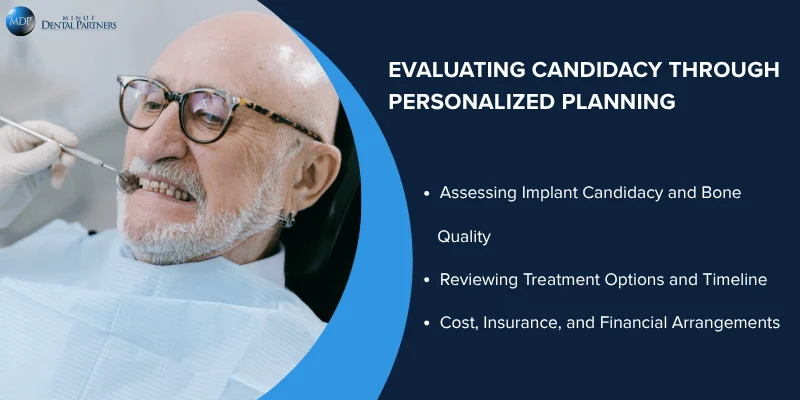
Assessing Implant Candidacy and Bone Quality
Your dentist evaluates several factors to determine your implant candidacy during the consultation. They check your jawbone density and volume using 3D scans to see if you have enough bone to support implants.
Key factors affecting candidacy:
- Adequate bone height and width for implant placement
- Healthy gums without active periodontal disease
- Overall health conditions that affect healing
- Lifestyle habits like smoking or teeth grinding
If you lack sufficient bone, your dentist may recommend bone grafting before implant placement. This procedure rebuilds your jawbone over several months.
The bone graft allows for proper osseointegration, which is when the implant fuses with your natural bone.
Your dentist also considers the location of nerves and sinuses. These structures affect where they can safely place implants without complications.
Reviewing Treatment Options and Timeline
Your personalized treatment plan outlines which implant type suits your situation best. Options range from single tooth replacements to full-arch solutions like All-on-X implants.
Common implant solutions include:
- Single implants for individual missing teeth
- Implant-supported bridges for multiple adjacent teeth
- Mini implants for narrow spaces or denture stabilization
- Full-arch restoration using four to six implants
Your dentist may use surgical guides for precise implant placement. These custom tools ensure implants go in at the exact angle and depth planned.
The timeline varies based on your needs. Simple cases take three to six months from implant placement to final crown. Complex cases requiring bone grafting can extend to eight to twelve months.
Your dentist provides a detailed schedule showing each phase of treatment.
Cost, Insurance, and Financial Arrangements
You’ll receive a detailed breakdown of all costs during your dental implant consultation. The total includes consultation fees, imaging, surgery, implant hardware, and final restoration.
Typical cost components:
| Item | What It Covers |
| Diagnostic fees | X-rays, 3D scans, examination |
| Surgical costs | Implant placement procedure |
| Materials | Titanium posts, abutments, crowns |
| Additional procedures | Bone grafts, extractions if needed |
Many dental practices offer flexible payment plans to make treatment more manageable. Your dentist’s office will review your insurance coverage to see what portions they cover.
Most dental insurance plans cover part of the implant crown but not the surgical portion. Some medical insurance may help with bone grafting if it’s medically necessary.
Your dentist provides written estimates so you understand all financial obligations before committing to treatment.
Discussing the Dental Implant Procedure and What to Expect
Your dentist will walk you through each phase of the implant placement process and explain your options for staying comfortable during the procedure. This discussion helps you understand the timeline and what recovery will look like.
Overview of the Implant Placement Process
During your dental implant consultation, your dentist will explain the stages of the dental implant procedure in detail. The process typically happens over several months.
First, if you need a damaged tooth removed, that happens during an initial appointment. Some patients may need a bone graft if their jawbone isn’t thick enough to support an implant.
This material fills in areas where bone has been lost.
The implant placement surgery comes next. Your dentist surgically places a small titanium post into your jawbone. This acts as your new tooth root.
After placement, you’ll get a temporary restoration to protect the area. Your jawbone then needs two to six months to heal and bond with the implant.
Once healed, your dentist attaches a connector piece called an abutment, followed by your dental crown.
Sedation Options and Comfort Measures
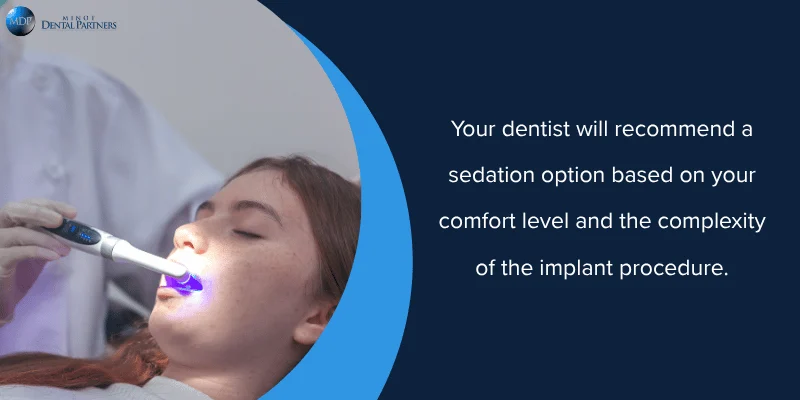
Your dentist will discuss sedation options during your dental implant consultation to keep you comfortable. Local anesthesia numbs the treatment area for most patients.
If you feel anxious about the implant procedure, you can ask about deeper sedation. Options include oral sedation pills or IV sedation that helps you relax or sleep through the surgery.
Your dentist will explain which sedation level makes sense for your specific case. The complexity of your implant placement and your comfort level both matter when choosing sedation.
Addressing Questions and Setting Expectations
This is your chance to ask anything about the dental implant procedure. Your dentist wants you to feel prepared and confident.
Ask about pain levels during and after implant placement surgery. Most patients report minor discomfort that’s manageable with medication. You should also discuss how long you’ll need off work and when you can return to normal activities.
Your dentist will set realistic expectations about healing time and any dietary restrictions. They’ll explain warning signs that need immediate attention, like excessive bleeding or worsening pain.
You can also ask about costs and payment plans during this discussion.
Next Steps and Preparing for Your Dental Implant Journey
After your consultation wraps up, your dentist will outline appointment schedules, provide pre-operative instructions, and establish communication channels to support you through implant placement, healing, and final restoration.
Scheduling Follow-Up Appointments
Your dentist will book your next appointments based on your specific treatment plan. If you need a tooth extraction or socket preservation, those procedures happen first to prepare the site.
The implant placement surgery typically gets scheduled a few weeks or months later, depending on your healing needs.
You’ll also schedule a follow-up visit to check the healing cap and assess how well the implant is integrating with your jawbone. This healing period usually takes three to six months.
After that, you’ll return for abutment placement and impressions for your final crown.
Some patients need a temporary crown during the healing phase to maintain their smile appearance. Your dentist will explain the timeline for each step and help you plan around work or personal commitments.
Make sure to ask about appointment lengths and any time off you might need.
Pre-Operative Instructions and Healing Guidance
Your dental team will give you specific instructions to follow before your implant surgery. These typically include avoiding food and drinks for a certain period before the procedure, especially if you’re receiving sedation.
You may need to stop taking certain medications or supplements that affect bleeding.
After surgery, you’ll receive detailed guidance on caring for your implant site during healing. This includes what foods to eat, how to keep the area clean, and when to start brushing near the implant. Your dentist will explain warning signs to watch for and pain management strategies.
You’ll learn how to protect your healing cap and temporary restoration if you have one. Most patients can return to normal activities within a few days, but you should avoid strenuous exercise initially.
Ongoing Communication and Support

Your dental office will provide contact information for questions or concerns that arise between appointments.
Most practices have staff available to address post-operative issues or answer questions about your healing progress. Don’t hesitate to call if you notice unusual symptoms or have worries about your recovery.
Regular communication with your dental team helps ensure problems get addressed quickly. You’ll receive reminders about upcoming appointments and any preparations needed.
Some offices use patient portals or text messaging to stay connected throughout your implant journey.
Your dentist remains involved from the initial implant placement through your final restoration. This continuous support helps you feel confident as you move toward completing your new smile.
Frequently Asked Questions
Your first implant consultation brings up many questions about what happens during the visit and what comes next. These answers cover the most common concerns patients have about examinations, costs, candidacy, and treatment planning.
What will the dentist check during my first dental implant consultation?
Your dentist will perform a thorough examination of your mouth and jaw. They’ll check your gum health to make sure there’s no infection or disease that could affect implant success.
The dentist will look at your remaining teeth and how they fit together when you bite. They’ll also examine your jaw joints to see how they move and function.
Bone density is another important factor your dentist will evaluate. They need to know if you have enough bone to support an implant or if you’ll need a bone graft first.
Your dentist will also review your complete medical history. Conditions like diabetes, heart disease, or osteoporosis can affect how well implants heal and integrate with your bone.
What questions should I bring to ask at my implant consultation?
You should ask about the recommended implant system and why it’s the best choice for your situation. Different implant brands and types work better for different cases.
Ask about the complete timeline from start to finish. You’ll want to know how long each phase takes and when you can expect your final tooth.
Cost questions are important to address upfront. Ask for a breakdown of all fees including surgery, implants, crowns, and any additional procedures you might need.
You should also ask about risks and potential complications. Every surgery carries some risk, and you deserve to know what could happen.
Find out what happens if something goes wrong during treatment. Ask if revision work is covered and what the practice’s policy is on complications.
Will I need X-rays or a 3D scan at the consultation, and what are they used for?
Most implant consultations include a 3D cone beam CT scan. This scan shows your dentist the exact shape and density of your jawbone in three dimensions.
The scan reveals where nerves and sinuses are located. Your dentist needs this information to place implants safely without damaging these important structures.
Digital X-rays might also be taken to show your overall dental health. These images help identify problems with existing teeth or hidden issues below the gum line.
Your dentist uses these images to measure available bone height and width. They need specific measurements to choose the right implant size and plan the exact placement.
The scans also help create a surgical guide for the procedure. This tool ensures the implant goes in at the perfect angle and position for long-term success.
How does my dentist decide if I’m a good candidate for dental implants?
Your bone quality and quantity are the main factors in determining candidacy. You need sufficient bone density and volume to support the implant and allow it to fuse properly.
Your overall health plays a major role in the decision. Uncontrolled diabetes, active gum disease, or certain medications can reduce your chances of successful implant integration.
Your dentist will consider your healing ability. Smokers and people with immune system problems may have a harder time healing after implant surgery.
Age isn’t usually a barrier, but your jaw needs to be fully developed. Teenagers might need to wait until their bones stop growing.
Your commitment to oral hygiene matters too. Implants require good daily care and regular dental visits to stay healthy for decades.
What treatment options might be discussed besides implants, and how do they compare?
Your dentist might discuss dental bridges as an alternative. Bridges attach to nearby teeth but require grinding down healthy teeth to support the replacement.
Removable partial dentures are another option for missing teeth. They’re less expensive than implants but can slip around and feel less natural when eating or speaking.
Full dentures might be suggested if you’re missing all your teeth in one arch. Traditional dentures rest on your gums and can shift, while implant-supported dentures stay firmly in place.
All-on-4 or All-on-6 solutions use fewer implants to support a full arch of teeth. These options cost less than individual implants for every tooth and offer faster treatment timelines.
Your dentist will explain the pros and cons of each option. Implants typically last longer and feel more like natural teeth, but they require surgery and a bigger upfront investment.
What timeline and next steps should I expect after the consultation?
After your consultation, you’ll typically receive a detailed treatment plan in writing. This plan outlines each step, the costs involved, and estimated timeframes for completion.
If you need extractions or bone grafting, these procedures come first. Bone grafts usually require three to six months of healing before implant placement can happen.
The implant surgery itself takes one to two hours per implant. You’ll then need three to six months for the implant to fuse with your jawbone through a process called osseointegration.
Once healing is complete, your dentist will place an abutment and take impressions for your crown. The final crown typically arrives and gets attached within two to four weeks.
You might be able to get temporary teeth during the healing period. Your dentist will discuss options like temporary crowns or partial dentures to maintain your appearance while you heal.


