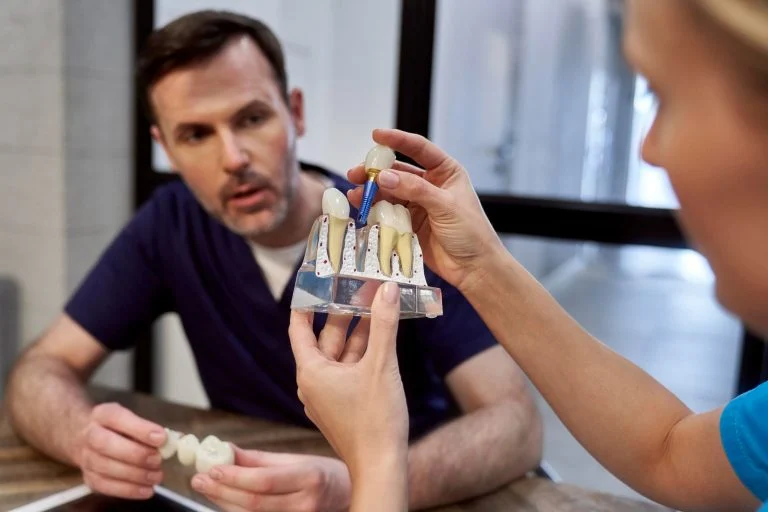



A new crown is supposed to feel like part of your mouth again, not a source of worry weeks later.
If your crown feels off weeks after placement, whether it seems high, sore, or simply not right, it may be time to have the bite and fit checked.
Mild tenderness often improves during the first couple of weeks, although some teeth may take longer to fully settle.
When discomfort stays the same, gets worse, or continues for several weeks, the crown may need a second look.
This article walks through what a healthy recovery feels like, what a high bite or crown pain might mean, and when it’s time to call your dentist instead of waiting it out.
Key Takeaways
- Mild tenderness and brief cold sensitivity can linger for a couple of weeks, but pain that lasts longer or gets worse usually means the bite or fit needs checking.
- A crown that feels too high, loose, or painful when you chew is one of the most common and easiest problems for a dentist to correct.
- Fever, swelling, or pus around a crown is not something to wait out. It calls for prompt dental care.
What Can Still Be Normal After Several Weeks?
Some discomfort weeks after getting a crown can still fall within normal healing, especially mild sensitivity to cold or slight gum tenderness near the new restoration.
The key is whether symptoms are fading over time or staying the same.
How Long Should a New Crown Feel Uncomfortable?
Most crown-related discomfort improves within one to two weeks, though some patients need up to four weeks to fully adjust.
A new crown commonly causes some soreness during this early window because the tooth and surrounding tissue are healing from the tooth preparation process, where a dentist reshapes the tooth to fit the crown.
If your symptoms are trending in the right direction, even slowly, that’s usually a good sign.
Discomfort that stays flat or grows worse past four weeks is a different story and worth a call.
Brief Cold Sensitivity vs. Lingering Tooth Sensitivity
A quick zing from cold water that fades in a second or two is common and often traces back to exposed dentin, the softer layer under your tooth’s enamel.
Tooth sensitivity after a crown is frequently normal during the first few weeks as the tooth adjusts to pressure and temperature changes again.
Lingering sensitivity is a different signal. If cold discomfort lasts thirty seconds or longer, wakes you up at night, or shows up with every meal weeks after placement, it may point to nerve irritation under the crown rather than simple healing.
Why a Temporary Crown and Permanent Crown Can Feel Different
A temporary crown is built to protect your tooth for a few weeks, not to match your bite perfectly. It often feels bulkier or sits slightly different than the permanent crown that replaces it.
Once your permanent crown is placed, your mouth needs a short period to learn its new shape. Expectations set by the temporary can make the permanent crown feel unusual at first, even when it fits correctly.
Does Your Crown Feel Too High When You Bite?
A crown that feels too high when you bite down is one of the most common complaints after placement, and it is also one of the easiest problems to fix.
When a crown sits even slightly taller than your surrounding teeth, it hits first every time your jaw closes, creating pressure your mouth cannot ignore.
Common Signs of a High Bite
You will usually notice the same tooth making contact first, every single time you bite down. Other signs include:
- Soreness that concentrates on one tooth or side of your mouth
- A feeling that your teeth do not “fit together” the way they used to
- Discomfort that worsens with chewing rather than easing over days
- Avoiding one side of your mouth while eating
A true high spot does not resolve with time. Only a bite adjustment, a quick reshaping done by your dentist, corrects it.
Why Pain When Biting Down Should Not Be Ignored
Pain when biting or chewing signals uneven pressure that can damage more than just the crown.
Left unaddressed, a high bite can wear down enamel on opposing teeth and strain the crown’s fit over time.
Some patients describe it as pressure rather than sharp pain, but the effect on your bite is the same.
This type of discomfort will not fix itself and tends to get worse the longer it’s left unchecked.
How an Uneven Bite Can Cause Jaw Tension and Headaches
An uneven bite forces your jaw muscles to work harder or shift position to avoid the high spot.
Over weeks, this extra strain can lead to jaw soreness, tension near your temples, or headaches that seem unrelated to your teeth at first.
Clenching often follows, as your jaw searches for a comfortable resting position.
If you notice new headaches or jaw tightness that started around the same time as your crown, mention both symptoms when you call your dentist.
Other Reasons a Crown May Hurt, Move, or Feel Wrong
A high bite is not the only explanation for lingering crown discomfort.
Gum irritation, cement left behind at the crown’s edge, nerve-related pain, or a loose or damaged crown can all cause symptoms that feel similar but need different fixes.
Gum Irritation, Cement Residue, and Crown Margin Problems
Gum tenderness near a crown often comes from irritation at the crown margin, the edge where the crown meets your natural tooth.
Leftover dental cement along this margin can trap bacteria and cause ongoing gum inflammation, even when the crown itself fits well.
Mild gum soreness in the first week or two is common as tissue adjusts.
Redness, puffiness, or bleeding that continues past that point is worth mentioning at your next visit.
When Tooth Pain May Point to Nerve Damage or a Root Canal Issue
Tooth pain that throbs, lingers after temperature changes, or wakes you at night can point to nerve damage inside the tooth.
The nerve tissue, or pulp, can become inflamed during tooth preparation, and in some cases this leads to the need for a root canal treatment even after the crown is already in place.
If you already had a root canal before your crown, new or returning pain could signal a failed root canal that needs re-treatment.
Either way, this type of pain is not something to manage with over-the-counter medication alone.
Could a Loose Crown, Cracked Tooth, or Crown Damage Be the Cause?
A crown that feels loose, shifts slightly, or clicks against other teeth needs attention regardless of how mild the sensation seems.
Loose cement, a cracked tooth underneath, or a crack in the crown material itself, especially with a porcelain crown, can all cause this feeling.
Ignoring a loose crown risks further crown damage or decay reaching the tooth underneath.
If your crown ever feels like it’s shifting when you chew, treat that as a sign to schedule an evaluation soon rather than waiting for your next professional cleaning.
When to Call Your Dentist and What a Bite Check Involves
Call your dentist if crown discomfort lasts more than two to four weeks, gets worse instead of better, or comes with swelling, fever, or pus.
A same-week crown evaluation can usually resolve the problem before it affects surrounding teeth or your jaw.
Symptoms That Need a Prompt Crown Evaluation
Reach out for an appointment if you notice any of these:
- Pain when biting that hasn’t improved after two weeks
- A crown that feels loose, shifted, or cracked
- Sharp or lingering sensitivity to cold that lasts longer than a few seconds
- New jaw soreness or headaches since the crown was placed
- Gum swelling or bleeding around the crown that isn’t improving
At Minot Dental Partners, patients are encouraged to call as soon as a high bite or ongoing soreness shows up rather than waiting to see if it resolves on its own.
When Fever, Pus, or Swelling Requires Urgent Dental Care
Fever, visible pus, or swelling in your face or gums are signs of infection and require prompt dental attention, not a wait-and-see approach.
These symptoms can mean bacteria have reached the tooth’s nerve or the tissue around it.
If you experience any of these along with crown pain, contact a dentist the same day. This is one of the few crown-related situations that qualifies as a true dental emergency.
How a Dentist Uses Articulating Paper for Bite Correction
A dentist checks your bite using thin, colored articulating paper placed between your teeth as you bite down.
The marks left behind show exactly which spots make contact first and how hard, giving a precise map for adjustment.
This bite assessment usually also includes a percussion test, a gentle tap on the tooth to check for nerve sensitivity.
Based on these results, the dentist can perform an occlusal adjustment, smoothing down high spots in small increments until your bite feels even again.
The process typically takes just a few minutes in the chair.
Why You Should Not Try to Adjust a Crown at Home
Filing, grinding, or otherwise adjusting a crown at home is never a safe option, even if you have dental tools on hand.
Removing too much material can permanently damage the crown or expose the tooth underneath, and it will not fix issues like nerve pain or a loose margin.
A restorative dentist has training and precision tools to make adjustments in fractions of a millimeter.
That level of accuracy is not something to attempt without a dental license and proper equipment.
A Crown That Still Feels Wrong Deserves a Check

A crown that still feels wrong after several weeks is worth a phone call, not months of quiet adjustment.
Waiting rarely makes bite problems, gum irritation, or crown fit issues resolve on their own, and small problems left unchecked can turn into bigger ones.
Good crown care in the meantime can ease symptoms while you wait for your appointment.
A soft-bristled toothbrush protects sensitive gum tissue, and a desensitizing toothpaste can calm mild cold sensitivity between now and your visit.
A warm salt water rinse can soothe gum soreness, and if you grind your teeth at night, a night guard helps prevent added jaw strain and enamel wear on your crown and natural teeth alike.
None of these steps replace a proper evaluation. They simply make the wait more comfortable while you arrange one.
Good oral hygiene around your crown, including regular flossing at the gumline, also reduces the chance of irritation turning into something more serious.
If discomfort continues despite these steps, that’s your cue to stop waiting and get it looked at.
Frequently Asked Questions
Why does my crown hurt when I put pressure on it?
Pain when biting usually means your crown is sitting slightly too high and making contact before your other teeth.
It can also point to gum irritation near the crown’s edge or, less often, nerve sensitivity in the tooth underneath. A bite check can usually identify which one is causing your symptoms.
How can I tell whether my crown is too high?
A high crown typically makes contact first, every time you bite down, and causes soreness that concentrates on one tooth or side of your mouth.
You might also notice jaw tension or find yourself chewing on the opposite side. This does not improve with time and needs a dentist’s adjustment to correct.
Is it normal for a crown to feel off after several weeks?
Mild awareness of a new crown can last a few weeks, but ongoing pain, high-bite sensations, or gum swelling past that point are not typical of normal healing.
Most comfortable adjustment happens within two to four weeks. Anything beyond that timeline, or symptoms getting worse, is worth a call to your dentist.
Why does tooth pain under a crown come and go?
Pain that comes and goes can mean the nerve inside the tooth is irritated and reacting only to certain triggers, like chewing pressure or temperature changes.
It can also point to a small crack or a loosening crown margin that only bothers you under specific conditions. A dentist can test the tooth to find the source.
What are the signs that a dental crown is failing?
Signs of a failing crown include a loose or shifting feeling, visible cracks, persistent pain, gum swelling around the base, or a bad taste near the tooth.
Fever, pus, or facial swelling are more serious signs that need same-day dental care. Catching these signs early usually means a simpler fix.
Can a dentist adjust a crown without replacing it?
Yes, most bite problems are corrected by adjusting the existing crown rather than replacing it.
Dentists use articulating paper to find high spots, then smooth small amounts of material until your bite feels balanced. Replacement is usually only needed if the crown is cracked, badly fitted, or decayed underneath.