



Most people think they need to visit a dentist before knowing if they qualify for full dental implants, but you can actually evaluate your own candidacy from home.
You’re likely a good candidate for full dental implants if you have sufficient jawbone density, healthy gums free from active disease, and are in generally good health without conditions that severely impair healing.
Understanding these basic requirements can help you decide whether scheduling a consultation is worth your time and money.
While a professional evaluation is always necessary before getting dental implants, knowing the key eligibility factors beforehand helps you set realistic expectations.
Many people who worry they might not qualify discover they actually meet most requirements.
Others find that even if they don’t qualify right now, simple preparatory steps like bone grafting or treating gum disease can make them eligible later.
This guide walks you through the main signs that indicate you’re a strong candidate for full arch implants.
You’ll learn about the oral health requirements, medical conditions that matter, and lifestyle factors that affect success rates.
By the end, you’ll have a clear understanding of where you stand and what your next steps should be toward permanent tooth replacement.
Key Takeaways
- You can evaluate your basic eligibility for full dental implants by checking your bone density, gum health, and overall medical condition before visiting a dentist
- Most adults with adequate jawbone structure and controlled health conditions qualify for dental implants, though some may need preparatory procedures first
- Understanding the difference between full arch implants and alternative solutions helps you make informed decisions about permanent tooth replacement options
Primary Signs You May Qualify for Full Dental Implants
Several clear indicators suggest you might be a good candidate for dental implants even before visiting a dentist.
If you have gaps in your smile, struggle with current tooth replacement options, or face daily challenges eating and speaking, you may qualify for this permanent solution.
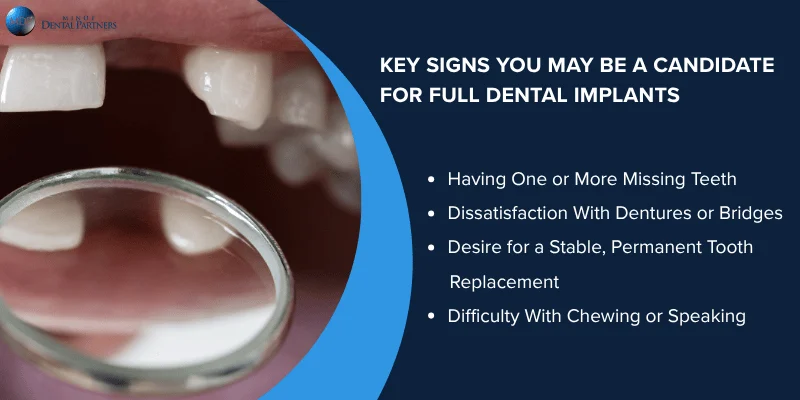
Having One or More Missing Teeth
Missing teeth represent the most obvious sign that you could benefit from dental implants. Whether you’ve lost a single tooth or multiple teeth, this creates functional and aesthetic problems that implants can address.
You don’t need to be completely without teeth to qualify. Dental implants work for single tooth replacement, multiple missing teeth, or full arch restoration. Each implant acts as an artificial tooth root that supports a crown or bridge.
Common causes of tooth loss include:
- Tooth decay or cavities
- Gum disease
- Physical injury or trauma
- Failed root canals
- Congenital absence
The key factor is that you have missing teeth that need replacement. Unlike dentures or bridges that sit on top of your gums, implants integrate directly into your jawbone. This makes them the closest thing to natural teeth you can get.
Dissatisfaction With Dentures or Bridges
If you currently wear dentures or have a dental bridge but feel unhappy with them, you’re likely a candidate for implants. Many people struggle with removable dentures that slip, cause sore spots, or make them feel self-conscious.
Traditional dentures can shift when you eat or talk. Partial dentures often use metal clasps that show when you smile. A dental bridge requires grinding down healthy teeth on either side of the gap, which many people want to avoid.
Implant-supported dentures offer a stable alternative. They snap onto implants placed in your jaw, eliminating the sliding and discomfort of removable dentures.
You can also choose individual implants instead of bridges, preserving your remaining healthy teeth.
If your current tooth replacement solution restricts what you eat, affects your speech, or requires constant adjustments, dental implants provide a more permanent and comfortable option.
Desire for a Stable, Permanent Tooth Replacement
You may qualify for dental implants if you want a long-term missing teeth solution that doesn’t require replacement every few years. Implants can last decades or even a lifetime with proper care.
Unlike removable dentures that need refitting as your jaw changes shape, implants maintain their position. You won’t need to use adhesives or worry about them falling out at inconvenient moments. They function just like your natural teeth.
Benefits of permanent tooth replacement:
- No removal for cleaning overnight
- No dietary restrictions
- Natural appearance and feel
- Preservation of jawbone structure
Dental implants fuse with your jawbone through a process called osseointegration. This creates a stable foundation that won’t move or shift. You brush and floss them exactly like regular teeth.
Difficulty With Chewing or Speaking
Struggling to eat your favorite foods or pronouncing words clearly indicates you need a better tooth replacement solution. Missing teeth or poorly fitting dentures create gaps that affect both functions.
You might avoid certain foods because they’re too hard to chew or get stuck under your dentures. Steak, apples, corn on the cob, and other nutritious foods become off-limits. This limits your diet and can affect your overall health.
Speech problems occur when your tongue can’t properly form sounds against your teeth. You might notice whistling sounds, slurred words, or clicking noises from loose dentures.
These issues can make you hesitate to speak in social or professional settings.
Dental implants restore full chewing power. They’re anchored in your jaw, so they can handle the same force as natural teeth. You’ll regain the ability to eat whatever you want without pain or embarrassment.
Assessing Essential Oral Health Requirements
Your mouth needs to meet specific health standards before you can get full dental implants. Strong gums, good daily cleaning habits, and enough jawbone support are the three main factors that determine if you’re ready for this procedure.
Gum Health and Absence of Periodontal Disease
Your gums must be healthy and free from active infection before getting dental implants. Periodontal disease weakens the tissues that support your teeth and can cause implants to fail.
If you have gum disease right now, you’ll need treatment first. Good oral health requires addressing any active infections before moving forward with implants.
Periodontitis causes inflammation that damages both gums and bone, creating an unstable foundation for implants.
Look for these signs of healthy gums:
- Pink color without redness or swelling
- No bleeding when you brush or floss
- Gums that fit snugly around your teeth
- No pain or tenderness
Even after healing from gum disease, you need to maintain good gum health. Implants can develop peri-implant disease, which is similar to periodontal disease and affects the gums around the implant.
Good Oral Hygiene and Maintenance Habits
Your daily cleaning routine plays a big role in implant success. You need to brush twice daily and floss regularly to keep your mouth clean.
Implants require the same care as natural teeth. Food particles and bacteria can build up around implants just like they do on regular teeth. Poor cleaning leads to infection and implant failure.
Think about your current habits honestly. Do you skip brushing some nights? Do you rarely floss? These patterns won’t change after getting implants, but the consequences become more serious.
A commitment to oral hygiene is essential for keeping implants healthy long-term. You’ll also need regular dental cleanings every six months, or possibly every three to four months if you have extensive work done.
Adequate Jawbone Structure and Density
Your jawbone needs enough height, width, and density to hold implants in place. The minimum jawbone requirements are typically 10mm in height and 5mm in width, though this varies by location in your mouth.
Missing teeth for a long time causes bone loss. Your jawbone shrinks when it’s not stimulated by tooth roots. The longer you’ve been without teeth, the more bone volume you may have lost.
You can check for potential bone loss by feeling your jaw ridge where teeth are missing. A thin or flat ridge suggests low bone density. Loose dentures that don’t fit well also indicate bone loss.
If your jawbone density is too low, bone grafting might build up the area before implants. This adds time and cost but can make you eligible if you currently lack sufficient jawbone health.
Medical and Lifestyle Factors Affecting Implant Candidacy
Your overall health and daily habits play a major role in determining whether dental implants will work for you.
Certain chronic conditions, smoking habits, age-related healing differences, and teeth grinding can all affect implant eligibility in different ways.

Controlled vs. Uncontrolled Chronic Conditions
Having a chronic condition doesn’t automatically disqualify you from being a dental implant candidate. The key difference is whether your condition is well-managed or uncontrolled.
Diabetes is often compatible with dental implants. If your blood sugar levels stay stable and you work with your doctor to manage the condition, you can still qualify for treatment. Your body’s ability to heal properly depends on consistent glucose control.
Uncontrolled diabetes presents more challenges for dental implant candidacy. High blood sugar levels slow down healing and increase infection risk. This can lead to implant failure.
Osteoporosis may affect your implant eligibility depending on its severity. The main concern is whether medications you take for bone health interfere with healing.
Some drugs used to treat osteoporosis can impact how your jawbone heals after surgery.
Other chronic conditions like controlled heart disease or high blood pressure are usually evaluated case-by-case. Your dentist may coordinate with your regular doctor to determine if you’re ready for the procedure.
Impact of Smoking and Tobacco Use
Smoking is one of the most significant lifestyle factors that affect implant candidacy. Tobacco use reduces blood flow to your gums and slows down healing after surgery.
If you smoke, your risk of implant failure increases substantially. The chemicals in tobacco interfere with bone integration around the implant post. This can cause the implant to become loose or fail completely.
Quitting smoking before and after your procedure dramatically improves your chances of success.
Many dental professionals recommend stopping tobacco use at least a few weeks before surgery. Staying smoke-free during the healing period is equally important.
Even smokeless tobacco products can affect your healing capacity. They still introduce harmful chemicals that impact gum health and bone quality.
Age and Healing Capacity
There’s no upper age limit for dental implants. Many older adults successfully receive implants and enjoy long-term results.
What matters more than your actual age is your healing capacity. Your body’s ability to recover from surgery and integrate the implant depends on your overall health status. A healthy 75-year-old may be a better candidate than a 50-year-old with multiple uncontrolled health issues.
Younger patients generally heal faster, but older patients with good health can achieve excellent outcomes. Your bone quality and density matter more than the number of years you’ve lived.
Children and teenagers are rarely considered for implants because their jawbones are still growing. Treatment usually waits until facial development is complete.
Habitual Teeth Grinding or Bruxism
Teeth grinding puts extra pressure on dental implants. If you grind or clench your teeth regularly, this habit can damage both natural teeth and implant restorations.
Bruxism doesn’t necessarily disqualify you from getting implants. However, it does require special consideration during treatment planning. Your dentist may recommend a custom night guard to protect your implants while you sleep.
The constant force from grinding can loosen implants over time or cause the crown on top to crack. Addressing this habit before getting implants improves your long-term success rate.
If you wake up with jaw pain or your partner mentions hearing you grind your teeth at night, mention this during your evaluation. Untreated bruxism can compromise even the best dental work.
What to Expect From the Diagnostic and Preparatory Process
Getting dental implants involves detailed imaging to evaluate your jawbone, potential bone grafting or sinus lift procedures if needed, a thorough consultation with your dental specialist, and specific preparatory steps before surgery.
Each of these stages helps ensure your implant posts have the best chance of long-term success.
Importance of Jawbone Imaging and Scans
Your dentist will take dental X-rays and 3D images to assess your jawbone structure. A cone beam CT scan provides detailed views of your bone density, bone volume, and the exact location of nerves and sinuses.
This imaging shows whether you have enough bone to support implant posts.
The scan also reveals the quality of your existing bone. Soft or thin bone may require additional procedures before implant placement.
Your dentist uses these images to create models of your teeth and jaw, which help plan the exact positioning of each implant post.
Without proper imaging, there’s no way to know if your jawbone can handle the pressure from chewing. The scans ensure your dental team can map out a safe surgical plan.
Understanding Bone Grafting and Sinus Lift Procedures
If your jawbone isn’t thick enough or is too soft, you’ll need a bone graft before dental implant surgery. Bone grafting creates a stronger foundation because the powerful chewing action puts great pressure on your bone.
Your dentist can use several materials for bone grafting:
- Natural bone from another location in your body
- Synthetic bone-substitute material
- Bone from a human donor
- Bone from an animal source
A sinus lift becomes necessary when dental implants in your upper jaw might poke into your sinus cavities. This procedure raises the sinus floor and adds bone to create enough space for the implants.
It typically takes several months for the transplanted bone to grow enough to support your implants.
Minor bone grafting can sometimes happen during the same surgery as implant placement. The condition of your jawbone determines which approach your dentist takes.
Role of Dental Implant Consultation
During your dental implant consultation, you’ll receive a full dental exam. Your dentist will review your medical history, including any medical conditions and medications you take.
You need to share information about prescription medicines, over-the-counter drugs, and supplements.
The consultation involves planning with various specialists. These may include an oral and maxillofacial surgeon, a periodontist who treats gums and bones, or a prosthodontist who designs artificial teeth.
An ear, nose and throat specialist might join if sinus issues are a concern.
Your dental team creates a treatment plan specific to your needs. This plan considers how many teeth need replacement and the condition of your jawbone and remaining teeth.
Your dentist will also discuss anesthesia options and whether you’ll need antibiotics before surgery if you have certain heart conditions or bone implants.
Preparatory Steps for Implant Surgery
Before implant surgery, you’ll need to follow specific instructions about eating and drinking. If you’re having sedation or general anesthesia, you may need to limit food and beverages beforehand.
Plan to have someone drive you home after the procedure.
Your dentist might prescribe antibiotics to prevent infection at the implant site. You should also arrange to take time off work for rest and recovery. Stock up on soft foods since you’ll need to eat them while your surgical site heals.
Stop smoking before surgery if possible, as smoking can lead to implant failure. Discuss any concerns about pain management with your dental team.
They’ll explain which pain medicines you might need after each stage of the procedure.
Comparing Dental Implants With Alternative Solutions
Full dental implants differ from other tooth replacement options in how they attach to your jaw and support your bite. Understanding these differences helps you evaluate which solution matches your oral health needs and daily lifestyle.
Differences From Traditional Dentures and Bridges
Traditional dentures rest on your gums and rely on suction or adhesive to stay in place. They don’t attach to your jawbone. You remove them daily for cleaning and soaking overnight.
Dental bridges attach to your natural teeth on either side of the gap. Your dentist reshapes these adjacent teeth to support the bridge, which means permanently altering healthy tooth structure. The bridge itself is fixed and doesn’t come out.
Dental implants work differently because they replace your tooth root. A titanium post goes into your jawbone and fuses with the bone tissue over several months. This creates a permanent foundation for your replacement teeth.
The key difference is stability. Traditional dentures can slip when you eat or talk. Bridges depend on neighboring teeth staying healthy. Implants function independently like natural teeth because they have their own root system in your jaw.
Benefits of Implant-Supported Dentures
Implant-supported dentures combine the coverage of full dentures with the stability of implants. These snap into place using implant anchors instead of relying only on your gums for support.
You get better chewing strength compared to traditional dentures. The implants hold your dentures firmly so they don’t move around when you bite into food. Many people feel more confident eating a wider variety of foods.
These dentures are still removable for cleaning. You snap them out at night and clean both the denture and the implant attachments. This makes maintenance easier than caring for individual implant crowns.
The number of implants needed is typically less than full mouth individual implants. Most cases use four to six implants per arch. This reduces the surgical time and overall dental implant cost while still providing good stability.
Risks of Bone Loss With Removable Options
Your jawbone needs stimulation from tooth roots to maintain its density and shape. When you lose teeth, the bone in that area starts to shrink. This process is called bone resorption.
Traditional dentures don’t prevent this bone loss. They sit on top of your gums without stimulating the bone underneath. Over time, your jaw ridge becomes thinner and flatter. This changes how your dentures fit and makes your face look sunken.
Dental bridges also contribute to bone loss in the empty space under the replacement tooth. While the bridge restores the appearance of your smile, nothing stimulates the bone where your natural tooth root used to be.
Dental implants are the only option that preserves your jawbone. The implant post acts like a natural root and transfers chewing forces into your bone. This stimulation signals your body to maintain the bone density in that area.
Implant Restoration and Success Rates
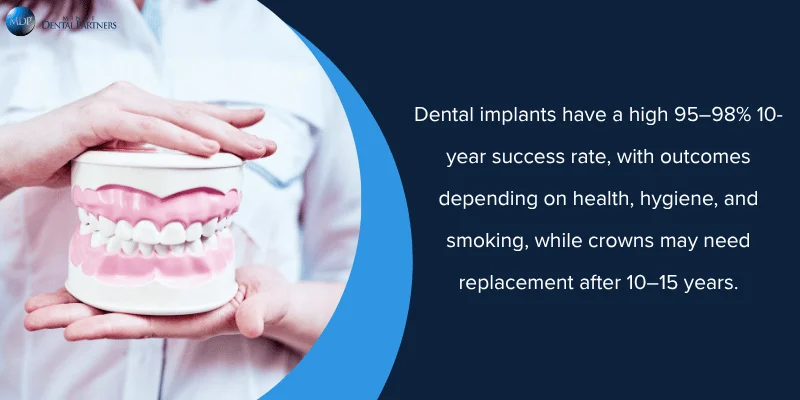
Dental implants have high success rates between 95% and 98% over 10 years. Success depends on factors like your overall health, bone quality, oral hygiene habits, and whether you smoke.
The implant restoration refers to the crown, bridge, or denture that attaches to your implants. These restorations may need maintenance or replacement over time even when the implant itself remains healthy.
Crowns typically last 10 to 15 years before needing replacement.
Your commitment to oral care directly impacts your implant success rate. You need to brush, floss, and get regular dental cleanings. Infections around implants can lead to implant failure if left untreated.
Certain health conditions affect success rates. Uncontrolled diabetes, active gum disease, and heavy smoking increase your risk of implant failure.
Your dentist evaluates these factors to determine if you’re a good candidate for implant-supported tooth replacement.
Next Steps Toward Permanent Tooth Replacement
Once you’ve assessed your initial candidacy, understanding the evaluation process and what comes after helps you prepare for successful permanent tooth replacement.
Professional guidance ensures your treatment plan addresses your specific needs while setting you up for decades of implant stability.
When to Seek a Professional Evaluation
You should schedule an evaluation as soon as you notice missing teeth or learn that extraction is necessary. Waiting too long allows your jawbone to deteriorate, which can complicate placement later.
Your dentist will use 3D imaging to measure your bone density and assess whether you need preparatory procedures.
They’ll also review your medical history to identify any conditions that might affect osseointegration. If you have uncontrolled diabetes, active gum disease, or smoke heavily, your dentist will address these factors before moving forward.
Key evaluation components include:
- Cone beam CT scans to map your jaw structure
- Periodontal assessment of gum health
- Blood work if you have underlying health conditions
- Discussion of your goals and expectations
Don’t wait for a formal consultation to make lifestyle changes. If you smoke, start reducing your tobacco use now since it significantly increases implant failure rates.
Personalized Treatment Plans and Financing Options
Your personalized treatment plan outlines every step from initial placement through final restoration. This plan factors in your bone quality, number of missing teeth, and timeline preferences.
Single implants typically cost $3,000 to $5,000, while full mouth restoration ranges from $20,000 to $45,000.
Many dental practices accept CareCredit, which offers 12 to 24 month interest-free financing. Some dental insurance plans now cover up to 50% of implant costs.
Ask your dentist about in-house payment plans if third-party financing doesn’t fit your budget. Breaking the cost into manageable monthly payments makes this investment more accessible.
Maintaining Long-Term Implant Stability
Proper post-procedure care directly impacts how well your implants integrate with your jawbone. During the 3 to 6 month healing period, follow all instructions about diet restrictions and oral hygiene.
Daily maintenance requires:
- Brushing twice daily with a soft-bristled toothbrush
- Flossing around implants using specialized floss or water flossers
- Avoiding hard foods that create excessive pressure
- Attending regular dental cleanings every 6 months
Your dentist will monitor osseointegration progress through follow-up appointments. Report any pain, swelling, or mobility immediately, as these can signal problems.
With consistent care, your implants can last 25 years or longer, making them a worthwhile investment in your oral health.
Frequently Asked Questions
Most people wonder about specific health factors and physical requirements before deciding if full dental implants might work for them.
Understanding bone density needs, how existing health conditions play a role, and what alternatives exist can help you assess your situation more clearly.
What signs suggest I might be a good fit for full dental implants?
You’re likely a good candidate if you have healthy gums without active gum disease. Your jawbone needs to be strong enough to support implants, and you should be in stable overall health.
Good oral hygiene habits also matter. If you brush and floss regularly and visit the dentist for checkups, you’re likely a great candidate for implants.
Being a non-smoker helps too. Your commitment to following care instructions after surgery is important for long-term success.
How much healthy jawbone do I need for full dental implants to work?
Your jaw needs sufficient bone density and volume to hold the implant posts securely. The implants must fuse with your jawbone through a process called osseointegration, which creates a strong foundation for your restoration.
The exact amount varies based on the number of implants and where they’ll be placed. Upper jaw implants often need more bone because the bone there is naturally less dense than the lower jaw.
A 3D scan would typically measure your bone quality and help determine if placement is appropriate. If your bone seems thin or weak, that doesn’t automatically disqualify you from treatment.
Can I still get full dental implants if I’ve been missing teeth for a long time?
Yes, but bone loss becomes more likely the longer teeth have been missing. Your jawbone naturally shrinks when it doesn’t have tooth roots to support.
The good news is that bone loss doesn’t mean you can’t get implants. Many patients who’ve been missing teeth for years still qualify after additional procedures.
Your gum tissue also changes over time without teeth. The tissue may recede or lose its shape, but these changes can often be addressed during treatment planning.
Do gum disease or frequent infections affect whether I can get full dental implants?
Active gum disease usually needs treatment before you can get implants. Untreated gum disease and risk factors that affect healing could compromise implant stability and success.
Ongoing infections in your mouth create an environment where implants might not integrate properly. Your gums need to be healthy and infection-free for the best outcome.
If you currently have gum disease, getting it under control first can make you eligible later. Your dentist would typically treat the infection and wait for your gums to heal before moving forward with implants.
Can I qualify for full dental implants if I have diabetes or other health conditions?
Diabetes doesn’t automatically disqualify you from getting implants. Well-managed diabetes may still be compatible with implants, though healing might take longer.
Controlled heart conditions and high blood pressure are often evaluated case by case. What matters most is whether your condition is stable and managed with medication or lifestyle changes.
Osteoporosis may also be considered depending on its severity. Some medications for bone conditions can affect healing, so your implant provider might coordinate with your regular doctor to assess readiness.
If I’m told I don’t have enough bone, what options could still make full dental implants possible?
Bone grafting can rebuild jaw structure where bone has been lost. This procedure adds bone material to your jaw to create enough support for implants.
Sinus lifts increase bone height in the upper jaw by lifting the sinus membrane and adding bone underneath. These procedures are typically completed several weeks or months before implant placement.
Implant-supported dentures might be another option if extensive bone grafting isn’t possible. These use fewer implants than full arch replacements but still offer more stability than traditional dentures.