



Many seniors worry that age might prevent them from getting dental implants, but this concern is largely unfounded. Dental implants are generally safe and effective for seniors over 65, as there is no upper age limit for the procedure, and what matters most is overall health rather than age alone.
The key factors that determine whether you’re a good candidate include your bone density, gum health, and any existing medical conditions that might affect healing.
Understanding your options for tooth replacement can help you make the best choice for your smile and quality of life.
Unlike traditional dentures that can slip or cause discomfort, dental implants offer superior stability and function that can dramatically improve your ability to eat, speak, and feel confident.
While the procedure does require careful evaluation of your individual health situation, advances in dental technology have made implants accessible to nearly all older adults in reasonably good health.
This guide walks you through everything you need to know about dental implants for seniors safety, from health requirements to costs and alternatives.
You’ll learn what to expect during the process, how to determine if you’re a good candidate, and what steps you can take to ensure successful outcomes that last for years to come.
Key Takeaways
- Age alone doesn’t disqualify you from getting dental implants, but bone health and overall medical conditions need evaluation
- Dental implants provide better stability and comfort than traditional dentures and help preserve your jawbone structure
- The procedure requires several months from start to finish and costs vary based on your specific needs and insurance coverage
Are Dental Implants Safe for Seniors Over 65?
Dental implants are safe and effective for seniors over 65, with success rates that match those of younger patients. Your age alone does not determine whether you’re a good candidate for implants.
Implant Success Rates in Older Adults
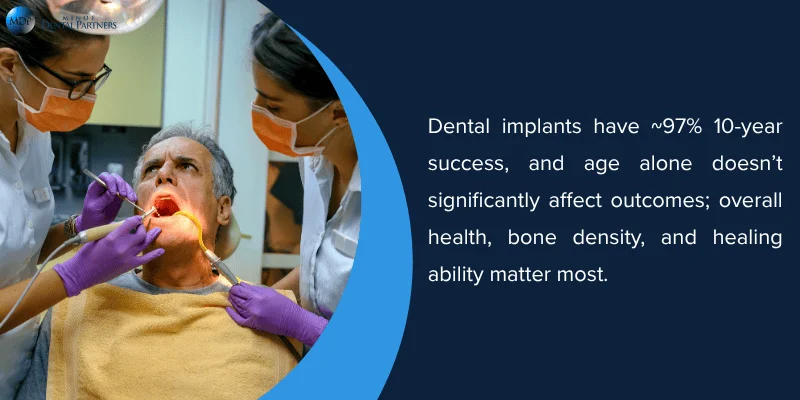
Dental implants have a high success rate of 97% at 10 years and 75% at 20 years across all age groups. Research shows that age doesn’t significantly impact these outcomes.
A 2019 study compared 400 patients over 65 years with a younger group and found only a 2% failure rate across both groups over 10 years. Even patients over 80 years experienced only slightly higher complication rates.
This means you’re not too old for dental implants if you’re in reasonably good health.
The American Academy of Implant Dentistry supports implant treatment for older adults when they meet basic health requirements. What matters more than your age is your overall health, bone density, and ability to heal after surgery.
If you have diabetes or smoke, you may face higher infection risks, but these factors affect patients at any age.
Safety Compared to Other Tooth Replacement Options
Senior dental implants offer better long-term safety than dentures or bridges. Unlike dentures that can slip and cause choking risks, implants stay fixed in your jaw. They don’t require grinding down healthy teeth like bridges do.
Implants help prevent jawbone deterioration that occurs with tooth loss. This keeps your facial structure intact and prevents the sunken appearance that often comes with dentures. You can chew food more effectively, which improves nutrition.
While implants have a higher upfront cost than dentures, they typically last much longer. A single implant can function for decades with proper care. Dentures need replacement every 5-7 years on average.
Age-Related Myths vs. Current Evidence
Many people believe they’re too old for dental implants, but current evidence proves otherwise. Age alone is rarely a reason to rule out implants for seniors in their 70s and 80s.
The myth that older adults can’t heal properly after implant surgery isn’t supported by research. Your body’s ability to heal depends more on your specific health conditions than your age. Advances in 3D imaging and minimally invasive techniques have made the procedure gentler than ever.
Some seniors worry that their bones are too weak for implants. While bone density matters, dentists can often work with lower bone levels using specialized implant types. Subperiosteal implants sit on top of the jaw rather than in it, providing an option when bone height is limited.
Benefits of Dental Implants for Seniors
Dental implants offer seniors a permanent tooth replacement solution that goes beyond just filling gaps in your smile. They help you eat better foods, feel more confident in social situations, and protect your jaw from breaking down over time.
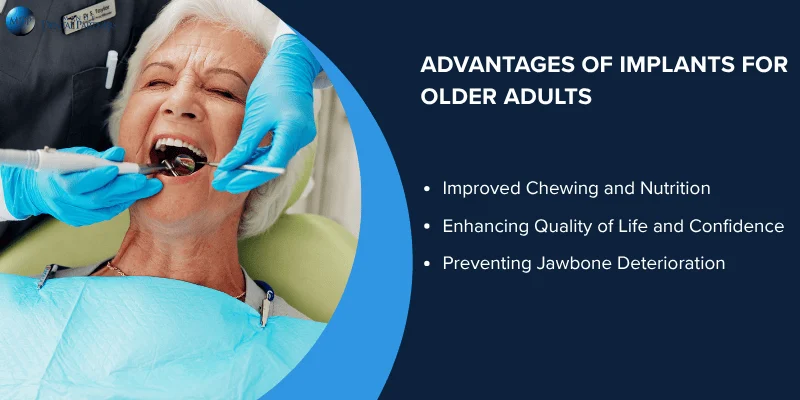
Improved Chewing and Nutrition
One of the biggest benefits of dental implants for seniors is the ability to eat a wider variety of foods. Unlike traditional dentures that can slip or cause discomfort, implants stay firmly in place while you chew.
This stability means you can enjoy foods that might have been off-limits before. Crunchy vegetables, fresh fruits, nuts, and lean meats all become easier to eat. When you can chew properly, your body breaks down food better and absorbs more nutrients.
Dental implants allow you to eat a broader range of foods, which supports better nutrition and digestive health. Many seniors notice they feel healthier overall once they can return to eating nutritious whole foods.
Better nutrition can help you maintain your energy levels and support your immune system as you age.
Enhancing Quality of Life and Confidence
Missing teeth can make you feel self-conscious about smiling or speaking in public. Dental implants look and feel like natural teeth, giving you back your confidence.
You won’t have to worry about your teeth slipping when you talk or laugh. This security helps many seniors feel more comfortable in social settings. Whether you’re having dinner with family or meeting friends for coffee, you can focus on enjoying the moment instead of worrying about your teeth.
Implant-supported dentures are more stable than traditional options and don’t require messy adhesives. You can speak more clearly too, since implants restore your natural speech patterns. Many seniors report feeling years younger once they have a secure, natural-looking smile.
Preventing Jawbone Deterioration
When you lose a tooth, the jawbone underneath begins to break down. This happens because the bone needs pressure from chewing to stay strong and healthy.
Dental implants act like natural tooth roots. They stimulate your jawbone every time you chew, which prevents bone loss. This is something traditional dentures cannot do since they just sit on top of your gums.
Preventing jawbone deterioration helps maintain the shape of your face. Without this support, your face can develop a sunken appearance over time. The benefits of dental implants include preserving your facial structure and keeping you looking more youthful.
This long-term protection makes implants a smart investment in your oral health.
Candidacy and Considerations for Seniors
Your overall health status, bone quality, and current medications all play important roles in determining whether you’re a good candidate for senior dental implants. Most seniors can successfully receive implants with proper planning and medical clearance.
Health Factors That Influence Suitability
There’s no upper age limit for dental implants, so you’re never too old for dental implants based solely on your age. What matters most is your overall health condition.
If you have diabetes, you’ll need to ensure your blood sugar levels are well-controlled before surgery. Uncontrolled diabetes can slow healing and increase infection risk. Heart disease requires evaluation from your cardiologist to confirm you can handle the surgical stress.
Your immune system function affects how well you’ll heal after the procedure. A weakened immune system may lead to complications during the healing phase. Gum disease must be treated before placing implants, as active infection can cause implant failure.
Cognitive decline doesn’t automatically disqualify you, but you may need extra support from family members or caregivers. They can help you maintain proper oral hygiene and follow post-surgery care instructions.
Bone Density and Bone Grafting Options
Your jawbone needs sufficient density and volume to support dental implants through a process called osseointegration. During osseointegration, the titanium implant post fuses with your jawbone over several months.
Low bone density affects approximately 5% to 7% of implant failures in patients over 70. If you’ve experienced tooth loss, you may have jawbone deterioration where the missing tooth roots no longer stimulate bone growth.
Bone grafting can solve this problem by:
- Adding donor bone or synthetic material to strengthen your jaw
- Creating a solid foundation for implant placement
- Preventing further bone loss in the treated area
- Improving your facial structure and appearance
The major bone grafting procedure adds several months to your treatment timeline. You’ll need to wait for the graft to integrate before receiving your implants.
Medication and Medical Condition Considerations
Certain medications you take can affect your implant surgery and healing process. Blood thinners and anticoagulants increase bleeding risk during and after the procedure.
You should tell your dentist about all medications you’re currently taking, including:
- Prescription drugs
- Over-the-counter medicines
- Supplements and vitamins
- Herbal remedies
Bisphosphonates used to treat osteoporosis can interfere with healing and increase the risk of jaw bone problems. Your dentist may need to adjust your medication schedule around the surgery.
Steroids and immunosuppressants can slow down healing and make you more prone to infections. If you take these medications, your dental team will create a customized treatment plan that accounts for these risks.
Smoking significantly reduces implant success rates. If you smoke, quitting before surgery greatly improves your chances of successful osseointegration and long-term implant survival.
Dental Implant Procedure for Seniors
Getting dental implants involves several stages that take place over a few months. The process gives your jawbone time to heal and bond with the artificial tooth roots.
Consultation and Assessment
Your first visit focuses on determining if you’re a good candidate for dental implant surgery. The dentist will examine your mouth, take X-rays or 3D scans, and review your medical history and current medications.
They’ll check your jawbone density and gum health to ensure you have enough bone support. If you’ve experienced bone loss, your dentist may recommend a bone graft before implant placement can begin.
During this appointment, you’ll discuss any health conditions like diabetes or heart disease. Your dentist will also explain the timeline, costs, and what to expect during recovery. This is the time to ask questions about sedation dentistry and post-surgery care.
Implant Placement and Surgical Process
The surgical process begins with numbing the area using local anesthesia. Some dentists also offer sedation options if you feel anxious about the procedure.
Your dentist makes a small opening in your gum tissue to access the jawbone. They carefully drill a hole and insert the titanium implant post into your jaw. This artificial tooth root serves as the foundation for your new tooth.
The entire surgery typically takes one to two hours per implant. Most seniors report minimal discomfort during the procedure due to effective numbing.
After implant placement, your gum tissue is stitched closed over or around the implant. Now begins the healing phase called osseointegration, where your jawbone grows around and fuses with the implant.
This process usually takes three to six months and creates a strong, stable base for your replacement tooth.
Abutment Placement and Restoration
Once osseointegration is complete, you’ll return for abutment placement. The abutment is a small connector piece that attaches to the top of your implant.
Your dentist reopens the gum tissue to expose the implant and screws the abutment into place. Some dentists place the abutment during the initial surgery, which eliminates this extra step.
After the abutment is attached, your gums need about two weeks to heal. During this time, your dentist takes impressions of your mouth to create your custom crown, bridge, or denture.
The final step involves attaching your permanent restoration to the abutment. Your dentist ensures the fit is comfortable and the color matches your natural teeth.
Recovery and Long-Term Maintenance
You may experience mild swelling, bruising, or discomfort for a few days after each surgical stage. Ice packs, soft foods, and pain medication help manage these symptoms.
Most seniors return to normal activities within a day or two. Avoid hard or crunchy foods during the initial healing period to protect your implants.
Long-term care for dental implants is similar to caring for natural teeth. Brush twice daily, floss around the implant, and use an antibacterial mouthwash. Regular dental checkups and good oral hygiene help your implants last for decades.
Watch for signs of infection like persistent pain, fever, or excessive swelling. Contact your dentist immediately if you notice any concerning symptoms. With proper care, your implants can function just like natural teeth for the rest of your life.
Types of Implants and Alternatives for Seniors
Several implant options exist for seniors over 65, each designed to address different dental needs and bone conditions. The choice depends on your jawbone health, budget, and how many teeth you need to replace.
Traditional Dental Implants
Traditional dental implants use titanium posts that are surgically placed into your jawbone. These posts act as artificial tooth roots and fuse with your bone over time.
This type works best if you have good bone density and healthy gums. The implants provide a sturdy foundation that feels and functions like natural teeth.
You can use traditional implants to replace one tooth or multiple teeth. Each implant can support a crown, bridge, or denture depending on your needs.
The procedure typically takes several months because the implant needs time to bond with your jawbone. Most seniors with adequate bone structure are good candidates for traditional implants regardless of age.
These implants offer long-term stability and can last a lifetime with proper care. They help preserve your jawbone and prevent the bone loss that often occurs with missing teeth.
Mini Dental Implants
Mini dental implants are smaller in diameter than traditional implants and require less invasive surgery. They work well if you have limited bone structure or want to avoid bone grafting procedures.
The smaller size means your dentist can often place them in a single visit. You’ll experience quicker healing times compared to traditional implants.
Mini implants are cost-effective and particularly useful for stabilizing dentures. They provide immediate improvement in your ability to chew and speak comfortably.
Many seniors choose mini implants because they offer good stability without extensive surgery. The recovery process is typically easier and faster than traditional implants.
Implant-Supported Dentures
Implant-supported dentures attach to dental implants placed in your jawbone rather than resting on your gums. This design prevents the slipping and shifting that often occurs with regular dentures.
You’ll need between two to six implants per arch to secure the dentures. The implants provide a stable base that improves your chewing efficiency significantly.
These dentures come in two main types: fixed and removable. Fixed versions stay in place permanently while removable ones snap onto the implants but you can take them out for cleaning.
Implant-supported dentures help maintain jawbone density by stimulating the bone like natural tooth roots. This stimulation prevents the facial sagging that can happen with traditional dentures.
The cost varies based on how many implants you need and the complexity of your case. Some patients require bone grafting before implant placement.
Alternative Tooth Replacement Options
If dental implants aren’t right for you, several alternatives exist. Traditional dentures rest on your gums and use suction or adhesive to stay in place.
Dental bridges attach to your natural teeth on either side of a gap. They don’t require surgery but do involve reshaping the adjacent teeth.
Some seniors choose All-on-4 implants, which use just four strategically placed implants to support a full arch of teeth. This option costs less than placing individual implants for each tooth.
Snap-in dentures offer a middle ground between traditional dentures and full implant-supported versions. They provide better stability than regular dentures at a lower cost than fixed implants.
Your dentist can help you weigh the pros and cons of each option based on your bone health, budget, and personal preferences.
Cost Considerations for Dental Implants in Seniors
The price of dental implants varies widely based on your specific needs, location, and treatment complexity. Most seniors pay between $3,000 and $5,500 per tooth, though full-mouth solutions can range from $15,000 to $35,000 per arch.
Factors Affecting Cost
Several elements determine the cost of dental implants for seniors. Your jawbone density plays a major role. If you need bone grafting or a sinus lift before implant placement, expect to add $500 to $3,000 per procedure.
Geographic location significantly impacts pricing. Urban areas typically charge more than rural communities. The dentist’s experience level and credentials also affect fees.
The type of restoration you choose matters too. A single tooth implant costs less than implant-supported dentures or All-on-4 solutions. Materials make a difference as well. Titanium implants generally cost less than zirconia options.
Additional costs include initial consultations, X-rays, CT scans, and follow-up visits. Some practices bundle these into one package price, while others charge separately.
Insurance, Medicare, and Payment Options
Original Medicare does not cover dental implants for seniors since they’re considered cosmetic. However, some Medicare Advantage plans offer limited dental benefits that might help with portions of treatment.
Your private dental insurance may cover 15% to 50% of implant costs, though many policies cap annual benefits at $1,500 to $2,000. Always check your specific plan details before starting treatment.
Many dental practices offer payment plans that let you spread costs over 12 to 60 months. Third-party financing through companies like CareCredit provides similar options. Dental discount plans can reduce fees by 10% to 30% at participating offices.
Some seniors explore dental schools where supervised students perform procedures at reduced rates. Health Savings Accounts (HSAs) and Flexible Spending Accounts (FSAs) allow you to use pre-tax dollars for implant treatment.
Long-Term Value of Implants
Dental implants typically last 25 years or longer with proper care. This makes them more cost-effective than dentures, which need replacement every 5 to 7 years.
Traditional dentures require adjustments, relines, and eventual replacement. These recurring expenses add up quickly. You’ll also spend money on adhesives, cleaning solutions, and repair kits.
Implants help preserve your jawbone, preventing the facial sagging that often requires costly corrections later. They also reduce your risk of gum disease and additional tooth loss, potentially saving thousands in future dental work.
The improved nutrition from better chewing ability can lower your healthcare costs overall. When you eat a healthier diet, you often experience fewer medical issues related to poor nutrition.
Frequently Asked Questions
Seniors considering dental implants often have specific questions about eligibility, costs, and health factors.
Understanding bone density requirements for dental implants, financial options, and how existing medical conditions affect implant safety helps you make an informed decision about tooth replacement.
What factors determine the suitability of dental implants for individuals over 65?
Your overall health matters more than your age when it comes to dental implants. Doctors look at your ability to heal after surgery, your oral hygiene habits, and whether you can attend follow-up appointments.
Healthy gums provide the foundation for successful implants. If you have gum disease or gingivitis, you’ll need treatment first to reduce bacteria and stabilize your gum tissue before implant placement.
Your medical history gets reviewed carefully. Medications that affect blood flow, bone metabolism, or immune response can impact how well implants integrate with your jawbone. However, these factors can usually be managed with a customized treatment plan.
Lifestyle choices also play a role. Smoking reduces blood flow and compromises healing, which increases the risk of implant failure. Your dentist will encourage you to quit smoking, especially during the healing process.
How does bone density affect the success of dental implants in older adults?
Strong jawbone provides the stability needed to support titanium implants. Over time, tooth loss and gum disease can lead to bone deterioration, which affects whether you qualify for implants right away.
Your dentist uses dental X-rays and 3D scans to measure your bone density and volume. These images show whether your jawbone can support implants or if you need additional procedures first.
Low bone density doesn’t automatically disqualify you from getting implants. Bone grafting procedures can rebuild bone volume and create a stable foundation for implants, even in patients with compromised bone structure.
Osteoporosis is common among seniors but doesn’t prevent you from receiving implants. Advances in implant design and surgical techniques allow many patients with reduced bone mineral density to become candidates with proper treatment planning.
What financial assistance options are available for seniors considering dental implants?
Dental implants typically cost between $3,000 and $4,500 per tooth. Full mouth restoration can range from $20,000 to $45,000 depending on the number of implants needed and the complexity of your case.
Many dental offices offer in-house payment plans that let you spread costs over several months or years. These plans often come with low or zero interest if you meet the payment schedule.
Third-party financing companies like CareCredit provide healthcare credit cards specifically for dental procedures. You can apply online and receive approval within minutes, with various payment terms available.
Some dental schools offer reduced-cost implant procedures performed by supervised students. While treatment takes longer, you can save 30-50% compared to private practice fees.
Medicare doesn’t typically cover dental implants because they’re considered a cosmetic procedure. However, Medicare Advantage plans sometimes include dental benefits that may help with a portion of the costs.
Medicaid coverage varies by state. Some states provide limited dental benefits for seniors that might include implants if deemed medically necessary rather than cosmetic.
Are there any age-specific considerations for elderly patients opting for dental implants?
There is no upper age limit for dental implants. Patients in their 70s, 80s, and even 90s can safely receive implants if they’re healthy enough for routine outpatient procedures.
Your healing ability becomes more important than your chronological age. Seniors with controlled conditions like high blood pressure or diabetes can still qualify for implant surgery with proper medical clearance.
Some seniors take medications that affect bone health or blood clotting. Blood thinners, bisphosphonates, and corticosteroids may require dosage adjustments or timing changes around your surgery date.
Recovery time might be slightly longer for older patients. Your body needs adequate time for osseointegration, the process where titanium implants fuse with your jawbone.
How do potential health conditions in seniors impact the safety of undergoing a dental implant procedure?
Diabetes affects healing and increases infection risk, but well-controlled blood sugar levels allow most diabetic patients to receive implants safely. Your dentist works with your doctor to ensure your diabetes is managed before surgery.
Heart conditions require careful evaluation before implant surgery. If you’ve had heart valve replacements or other cardiac procedures, you may need antibiotic prophylaxis to prevent infection.
Osteoporosis medications, particularly bisphosphonates, can affect jawbone healing. Your dentist reviews your medication history and coordinates with your healthcare provider to develop a safe treatment protocol.
Autoimmune conditions may slow healing or increase complication risks. However, many patients with autoimmune disorders successfully receive implants with additional precautions and monitoring.
Cancer treatments like radiation therapy to the head or neck can damage jawbone tissue. Your dentist evaluates the affected area and may recommend alternative treatment approaches or longer healing periods.
What are the cost implications for senior citizens interested in getting dental implants?
Single tooth implants cost less upfront than full mouth restoration. You’ll pay for the implant post, abutment, and crown separately, which typically totals $3,000-$4,500 per tooth.
Full mouth dental implants using All-on-4 or All-on-6 techniques range from $15,000 to $30,000 per arch. This option costs more initially but provides a complete tooth replacement solution in one procedure.
Traditional dentures seem cheaper at first, costing $600-$8,000 per arch. However, dentures require regular adjustments, relines, and replacements every 5-7 years, which adds up over time.
Dental implants last 25 years or longer with proper care. When you divide the initial cost over the implant’s lifespan, the per-year expense often becomes comparable to or less than maintaining dentures.
Additional procedures increase total costs. Bone grafts add $300-$3,000 depending on the extent of bone loss, while tooth extractions cost $75-$450 per tooth.
HSA and FSA accounts let you use pre-tax dollars for dental implants. This reduces your out-of-pocket costs by your tax rate, providing immediate savings on the procedure.