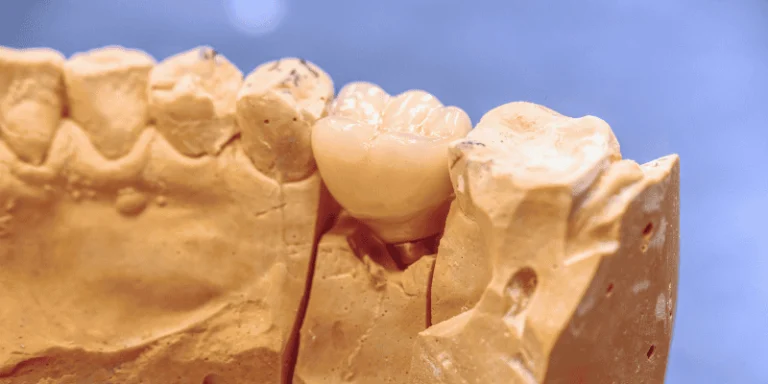



If your jaw lacks enough bone for an implant, one of two common fixes will get your new tooth stable: a sinus lift raises the floor of the sinus to add vertical height in the upper back jaw, while ridge augmentation rebuilds thin or narrow jaw ridges side to side.
Which one you need depends on where the bone is missing; height near the sinus calls for a sinus lift, and width or a knife-edge ridge calls for ridge augmentation.
You’ll learn how sinus lift vs ridge augmentation works, how long healing takes, and what to expect so you can pick the right path for a lasting implant.
This article compares risks, recovery time, and when a dentist might place the implant at the same time versus waiting for bone to form.
Key Takeaways
- Choose the procedure based on whether you lack vertical height or ridge width.
- Expect months of healing while grafted material becomes new bone.
- Your dentist’s 3-D scan and health factors guide the final choice.
Why Bone Grafting Is Needed for Dental Implants
Bone grafting rebuilds lost jawbone so your implant has a strong, stable place to sit. It restores bone height and width, supports the implant long-term, and helps keep nearby teeth and gums healthy.
Impact of Bone Loss on Implant Placement
When you lose a tooth, the jawbone under that socket starts to shrink. This can leave too little bone height or width for a titanium implant to anchor securely. If the bone is too thin, the implant may fail to integrate with your jaw and could loosen or fracture under normal chewing forces.
Bone loss also changes where an implant can be placed. You might need a shorter or angled implant, or a bridge that uses adjacent teeth instead. For the upper back jaw, the sinus can expand into the space left by bone loss, which blocks implant placement unless you raise the sinus floor first.
A bone graft restores the missing bone so you can place a properly sized implant in the correct position. That helps the implant handle normal biting forces and improves the chance the implant will last for decades.
Oral Health Benefits of Adequate Bone Volume
Adequate bone volume keeps your jaw strong and supports the shape of your face and gums. When you have enough bone, your prosthetic tooth fits better and cleans more easily, which lowers your risk of gum disease and infection around the implant.
Strong bone also protects neighboring teeth. Without bone grafting, adjacent teeth may shift toward the empty space, causing bite problems and added wear. Proper bone height preserves gum contours so your restoration looks natural and your smile stays stable.
After a graft, new bone grows into the graft material and bonds with your jaw. That integration creates a stable foundation that reduces the chance of implant complications like peri-implantitis or implant mobility.
When Bone Grafting is Recommended
You’ll likely need a bone graft if imaging shows less than about 6–8 mm of vertical bone or less than 5–6 mm of ridge width where the implant should go. Your dentist uses X‑rays or a CBCT scan to measure bone volume and decide whether a graft or a sinus lift is required.
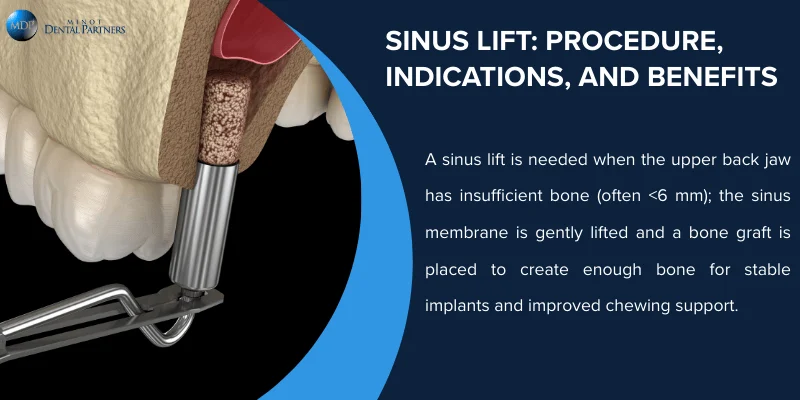
Other indications include long-term tooth loss, advanced gum disease, trauma, or previous infections that destroyed bone. If your sinus is too close to the planned implant site in the upper jaw, a sinus lift (a type of bone augmentation) is recommended to create the needed vertical height.
Your surgeon may also suggest a graft during or right after a tooth extraction (socket preservation) to prevent future bone loss and make later implant placement easier.
Not sure which grafting procedure you need. Schedule a visit in Minot, ND, and get a personalized exam so you can move forward with confidence and clarity.
Sinus Lift: Procedure, Indications, and Benefits
A sinus lift increases bone height in the upper back jaw by raising the sinus floor and adding graft material. It helps you get stable dental implants where the maxillary sinus sits close to the ridge.
When a Sinus Lift Is Necessary
You need a sinus lift when the bone above your upper molars or premolars is too thin to hold an implant. This often happens after tooth loss, long-term denture use, or from bone resorption.
If a CBCT scan shows less than about 6 mm of bone height under the maxillary sinus, your surgeon or periodontist may recommend sinus augmentation.
Other reasons include large sinus cavities that have expanded downward, bone loss from periodontitis, or trauma that removed the ridge. Your oral surgeon will check sinus health, look for chronic sinusitis, and review medical history before deciding if sinus expansion suits you.
Step-by-Step Sinus Lift Procedure
The lateral window (traditional) and crestal (less invasive) are the two main approaches. For the lateral technique, your surgeon makes an incision in the gum, lifts a flap, and creates a small window in the lateral sinus wall.
The surgeon gently elevates the sinus membrane, taking care to avoid sinus membrane perforation, then places bone graft material into the space. The gum is closed with sutures and allowed to heal for 4–9 months before implant placement.
For the crestal technique, your surgeon accesses the sinus from the ridge crest and uses osteotomes or a balloon to lift the membrane. This method often suits cases needing modest augmentation and can allow immediate implant placement when initial stability is achievable.
Advantages of Sinus Augmentation
Sinus augmentation gives you enough vertical bone to place longer, more stable implants in the posterior maxilla. That improves chewing force and lowers the risk of implant failure due to poor support.
The procedure can use different grafts: your own bone (autograft), donor bone (allograft), bovine-derived material (xenograft), or synthetic substitutes.
When done by an experienced oral surgeon or periodontist, sinus lifting has predictable outcomes. It also lets you avoid removable dentures and restores dental function and smile height.
If a sinus membrane perforation occurs, most can be repaired during surgery, and healing still allows successful graft integration.
Ridge Augmentation: Procedure, Indications, and Benefits
Ridge augmentation rebuilds lost jawbone so you can get stable dental implants and a natural look. It focuses on adding width or height to the alveolar ridge using bone grafts and surgical techniques.
When Ridge Augmentation Is Required
You may need ridge augmentation when the jaw ridge is too narrow or short to hold an implant. This happens after long-term tooth loss, trauma, infection, or severe periodontal disease that causes bone to shrink.
If imaging shows less than the implant manufacturer’s recommended bone width or height, your dentist will recommend augmentation.
Other signs include a sunken gum line that alters esthetics, thin soft tissue that risks implant exposure, or a ridge shape that prevents correct implant angle. Ridge augmentation is often planned before placing implants but can also be done at the same time as extraction (socket preservation) to limit future bone loss.
How Ridge Augmentation Is Performed
Your surgeon will first evaluate bone with clinical exam and cone-beam CT scans. The procedure often uses one of these steps:
- Local anesthesia or IV sedation for comfort.
- Incision to access the deficient ridge and expose bone.
- Placement of graft material: your own bone (autograft), donor bone (allograft), animal-derived material (xenograft), or synthetic substitute (alloplast).
- Use of a barrier membrane or mesh to hold graft in place and prevent soft tissue ingrowth.
- Suturing and a healing period of several months for graft integration.
Recovery includes brief swelling and mild pain controlled with meds. You’ll avoid smoking and follow oral hygiene rules. The graft must integrate and form new bone before implant placement, usually in 3–6 months depending on graft type and location.
Unique Benefits of Ridge Augmentation
Ridge augmentation creates a wider, stronger foundation for implants so they resist chewing forces and last longer. By restoring implant stability, you reduce the risk of implant failure and recurring bone loss.
It also improves gum contours and facial appearance. That helps restorations look natural and makes prosthetic crowns fit correctly. Ridge augmentation can allow implant placement where it otherwise wouldn’t be possible, avoiding more complex alternatives like removable dentures or angled implants.
Finally, choosing the right graft material and technique lowers future surgical needs and helps preserve oral health for years.
Patients across Minot, ND, choose our team for safe, comfortable grafting procedures that enable implant placement. Contact us today to start your smile journey.
Comparing Sinus Lift and Ridge Augmentation
These procedures both add bone so your implant can sit solidly. One mainly raises the sinus floor to gain vertical height; the other rebuilds the jaw ridge to gain width and shape.
Key Differences in Location and Purpose
A sinus lift targets the upper back jaw under the maxillary sinus. Your surgeon lifts the sinus membrane and packs bone graft under it to add vertical height. This helps when your natural bone height is too short for implant threads.
Ridge augmentation focuses on the alveolar ridge where teeth sit. It rebuilds ridge width or contour after tooth loss or long-term bone loss. Your doctor may use bone from another site, bone substitutes, or a mix to restore width and soft-tissue shape.
CBCT imaging is critical for both. Your CBCT shows how much bone you have and the sinus anatomy. That helps the team pick the right approach and graft material for osseointegration.
Recovery Times and Healing Processes
After a sinus lift, expect swelling and mild congestion for 1–2 weeks. Bone grafts need 4–9 months to integrate before implant placement, depending on graft type and how much height was added. Smoking, sinus health, and graft choice slow healing.
Ridge augmentation often heals faster superficially, but full bone maturation still takes 3–6 months. If your surgeon places an implant at the same time, healing may be staged: initial ridge build, then implant after graft consolidation. Using bone substitutes sometimes lengthens healing but avoids donor-site pain.
Osseointegration begins once the implant is placed and can take 3–6 months. Your dentist checks stability with clinical tests and images to confirm the implant bonds to the new bone.
Risks and Potential Complications
Sinus membrane perforation is the main risk in a sinus lift. If the membrane tears, your surgeon may repair it or delay grafting. A persistent perforation can lead to graft infection or sinusitis. CBCT helps predict membrane position and lower this risk.
Ridge augmentation risks include wound opening, graft exposure, and infection. Poor soft-tissue coverage can cause graft loss. If the graft fails, you may need another procedure or different graft material.
Both procedures carry general risks: infection, bleeding, and nerve irritation. Choosing an experienced surgeon, getting proper CBCT imaging, and following post-op instructions lowers complications and improves chances of successful osseointegration.
Choosing the Right Bone Grafting Procedure: Factors to Consider
You need enough bone height and width, a clear picture of your sinus and jaw anatomy, and a trusted specialist to pick between a sinus lift and ridge augmentation. Consider how much bone you need, what graft material suits you, and who will perform the surgery.
Evaluating Bone Volume and Implant Needs
First, measure the vertical height and horizontal width where the implant will go. If the upper back jaw has less than about 6–8 mm of vertical bone under the sinus, a sinus lift often becomes necessary to create height for standard implants.
If the ridge is narrow but tall, a ridge augmentation (horizontal graft) can widen the crest so the implant body fits.
Think about the number and size of implants. Multiple adjacent implants may need a larger block graft (sometimes an autograft from your chin or hip) to build stable bone. Single-tooth sites may use particulate grafts such as allograft or xenograft.
Your chewing forces and esthetic goals also matter; stronger bite forces push toward thicker, denser grafts and possibly an autograft for faster integration and higher dental implant success.
Role of CBCT Imaging and Diagnosis
CBCT imaging gives 3D views of your sinus position, ridge shape, and bone density. Your clinician uses CBCT scans to measure exact bone dimensions and to spot sinus anatomy quirks like septa or a low sinus floor that affect whether a lateral or transcrestal sinus lift is safer.
A clear CBCT helps plan graft volume and placement, choose implant length and angle, and avoid complications like sinus membrane perforation. It also guides graft material choice: lower-density bone might benefit from an autograft or a mix of autograft plus allograft to speed integration.
Ask to review your CBCT images with the periodontist or oral surgeon so you understand the measurements and the planned approach.
Working with Your Dental Specialist
Choose a periodontist or oral surgeon based on experience with the specific graft you need. Sinus lifts require comfort working near the sinus membrane; ridge augmentations demand skill with block grafts and soft-tissue closure. Ask how many of each procedure they perform yearly and request before-and-after photos of similar cases.
Discuss graft materials: autograft (your bone) integrates fastest but needs a donor site; allograft (donor bone) avoids a second surgery; xenograft (animal-derived) provides long-lasting scaffold. Ask about infection control, pain management, and the expected healing timeline for implant placement.
Clear communication about risks, costs, and follow-up visits helps you pick the procedure that fits your anatomy and goals.
Stop waiting and start smiling again. Visit Minot Dental Partners and let us help you restore strength beauty and function to your teeth.
Frequently Asked Questions
This section answers common questions about when and why surgeons lift the sinus or rebuild the jaw ridge for implants. You will find clear facts on safety, care after surgery, material choices, and which technique tends to succeed most often.
What is a sinus lift and how does it relate to dental implants?
A sinus lift raises the sinus membrane and adds bone under the sinus to increase vertical height in the upper back jaw.
You need this when the existing bone is too thin to hold an implant without penetrating the sinus cavity.
The procedure creates enough bone height so your implant has solid support.
Once the graft heals and integrates, the implant can be placed safely.
How safe is a sinus lift procedure for tooth implant preparation?
A sinus lift is generally safe when performed by an experienced surgeon.
Complications are uncommon but can include sinus membrane tears, infection, or temporary sinus symptoms.
You lower risk by following pre-op instructions, choosing a skilled surgeon, and treating any existing sinus disease before the graft.
Most patients heal without long-term problems.
Can you explain sinus lift post-operative care?
You should avoid blowing your nose, sneezing hard, or using straws for about two weeks. These actions can raise sinus pressure and risk graft displacement or membrane tears.
Take prescribed antibiotics and pain medicine exactly as directed.
Sleep with your head elevated, eat soft foods, and report worsening pain, fever, or prolonged nasal drainage to your surgeon.
Do I need a sinus lift, a bone graft, or both for dental implants?
If your upper back jaw lacks vertical bone under the sinus, you likely need a sinus lift.
If a tooth socket or ridge is narrow or shallow, you may need ridge augmentation instead.
Sometimes you need both: a ridge graft rebuilds width while a sinus lift adds height.
Your implant surgeon will assess bone volume with X-rays or CT scans and recommend the right combination.
What are the best materials used for bone grafting in a sinus lift?
Common graft materials include your own bone (autograft), donor bone from a tissue bank (allograft), animal-derived bone (xenograft), and synthetic substitutes.
Each type has trade-offs in healing speed, availability, and cost.
Autografts often integrate fastest but require a second surgical site.
Allografts and xenografts remove the need for extra bone harvesting and work well for many patients.
Which grafting technique is known to have the highest success rate?
Both sinus lifts and ridge augmentations show high success when done correctly and when you follow aftercare.
Success depends more on proper case selection, surgical skill, and good healing than on a single technique.
For long-term implant stability, choosing the right graft type and timing—guided by imaging and the surgeon’s experience—gives the best chance of success.