

Full-arch dental implants can transform your smile and quality of life, but sometimes they fail within the first year after placement.
Early full-arch implant failure happens most often due to poor bone integration, infection at the surgical site, excessive force on new implants, and underlying health conditions like smoking or uncontrolled diabetes.
Understanding why these failures occur helps you make informed decisions and work with your dental team to improve your chances of success.
The good news is that early implant failure is relatively uncommon, with success rates above 97% in many cases. When problems do happen, experienced specialists know how to spot warning signs early and take steps to protect your investment.
Your individual risk factors, the techniques your surgeon uses, and how well you follow aftercare instructions all play important roles in whether your implants will last.
This guide walks you through the full-arch dental implant failure causes, patients at higher risk, and how top specialists help prevent complications. You’ll also learn how to recognize trouble signs and what options exist if something goes wrong with your implants.
Key Takeaways
- Early full-arch implant failure is usually caused by poor bone integration, infection, smoking, or problems specific to upper jaw placement
- Specialists prevent early failure through careful patient screening, proper surgical techniques, and close monitoring during the healing period
- If early failure occurs, most patients can successfully receive replacement implants after the underlying issue is addressed
Understanding Early Full-Arch Implant Failure
Early implant failure happens within the first year after placement and stems from different causes than problems that show up later. Full-arch systems face specific challenges because multiple implants must work together to support your entire set of teeth.
Definition of Early Implant Failure
Early implant failure refers to dental implant failure that occurs within the first year after your implant placement surgery. This timeframe is different from late failure, which happens after successful integration.
Your dentist will remove an implant early if you experience persistent symptoms like mobility, ongoing pain, swelling, or infection that leads to an abscess. The failure happens before your implant fully bonds with your jawbone through a process called osseointegration.
Research shows that early failure rates for full-arch implants are around 1-2% at the implant level. At the patient level, about 3% of people lose at least one implant in the upper jaw and 1.5% in the lower jaw during the first year.
Unique Challenges of Full-Arch Implants
Full-arch implants create special complications because they use multiple connected implants to support your entire arch of teeth. When one implant fails in a traditional single-tooth replacement, only that tooth is affected.
With full-arch systems, if one implant fails but the prosthesis remains stable, your remaining implants must carry extra load while the failed implant gets replaced. This puts additional stress on the surviving implants during a critical healing period.
The all-on-four concept uses just four strategically placed implants per arch. Each implant plays a vital role in supporting your complete restoration. Your specialist must achieve proper initial stability for all implants since losing even one can compromise the entire system.
Distinction Between Early and Late Failure
Early and late dental implant failures happen for completely different reasons. Late failure typically results from peri-implantitis, which is bacterial infection around your implant, or from excessive force due to teeth grinding.
A study shows that early failure occurs before your implant fully integrates with your bone. Problems during the surgical procedure, infections at the implant site, or poor bone quality can prevent proper healing. Your body hasn’t completed the osseointegration process yet.
Late failures happen after your implant successfully fuses to your jawbone. These problems develop from long-term issues like inadequate oral hygiene or mechanical complications. Understanding this difference helps your dental team choose the right prevention strategies for each stage of your treatment.
Contact Minot Dental Partners in Minot, ND, for a professional implant assessment to understand your personal risk factors and how specialists reduce complications during the critical healing phase.
Major Causes of Early Full-Arch Implant Failure
Early failures in full-arch implants typically stem from issues with bone integration, mistakes during surgery, or bacterial infections around the implant site. Understanding these causes helps you recognize warning signs and work with your dental team to prevent problems.
Poor Osseointegration
Osseointegration is the process where your jawbone bonds with the titanium implant. When this doesn’t happen properly, your implant can fail within the first few months.
Several factors affect how well your bone integrates with implants. Poor bone quality or low bone density makes it harder for the implant to fuse correctly. If you have conditions like uncontrolled diabetes or osteoporosis, your body may struggle to form the necessary bone connection.
Smoking significantly reduces your chances of successful osseointegration. It restricts blood flow to your gums and bone, which slows healing. Your surgeon might recommend quitting at least two weeks before surgery.
Research highlights that sometimes early implant failure happens before your permanent teeth are attached. This usually means your body rejected the implant during the healing phase.
When bone grafting is needed to build up your jawbone before implant placement, poor integration of the graft material can also lead to failure.
Surgical Technique and Placement Errors
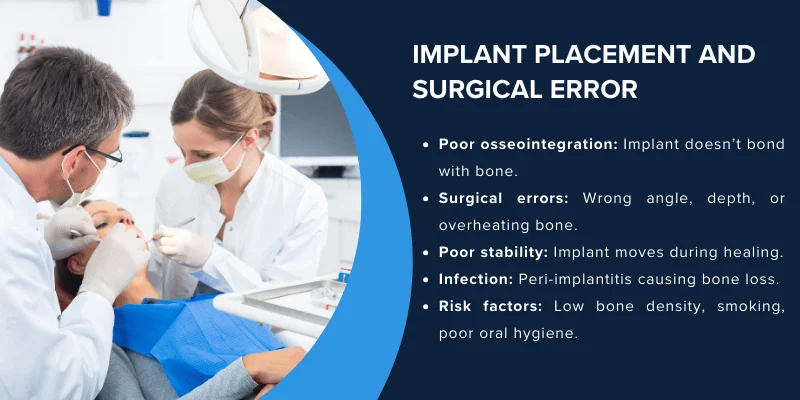
How your surgeon places your implants matters just as much as the implants themselves. Also, study shows that surgical errors and poor technique can prevent proper healing from the start.
Overheating your bone during drilling damages the tissue and stops osseointegration. Your surgeon must use proper irrigation to keep the surgical site cool. Placing implants at the wrong angle or depth creates excessive stress on your bone and causes early failure.
Inadequate primary stability is another common problem. Your implants need to be firmly anchored in your jawbone from day one. If they move even slightly during healing, the bone won’t attach properly.
Key placement errors include:
- Implants positioned too close together
- Wrong implant size for your bone structure
- Damage to nerves or sinuses during surgery
- Insufficient bone without proper bone graft procedures
Infection and Peri-Implantitis
Bacterial infections are one of the most preventable causes of implant failure. Peri-implantitis develops when bacteria and food particles build up around your implant and gum line.
This condition causes inflammation in the soft tissue around your implant and leads to bone loss. You might notice swelling, bleeding when you brush, or a bad taste in your mouth. Early detection matters because peri-implantitis can destroy the bone supporting your full-arch restoration.
Infection can happen at any point during implant surgery or healing. Poor oral hygiene after your procedure increases your risk significantly. Cement left under your gums during the restoration process can also trap bacteria and cause infection.
Your dentist should monitor your implants regularly during the first year. Professional cleanings and proper home care reduce your infection risk dramatically.
Patient and Medical Factors That Increase Risk
Your overall health and daily habits play a major role in whether full-arch implants succeed or fail. Research shows that certain medical conditions, bone quality issues, and lifestyle choices can significantly raise your risk of early implant failure.
Bone Health and Osteoporosis
Your jawbone needs sufficient volume and density to support dental implants. If you have osteoporosis or significant bone loss, your implants may not integrate properly with the surrounding bone.
Osteoporosis weakens your bone structure throughout your body, including your jaw. This condition reduces bone volume and makes it harder for implants to achieve stable fixation. Some medications used to treat osteoporosis can also affect healing, so you should discuss these with your dental specialist before treatment.
Your dentist will evaluate your bone quality through imaging and may recommend bone grafting if needed. Studies indicate that bone grafting can be a risk factor for implant failure in some cases, so proper planning is important.
Women past menopause face higher rates of bone loss and should pay special attention to bone health before getting implants.
Oral Hygiene and Gum Disease
Poor oral hygiene is one of the most preventable causes of implant failure. If you have gum disease or periodontitis before getting implants, your risk of complications increases significantly.
Infection at the implant site called peri-implantitis can develop when bacteria accumulate around the implant. This is similar to how periodontitis affects natural teeth. You need to maintain excellent oral hygiene both before and after implant placement.
If you currently have active gum disease, your dentist should treat it before placing implants. Regular brushing, flossing, and professional cleanings become even more important once you have full-arch implants. Your oral health habits directly affect how long your implants will last.
Systemic Conditions: Diabetes and More
Uncontrolled diabetes significantly increases your risk of early implant failure. High blood sugar levels slow down healing and make you more prone to infections.
If you have diabetes, keeping your blood sugar well-controlled before and after surgery is important. Studies show that patients with uncontrolled systemic diseases face higher failure rates. Your dental team may work with your physician to optimize your health before proceeding with implants.
Other cardiovascular diseases can also affect healing and implant success. You should provide your dentist with a complete medical history, including all medications you take. Some conditions require special precautions or timing adjustments for implant surgery.
Habits Like Smoking and Teeth Grinding
Smoking is one of the strongest predictors of early implant failure. Research confirms that smoking is a risk factor at the patient level for implants placed in both upper and lower jaws.
Nicotine reduces blood flow to your gums and bone, which slows healing after surgery. Smoking also weakens your immune system and makes infections more likely. If you smoke, quitting at least several weeks before surgery and staying smoke-free during healing gives you better odds of success.
Bruxism, or teeth grinding, puts excessive force on your implants. This habit can prevent proper integration with your bone during the early healing period. If you grind your teeth at night, your dentist may recommend wearing a night guard to protect your implants from damaging forces.
Contact our team at Minot Dental Partners today to learn how careful screening and expert techniques help prevent early implant failure and protect long-term results.
Recognizing Early Signs of Implant Failure
Catching problems with your full-arch implants early can make the difference between a simple fix and complete implant replacement. Pain, movement, swelling, and changes in how your teeth fit together are all warning signs that something needs attention.
Implant Mobility and Looseness
Your implants should feel completely stable and secure in your mouth. Any movement or wiggling is a serious red flag that needs immediate attention from your dentist.
Signs of implant failure often start with mild mobility that gets worse over time. You might notice the movement when you eat or press on the implant with your tongue. Sometimes you can feel a slight rocking motion that wasn’t there before.
This looseness usually means the implant isn’t bonding properly with your jawbone. It can also signal that bone loss is happening around the implant site. Don’t wait to see if it gets better on its own.
Call your specialist right away if you detect any movement. Early intervention can sometimes save the implant before complete failure occurs.
Difficulty Chewing and Bite Changes
You should be able to eat normally with your full-arch implants without any trouble. If chewing becomes uncomfortable or your bite feels different, something may be wrong with your implants.
You might notice that your teeth don’t come together the same way they used to. Foods that were easy to eat before might now cause discomfort or feel awkward. Some people describe a feeling that their bite is “off” or uneven.
Difficulty chewing can happen when implants shift position or when the prosthetic teeth become misaligned. Pressure on the implant during chewing might cause pain that makes you avoid certain foods.
These changes often develop gradually. You might start cutting food into smaller pieces or chewing on one side of your mouth without realizing why.
Gum Inflammation and Swelling
Healthy gums around your implants should look pink and fit snugly against the prosthetic teeth. Red, puffy, or tender gums indicate gum inflammation that needs treatment.
Swelling around the implant site can range from mild puffiness to obvious bulging. You might see redness that extends beyond the immediate area of the implant. The gums may feel tender when you brush or touch them.
This inflammation often signals an infection called peri-implantitis. Bacteria building up around the implant causes the tissue to become inflamed and can lead to bone loss. You might also notice bleeding when you brush or floss around the implants.
Bad breath or an unpleasant taste in your mouth can accompany the swelling. Don’t ignore these symptoms even if they seem minor at first.
Persistent Pain or Discomfort
Some mild sensitivity right after your implant surgery is normal. But pain or discomfort that continues for weeks or suddenly appears months later isn’t normal at all.
The pain might be dull and constant or sharp when you bite down. You could feel throbbing that gets worse at certain times of day. Some people experience a deep ache in the jaw near the implant site.
Sharp pain when chewing usually means something is putting too much pressure on the implant. A failed dental implant often causes persistent discomfort that over-the-counter pain medicine doesn’t help much.
Contact your dental specialist if pain lasts more than a few days or keeps coming back. Pain is your body’s way of telling you something needs fixing.
How Specialists Prevent Early Full-Arch Implant Failure
Preventing early failure requires careful planning before surgery, skilled techniques during the procedure, and consistent care afterward. Specialists use advanced tools and proven methods to help ensure your implants integrate properly with your bone.
Thorough Patient Assessment and Planning
Your oral surgeon starts by reviewing your complete medical history to identify any conditions that might affect healing. They check for diabetes, osteoporosis, and other health issues that could impact implant success.
3D imaging plays a key role in planning your surgery. This technology shows the exact shape and density of your jawbone. Your specialist uses these scans to determine the best angles and positions for each implant.
Bone quality assessment helps your surgeon choose the right implant materials for your situation. The upper jaw typically has softer bone than the lower jaw, which affects how implants are placed.
Your specialist will also discuss your smoking habits. Studies show that smoking increases the risk of early implant failure significantly. If you smoke, your surgeon may recommend quitting before surgery.
Planning also includes creating a surgical guide. This custom tool helps position implants exactly where they need to go during your procedure.
Advanced Surgical Techniques and Technology
During dental implant surgery, specialists use specific techniques to achieve primary stability. This means the implant fits tightly in your bone right away, which is critical for implant supported dentures.
The surgical technique matters greatly for full-arch cases. Experienced surgeons place implants at specific angles to avoid important structures like nerves and sinuses. They also maximize contact with strong bone.
Your surgeon checks the initial fixation value during placement. Implants need at least 35 Ncm of torque to support immediate loading. If an implant doesn’t reach this level, your specialist may place an additional one nearby.
Implant material selection is based on your bone quality. Modern implants have textured surfaces that help bone cells attach better than smooth surfaces. Some specialists use surface treatments that can improve how quickly bone grows around the implant.
Real-time adjustments during surgery help specialists respond to what they find in your jaw. If bone quality is different than expected, they can modify the approach immediately.
Post-Surgery Care and Hygiene Protocols
Post-surgery care starts right after your procedure ends. You’ll receive antibiotics to prevent infection that could lead to implant failure. Most specialists prescribe a five-day course along with a medicated mouthwash.
Your diet matters during the first few months. You’ll need to eat soft foods for at least two to three months while your bone heals around the implants.
Follow-up appointments are scheduled at specific intervals. You’ll typically see your specialist at one week, two weeks, and then monthly for the first six months. These visits let your surgeon check for any early warning signs of problems.
Preventing dental implant failure requires you to maintain excellent oral hygiene. Your specialist will show you how to clean around your temporary prosthesis properly. This includes specific brushing techniques and tools designed for implants.
Long-Term Monitoring and Maintenance

Long-term implant success depends on regular professional care. After your final prosthesis is placed, you’ll need checkups every three to six months. Your specialist examines the implants and surrounding tissue at each visit.
Professional cleaning removes buildup that you can’t reach at home. Your hygienist uses special tools that won’t damage the implant surfaces or prosthesis.
X-rays taken during maintenance visits show how well bone is maintained around your implants. Any bone loss appears as a dark area on the image. Early detection allows for treatment before serious problems develop.
Your specialist looks for signs of excessive force on your implants. If you grind your teeth at night, you may need a night guard to prevent dental implant failure from overloading.
Adjustments to your prosthesis may be needed over time. Screws can loosen, or the bite relationship might change. Your specialist tightens connections and makes modifications as needed to protect your investment.
Solutions and Next Steps After Early Failure
When a full-arch implant fails early, you have several treatment options depending on the condition of your jaw and surrounding tissues. The right approach depends on whether enough bone remains and how quickly you need a functional solution.
Removal and Replacement Options
Your dentist will first need to remove the failed dental implant carefully to avoid damaging the surrounding bone. This procedure is usually straightforward and can often be done under local anesthesia.
After removal, you might be able to get a replacement implant right away if enough healthy bone remains. However, this depends on why the original implant failed. If infection caused the failure, your specialist will need to clean the area thoroughly first.
The waiting period between removal and replacement typically ranges from 8 to 12 weeks. This gives your bone time to heal properly. Some specialists use special techniques to place a slightly larger implant in the same location once healing is complete.
Your treatment team will evaluate factors like bone density and any remaining infection before deciding on timing. In the maxilla, healing often takes longer than in the mandible because the upper jaw typically has softer bone.
Bone Grafting and Site Preparation
You may need a bone graft if the failed implant caused bone loss around the site. This procedure adds new bone material to rebuild the area and create a stable foundation for future implants.
Common bone grafting materials include:
- Your own bone from another part of your jaw
- Processed donor bone
- Synthetic bone substitutes
- Animal-derived bone materials
The grafting process typically requires 4 to 6 months of healing before new implants can be placed. During this time, the graft material integrates with your existing bone structure. Your specialist may use imaging scans to monitor how well the graft is developing.
Some patients need additional procedures like sinus lifts in the maxilla or ridge augmentation to build up bone height and width.
Switching to Alternative Tooth Replacement
If replacing the implant isn’t possible right away, you have other tooth replacement options while you wait. Partial dentures can restore your ability to eat and speak normally during the healing period.
A removable prosthesis works well as a temporary solution. It keeps your remaining teeth from shifting and maintains your facial appearance. Some patients choose to stick with removable options permanently if they want to avoid another surgery.
Your alternatives include:
- Removable full dentures
- Implant-supported overdentures with fewer implants
- Traditional bridges if you have healthy adjacent teeth
Talk with your dental team about which option fits your lifestyle and budget best. Many patients successfully return to implant treatment after proper healing and preparation.
Start your implant journey the easy way at Minot Dental Partners. Fill out the New Patient Form now so we can review your dental history and treatment goals in advance.
Frequently Asked Questions
Patients often have specific questions about what causes full-arch implants to fail and how to protect their investment in new teeth. Understanding the risk factors and prevention strategies helps you make informed decisions about your treatment.
What are some common reasons for the early failure of full-arch dental implants?
Poor bone integration is one of the most common reasons full-arch implants fail within the first year. When your jawbone doesn’t properly fuse with the implant surface, the implant becomes unstable and may need removal.
Infection at the implant site can prevent proper healing and lead to early failure. Your body’s immune response to bacteria can break down the bone around the implant before it has a chance to integrate.
Excessive force on new implants during the healing period puts stress on the bone-implant connection. If you bite down too hard on your temporary teeth or eat foods that are too tough, you risk disrupting the healing process.
Research shows that smoking significantly increases your risk of implant failure because it reduces blood flow to your gums and bone. This limited blood supply slows healing and makes it harder for your bone to attach to the implant.
Surgical complications during placement can also lead to problems. If your implant is positioned incorrectly or doesn’t achieve strong initial stability, it may fail before your bone has time to grow around it.
How can specialists improve the success rate of full-arch implant procedures?
Experienced surgeons use detailed 3D imaging to plan your implant placement before surgery begins. This technology lets them see your bone structure, nerve locations, and sinus cavities to choose the best implant positions.
Specialists achieve better results by ensuring each implant has strong initial stability during placement. Your surgeon measures the torque value when inserting each implant to confirm it’s firmly anchored in your bone.
Using implants with specially treated surfaces helps your bone cells attach faster and more securely. These rough or chemically modified surfaces encourage bone growth and reduce the risk of early failure.
Your specialist may place additional implants beyond the standard four if your bone quality is poor or initial stability is weak. This extra support helps distribute forces more evenly across your jaw.
Following strict sterile techniques during surgery prevents bacterial contamination that could cause infection. Your surgical team takes steps to minimize your risk of complications from the moment your procedure begins.
What maintenance practices are recommended to ensure the longevity of full-arch implants?
You need to clean around your implants daily using special brushes and floss designed for implant care. Regular cleaning removes plaque and bacteria that can cause inflammation and bone loss around your implants.
Attending follow-up appointments every three to six months lets your dental team monitor your implants for early signs of problems. During these visits, your hygienist professionally cleans areas you can’t reach at home.
You should stick to a soft food diet for two to three months after surgery to protect your implants during the critical healing period. Avoiding hard or chewy foods prevents excessive force on your new implants.
Using an antimicrobial mouth rinse as directed by your specialist helps control bacteria in your mouth. This simple step reduces your risk of infection during the vulnerable early healing phase.
Wearing a night guard if you grind your teeth protects your implants from excessive pressure while you sleep. Your dentist can make a custom guard that fits over your new teeth.
Are there any specific health conditions that can contribute to the early failure of dental implants?
Uncontrolled diabetes increases your risk of implant failure because high blood sugar levels slow wound healing and make you more prone to infections. If you have diabetes, you need to work with your doctor to stabilize your blood sugar before getting implants.
Osteoporosis weakens your bone density and may affect how well your jawbone can support implants. Some osteoporosis medications, particularly intravenous bisphosphonates, can interfere with bone healing around implants.
Autoimmune diseases that affect your immune system can make it harder for your body to heal properly after surgery. Conditions like rheumatoid arthritis or lupus may require special precautions during your treatment.
Cardiovascular diseases don’t directly cause implant failure, but they can complicate your surgery and recovery. Your medical team needs to know about heart conditions to plan the safest approach for your procedure.
Immunosuppression from medications or medical treatments reduces your body’s ability to fight infection and heal tissue. If you’re taking immunosuppressive drugs, your specialist will assess whether implant treatment is appropriate for you.
What role does bone quality play in the success of full-arch dental implants?
Dense, healthy bone provides the strongest foundation for your implants and improves your chances of long-term success. When your bone has good quality and quantity, implants can achieve better initial stability and integrate faster.
A study suggests that the maxilla tends to have softer bone than the mandible, which may explain why upper jaw implants have slightly higher failure rates. Your upper jawbone is naturally more porous and may require longer healing times or additional implants for support.
If you’ve been missing teeth for years, your jawbone has likely shrunk through a process called resorption. This bone loss can make implant placement more challenging and may require bone grafting before you can receive implants.
Poor bone quality in the back of your mouth sometimes requires your surgeon to angle posterior implants to reach stronger bone. This angled placement helps avoid areas where your bone is too thin or soft to support an implant.
Your specialist evaluates your bone density using CT scans before recommending a treatment plan. Based on what they find, they may suggest treatments to strengthen your bone or adjust the number and position of your implants.
How important is the patient’s lifestyle in preventing early failure of full-arch implants?
Your smoking habit has a major impact on implant success because tobacco restricts blood flow to your gums and bone. Smokers face significantly higher risks of early implant failure compared to non-smokers.
Heavy alcohol consumption can interfere with bone healing and increase your risk of infection after surgery. Limiting alcohol during your recovery period helps your body focus its resources on healing around your new implants.
Poor oral hygiene creates an environment where harmful bacteria can thrive and attack the tissue around your implants. Brushing twice daily and cleaning between your implants prevents the buildup that leads to inflammation