


If you live with an autoimmune condition, you may wonder how it could affect dental implant healing. Your immune system plays a key role in how your body heals after surgery.
When that system attacks healthy tissue or stays overactive, healing can slow down or become less predictable.
Autoimmune conditions such as rheumatoid arthritis, lupus, and Sjögren’s syndrome can affect implant healing by changing how your body handles inflammation, bone repair, and infection risk.
Some conditions reduce bone density levels, while others cause dry mouth or chronic inflammation that may raise the risk of complications around the implant.
Medication also matters. Steroids, biologic drugs, and other immune‑suppressing treatments can affect how your body fights infection and rebuilds bone.
When you understand these risks of autoimmune disease and dental implants, and work closely with your dental and medical team, you can take clear steps to support better healing.
Key Takeaways
- Autoimmune diseases can change how your body heals after implant surgery.
- Bone health, inflammation, and infection risk all affect implant success.
- Careful planning and medical coordination help improve healing outcomes.
Understanding Implant Healing in the Context of Autoimmune Disease
When you have an autoimmune disease, your immune system does not respond in a typical way. That shift can affect tissue healing, bone metabolism, and how well your implant bonds to bone.
Role of the Immune System in Tissue Healing
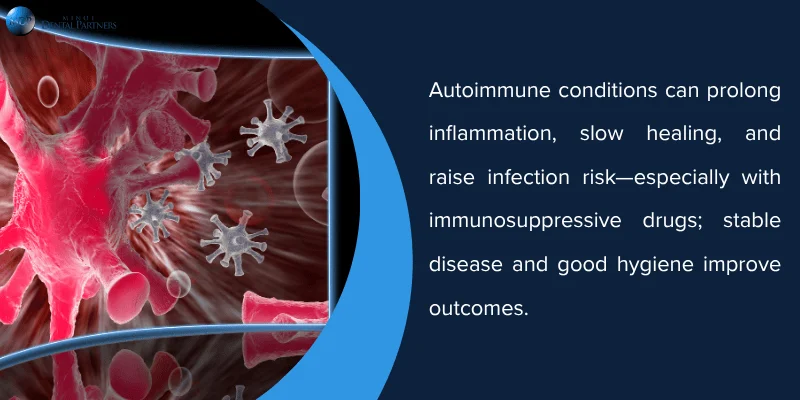
Your immune system controls each stage of tissue healing. It manages bleeding, inflammation, new tissue growth, and remodeling.
With autoimmune diseases, your immune system may stay active longer than it should. Instead of calming down after surgery, it can continue to release inflammatory signals. This can slow wound closure and increase swelling or soreness around the implant site.
Some autoimmune conditions also require medications that suppress your immune response. These drugs help control disease activity, but they can delay healing and raise the risk of infection. You may need closer follow-up visits to watch for early signs of dental implant failure.
Key factors that can affect your healing include:
- Level of disease control
- Type of medication used
- Your body’s inflammatory response
- Oral hygiene during recovery
When your condition stays stable, tissue healing tends to be more predictable.
Impact on Osseointegration
Osseointegration is the process where bone grows and bonds directly to the implant surface. This step determines whether the implant becomes stable and long lasting.
Autoimmune disease can affect bone metabolism. Some conditions increase bone breakdown or reduce new bone formation. If your body cannot build strong bone around the implant, osseointegration may take longer or become less secure.
Research suggests that dental implants can still succeed in patients with autoimmune diseases when managed carefully, as noted in this systematic review on implant treatment in patients with autoimmune diseases.
Your provider may adjust healing time, use specific implant surfaces, or monitor bone levels more often. Stable disease activity improves the chance that bone will attach firmly to the implant.
Foreign Body Response and Chronic Inflammation
Your body recognizes a dental implant as a foreign material. In most people, this foreign body reaction is controlled and supports healing.
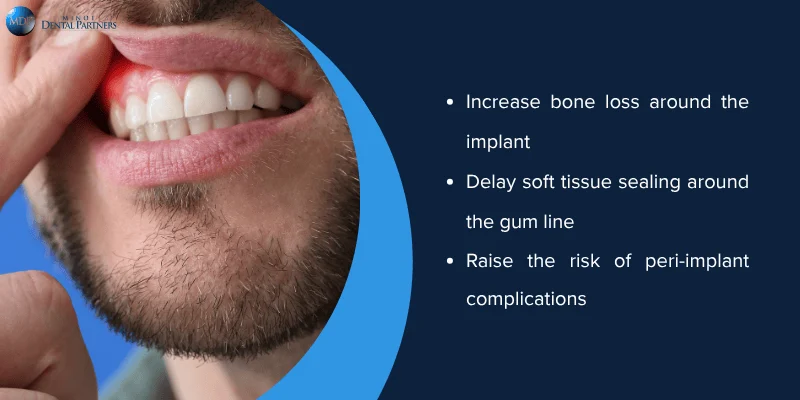
If you have chronic inflammation from an autoimmune disease, the reaction can become stronger or last longer. Ongoing inflammation may damage surrounding tissue and interfere with stable bone attachment.
Chronic inflammation can:
- Increase bone loss around the implant
- Delay soft tissue sealing around the gum line
- Raise the risk of peri-implant complications
Good plaque control and regular checkups matter even more in this setting. A careful plan that manages inflammation gives your implant the best chance to integrate and function well.
Major Autoimmune Conditions Affecting Implant Healing
Some autoimmune diseases change how your body heals bone and soft tissue after implant surgery. They can also affect saliva, oral mucosa, blood sugar, and infection risk, all of which shape implant success.
Rheumatoid Arthritis and Implant Outcomes
If you have rheumatoid arthritis (RA), chronic inflammation can affect bone metabolism and slow healing. RA can reduce bone density, especially if you take long-term corticosteroids. Lower bone density may reduce primary implant stability.
Many people with RA use drugs such as glucocorticoids or biologic agents. These medications help control joint damage, but they may also increase infection risk. Early implant loss often happens before the crown is placed, when healing fails.
A recent scoping review on dental implant therapy in patients with autoimmune diseases found implant survival rates between 85% and 100% in patients with autoimmune conditions, including RA. Still, most implant losses occurred early in healing.
You also need to consider fatigue and limited hand strength. These can make daily oral hygiene harder. Poor plaque control raises the risk of peri-implant inflammation.
Key concerns with RA:
- Reduced bone density
- Higher infection risk with immunosuppressants
- Difficulty maintaining oral hygiene
Close coordination between your dentist and rheumatologist helps manage these risks.
Systemic Lupus Erythematosus Effects
Systemic lupus erythematosus (SLE) can affect blood vessels, connective tissue, and immune response. This may slow wound healing after implant placement.
If you take steroids or other immunosuppressive drugs for SLE, your body may not respond to bacteria as well. That can increase the risk of post-surgical infection. Active disease flares also raise complication rates.
SLE may cause oral mucosal diseases, including ulcers and inflamed tissue. Placing implants during a flare can worsen discomfort and delay healing. Your dentist should plan surgery during stable periods.
Fatigue is common in SLE. When you feel exhausted, you may brush and floss less effectively. This can allow plaque to build up around implants.
You benefit most from:
- Careful timing of surgery
- Stable disease control
- Strict plaque management
- Regular follow-up visits
Sjögren’s Syndrome and Oral Health
With Sjögren’s syndrome, your immune system attacks salivary glands. This leads to dry mouth and often dry eyes. Low saliva levels raise the risk of tooth decay and gum disease.
Saliva protects your oral tissues and helps control bacteria. Without it, the tissue around implants may become inflamed more easily. Dry mucosa can also feel sore under prosthetic parts.
Some studies report strong implant survival in Sjögren’s patients. For example, one review noted high survival rates in autoimmune groups, including Sjögren’s syndrome, when disease control and hygiene were good.
You can lower your risk by:
- Using saliva substitutes
- Staying hydrated
- Applying prescription fluoride
- Attending frequent hygiene visits
Managing dry mouth is central to long-term implant health.
Type 1 Diabetes Impact
Type 1 diabetes is an autoimmune disease that destroys insulin-producing cells. If your blood sugar stays high, healing slows and infection risk rises.
High glucose levels impair white blood cell function. This weakens your body’s ability to fight bacteria around the implant site. It can also reduce bone formation needed for osseointegration.
You face greater risk of:
- Delayed soft tissue healing
- Early implant failure
- Peri-implantitis
Tight glycemic control before and after surgery improves outcomes. Your dentist may check your HbA1c level to confirm stability.
When you maintain stable blood sugar and follow a strict oral hygiene plan, implants can succeed. Careful medical monitoring makes a clear difference in healing and long-term stability.
Other Autoimmune Disorders and Disease-Specific Risks
Some autoimmune diseases change your skin, connective tissue, or nerves in ways that directly affect implant healing. These conditions can limit blood flow, increase inflammation, or make daily oral care harder, which raises the risk of delayed healing and peri-implant problems.
Scleroderma and Morphea
If you have scleroderma, your immune system produces autoantibodies that trigger excess collagen buildup. This process leads to fibrosis, which thickens skin and connective tissue and reduces blood flow.
Limited blood supply can slow wound healing after implant surgery. You may also have tight facial skin or reduced mouth opening, which makes surgery and hygiene more difficult.
Morphea is a localized form of scleroderma. It mainly affects the skin, but deep lesions near the jaw can still change tissue flexibility and healing response.
Key concerns include:
- Delayed soft tissue healing
- Higher risk of infection in fibrotic tissue
- Difficulty with oral hygiene if mouth opening is limited
Your care team should check disease activity and medication use, especially if you take immunosuppressive drugs.
Psoriasis and Oral Lichen Planus
Psoriasis causes chronic inflammation driven by immune cells and inflammatory signals. While it mainly affects the skin, severe cases can raise overall inflammatory levels in your body.
Chronic inflammation may increase your risk of peri-implant mucositis or peri-implantitis. If you take biologic drugs or systemic steroids, your healing response may change.
Oral lichen planus directly affects the lining of your mouth. It often appears as white streaks, red patches, or painful sores.
Active erosive lesions near an implant site can:
- Delay soft tissue closure
- Increase discomfort during healing
- Raise the risk of secondary infection
Implant placement works best when your oral lichen planus is stable and well controlled. Your dentist should avoid placing implants through active ulcerated tissue whenever possible.
Multiple Sclerosis Related Challenges
Multiple sclerosis (MS) affects your central nervous system, not your oral tissues directly. However, it can still influence implant outcomes.
Muscle weakness, tremors, or fatigue may make brushing and flossing harder. Poor plaque control increases the risk of peri-implant inflammation.
Some MS treatments modify your immune system. These drugs may slow healing or slightly increase infection risk, depending on the medication and dose.
You should also consider:
- Difficulty attending long appointments
- Jaw muscle fatigue during procedures
- Dry mouth linked to certain medications
With good planning and stable disease control, many people with MS can receive implants successfully. Careful hygiene support and shorter visits often make a big difference.
Clinical Outcomes and Potential Complications
Autoimmune conditions can change how your body heals around dental implants. You may face higher risks of implant failure, marginal bone loss, and inflammatory problems like peri-implantitis.

Implant Failure and Survival Rate
When you have an autoimmune disease, your immune system may react in ways that affect bone healing. This can influence implant survival rate and long-term implant outcomes.
A recent review found that many patients still achieve acceptable implant survival rates. However, outcomes vary based on the specific condition, disease control, and medications used.
You may face higher risk of implant failure if your disease is active or poorly managed. Drugs that suppress your immune system can slow early healing after surgery.
If you are edentulous or have multiple missing teeth, careful planning becomes even more important. Your dentist may stage treatment, monitor healing closely, and adjust loading times to protect your implant success rate.
Marginal Bone Loss and Bone Regeneration
Marginal bone loss (MBL) plays a key role in long-term implant success. Even small changes in bone levels can affect stability over time.
Autoimmune disorders can alter bone metabolism and slow bone regeneration. A systematic review on implant success in patients with autoimmune disorders notes that bone response may differ depending on the disease and treatment.
You may experience higher MBL if inflammation remains active. Reduced bone healing can limit strong osseointegration, especially in edentulous jaws where bone volume is already low.
Your dentist may recommend bone grafting or guided bone regeneration to improve support. Regular imaging helps track MBL and detect early changes before they threaten implant outcomes.
Peri-Implantitis and Mucositis Risks
Inflammation around implants presents a major concern in autoimmune conditions. You may have a higher risk of peri-implant mucositis and peri-implantitis due to altered immune responses.
Peri-implant mucositis involves redness, swelling, and bleeding on probing (BOP). If not treated, it can progress to peri-implantitis, which includes bone loss around the implant.
Research on the interplay between autoimmune diseases and peri-implantitis highlights how immune dysregulation may increase inflammatory damage in soft and hard tissues.
You can lower risk by keeping plaque levels low and attending regular maintenance visits. Early detection of BOP and slight marginal bone loss allows your dental team to act before implant failure develops.
Influence of Medications and Systemic Management
Your medications and overall disease control play a direct role in how well an implant bonds to bone. Drug effects on bone turnover, immune response, and soft tissue healing can change your risk for infection, bone loss, and implant failure.
Immunosuppressive Medications and Healing
If you take immunosuppressive medications for an autoimmune condition, your body may heal more slowly. These drugs lower immune activity to control disease, but they can also reduce your ability to fight infection and repair tissue.
Common examples include corticosteroids, biologic agents, and drugs used after organ transplant. A review on dental implants in immunocompromised patients found that implant survival is often acceptable, but careful case selection and follow-up are essential.
Long-term steroid use can also reduce bone density. That matters because implants depend on strong bone contact, called osseointegration.
Research on systemic diseases and medications that influence dental implant osseointegration notes that drugs affecting bone turnover may increase the risk of early implant loss.
You should share a full medication list with your dental team. Your provider may adjust surgical timing, use antibiotic coverage, or delay placement until your condition is stable.
Selective Serotonin Reuptake Inhibitors and Bone Health
Selective serotonin reuptake inhibitors (SSRIs) treat depression and anxiety, which are common in people with chronic autoimmune disease. These drugs can affect bone metabolism.
Some studies suggest SSRIs may lower bone mineral density or increase fracture risk over time. Reduced bone strength may limit implant stability, especially in the early healing phase when the implant bonds to bone.
If you take an SSRI, your dentist may assess bone quality more closely. This can include reviewing medical history, recent imaging, and risk factors such as osteoporosis.
You should not stop your medication without medical advice. Instead, your care team can factor SSRI use into treatment planning and choose implant size, number, and loading time with care.
Coordinated Treatment Planning
Successful implant care often depends on coordinated treatment planning between your dentist and physician. Good control of your autoimmune disease reduces inflammation and supports healing.
Your team may review:
- Current disease activity
- Medication dose and duration
- Blood sugar levels if you have diabetes
- Bone density status
- Smoking history
If healing risk is high, your provider may suggest staged treatment or delay final prostheses until integration is confirmed. In some cases, a removable prosthesis can protect implants during early healing.
Regular maintenance visits matter. Patients with autoimmune diseases can experience more peri-implant inflammation, so close monitoring helps protect both the implant and surrounding bone.
Best Practices for Optimizing Implant Healing in Autoimmune Patients
You improve implant healing when you plan carefully, coordinate care, and control daily risk factors. Clear assessment, team communication, and strict maintenance all shape long‑term implant rehabilitation outcomes.
Patient Assessment and Risk Evaluation
You start with a detailed medical review. Identify the exact autoimmune diagnosis, current disease activity, and all medications, especially steroids, biologics, and immunosuppressants.
Ask about flares, dry mouth, delayed wound healing, and past surgical problems. Conditions like Sjögren’s syndrome and erosive lichen planus can raise the risk of soft tissue problems around implants.
Review lab results when needed. Check blood glucose in Type 1 diabetes and inflammatory markers in active disease.
Use structured risk tools when possible. Many observational studies in this field use tools like the Newcastle-Ottawa Scale or ROBINS-I to judge risk of bias. While you may not score your patient formally, you should think the same way:
- Is the disease well controlled?
- Is bone quality reduced?
- Is healing likely to be delayed?
When risk is higher, consider staged treatment, longer healing periods, or short dental implants to reduce surgical trauma.
Interprofessional Collaboration
You should not manage complex autoimmune cases alone. Work closely with the patient’s rheumatologist, endocrinologist, or primary care doctor.
Confirm disease stability before surgery. Ask if medication timing needs adjustment around the procedure. Some biologic drugs may affect infection risk or healing speed.
Evidence from a systematic review on implant treatment in patients with autoimmune diseases shows implant survival rates often match the general population when disease control and follow-up are strong.
That finding comes mainly from observational studies, and many reviews note limits such as heterogeneity and risk of bias.
You should explain these limits to your patient in simple terms. Make sure they understand that published survival rates do not remove individual risk.
Document all communication. Clear records protect both you and your patient.
Hygiene, Maintenance, and Follow-Up Care
You must set strict hygiene rules from day one. Autoimmune conditions can increase inflammation and raise the risk of peri‑mucositis.
Give written and verbal instructions:
- Brush twice daily with a soft brush
- Use interdental cleaning tools
- Consider alcohol‑free antimicrobial rinses if indicated
Schedule shorter recall intervals, often every 3–4 months during the first year. At each visit, check probing depth, bleeding on probing, plaque levels, and radiographic bone height.
Research shows that long‑term success depends heavily on maintenance and follow-up in autoimmune patients, as highlighted in a review of dental implants in patients with autoimmune diseases.
Many studies in these reviews use meta-analysis methods, sometimes with a random-effects model, but they still rely largely on non-randomized data.
You improve outcomes by acting early. Treat inflammation at the first sign, adjust home care as needed, and reinforce disease control with the medical team.
Frequently Asked Questions
Autoimmune diseases can change how your body heals after implant surgery. You need clear facts about success rates, risks, bone grafts, and implant materials so you can plan safely with your dentist and medical doctor.
What is the success rate of dental implants in individuals with autoimmune diseases?
Many people with controlled autoimmune diseases have dental implant success rates close to the general population. Studies suggest implants can be a safe option when your condition is stable and well managed.
Your healing may take longer if you take steroids or immunosuppressant drugs. Good disease control and regular follow‑up visits improve your long‑term results.
Are patients with autoimmune conditions at a higher risk of complications with metal implants?
Your risk depends more on disease activity and medication than on the metal itself. Titanium implants rarely fail only because of autoimmune disease, especially when your condition stays under control.
You may face higher risks of infection or slow healing if your immune system is suppressed. Your dentist should review your medical history before surgery.
How can tooth extractions affect those with autoimmune disorders?
After an extraction, your body must form a blood clot and build new tissue. Autoimmune conditions and certain drugs can slow this process and raise your risk of dry socket or infection. Careful planning helps reduce problems.
Could dental bone grafting procedures trigger autoimmune responses?
Bone grafting usually does not trigger a new autoimmune disease. However, your immune system may react more strongly to surgery if your condition is active.
Systemic diseases can affect bone metabolism and wound healing, which are key for graft success.
What precautions should be taken for patients with autoimmune diseases receiving dental implants?
You should share a full list of your diagnoses and medications. Your dentist may consult your rheumatologist or primary doctor before surgery.
Close monitoring, strict oral hygiene, and regular checkups support long‑term success. Experts stress the need for tailored care in patients with autoimmune conditions.
Are there any alternatives to titanium implants for patients with autoimmune conditions?
Some dentists offer zirconia implants as a metal‑free option. Zirconia is a ceramic material and may appeal to you if you prefer to avoid metal.
However, titanium remains the most studied implant material. Your dentist should compare the risks, benefits, and long‑term data before you choose.


