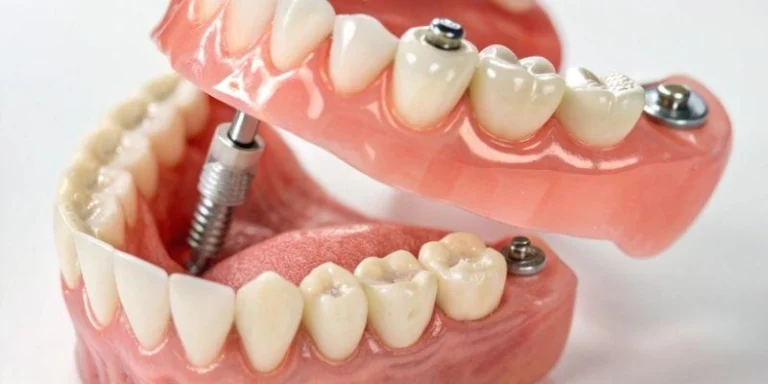



Full-arch implants can be a great solution for replacing a full row of missing teeth, but sometimes they fail early. The main reasons for full arch dental implant failure usually include poor bone healing, infection, excessive force on the implant, and some health or lifestyle factors like smoking.
Knowing these causes helps specialists take the right steps to avoid problems from the start. When implants fail early, it often means the bone hasn’t properly fused with the implant or infection has taken hold.
This can make it hard to keep the full arch prosthesis stable and comfortable. Specialists watch for warning signs early and use careful planning and treatment methods to give implants the best chance to succeed.
There are also new surface treatments for implants and strict follow-up routines that reduce risks. Understanding these factors makes a big difference in how long full-arch implants last.
Key Takeaways
- Early implant failure is caused by bone issues, infection, and health habits like smoking.
- Specialists prevent failure by careful surgery and close patient monitoring.
- New implant technologies and follow-up care improve long-term success.
Understanding Early Failure in Full-Arch Implants
Early failure happens when an implant does not properly bond with the bone soon after placement. This can affect how well the implant supports a full-arch prosthesis.
Knowing how common these failures are and what sets them apart from late failures helps me explain what to watch for and how specialists prevent problems early on.
Definition of Early Failure
Early failure means the implant fails within the first year after it is placed. This usually happens because the implant does not properly fuse with the jawbone in a process called osseointegration.
Studies suggest that bone quality is linked to over 30% of implant failures, with D4 bone (the least dense) being especially prone to poor bonding and failure.
Without good osseointegration, the implant becomes loose and can’t support the prosthesis. Some signs of early failure include pain, swelling, or the implant feeling unstable.
This stage is critical because if the implant can’t integrate well in the beginning, it may need to be removed and replaced. In my experience, early failure is mostly linked to surgical issues, infection, or poor bone quality.
Prevalence and Success Rates
The rate of early failure in full-arch implants is relatively low, generally around 1% to 2%. For example, a study with over 2300 implants reported a 1.7% failure rate within the first year.
Most implants succeed, but those placed in certain areas like the upper jaw (maxilla) tend to fail more often. Also, how the implant heals (whether it is uncovered immediately or submerged under the gum) can affect success.
Here’s a quick snapshot of factors linked to early failure:
- Higher risk in the upper jaw (maxilla)
- Increased failures with submerged healing
- Slightly higher failure rates in younger patients and females
Difference Between Early and Late Failure
Early failure happens before the implant fully bonds with the bone, usually within the first year. It is caused by problems in the initial healing phase, such as infection, poor surgical technique, or weak bone structure.
The implant never becomes stable enough to support the dental prosthesis. Late failure, on the other hand, occurs after successful osseointegration and may happen years later.
It is often due to mechanical problems, bone loss from disease (peri-implantitis), or excessive stress on the implant. Late failure can present as loosening or pain long after surgery.
Key Causes of Early Full-Arch Implant Failure
When dealing with full-arch implants, several critical factors can cause failure early on. These mainly involve how well the bone supports the implant, the precision of the surgery, and the risk of infection after placement.
Understanding these issues helps prevent complications.
Poor Osseointegration and Bone Issues
One of the biggest hurdles is poor osseointegration, which means the implant doesn’t properly bond with the jawbone. For this to happen well, bone density, quality, and volume must be adequate.
Thin or soft bone often can’t hold an implant firmly, increasing the risk of failure. Sometimes, I see cases where a bone graft is needed to rebuild bone before placing the implant.
Without enough bone volume, the implant won’t remain stable. Health problems like osteoporosis or smoking can weaken the bone’s ability to heal around the implant.
If the implant fails to integrate with the bone within the first year, it usually must be removed.
Surgical Technique and Placement Errors
Surgical skill is crucial because placing full-arch implants requires exact positioning. Mistakes during implant surgery can lead to poor alignment, wrong depth, or damaging nearby structures.
These errors can stop the implant from bonding or cause mechanical problems later. I pay close attention to implant placement to avoid stress on the implant from biting or chewing too soon.
Overloading an implant too early or in the wrong spot can lead to failure. Using the right implant materials that suit the patient’s needs is important.
The choice of screw-retained versus other designs matters in how forces are distributed.
Infection and Peri-Implant Disease
Infections around the implant, especially peri-implantitis, are another big cause of early failure. This disease causes inflammation and bone loss near the implant.
Poor hygiene, smoking, and uncontrolled diabetes are factors that increase the risk. It’s vital for me to monitor healing closely and treat any signs of infection quickly.
Even a minor infection can turn serious fast, leading to implant loosening and failure. Preventing infection starts with clean surgical conditions and continues with good patient care after surgery to protect the jawbone and implant site.
Patient-Related Risk Factors
When it comes to full-arch implants, certain health and lifestyle aspects can make healing harder or increase the chances of the implant failing early. These factors affect how well the bone and tissue support the implant during the crucial early stages.
Knowing these can help both patients and specialists make better choices for success.
Medical Conditions Affecting Healing
Some medical conditions can slow down the healing process or weaken the bone where the implant sits. For example, uncontrolled diabetes is a big concern because high blood sugar slows tissue repair and can increase infection risk.
If diabetes isn’t well managed, the chances of early implant failure go up. Osteoporosis is another issue.
It makes bones weaker and less dense, which can make it harder for an implant to bond with the jaw bone. People with osteoporosis need careful planning before surgery.
Good oral health is also critical. If someone has gum disease, like periodontitis, the tissues around the implant may not heal properly and might become infected.
Specialists often check and treat any inflammation before placing implants.
Lifestyle Factors and Habits
Smoking is one of the most well-known lifestyle habits that hurt implant success. Nicotine reduces blood flow and slows healing, which raises the risk of early failure.
Even after surgery, smokers tend to have more complications like infections or bone loss around implants. Poor oral hygiene is another big factor.
If I don’t keep my mouth clean, bacteria can build up and cause gum disease that affects the implant. Brushing, flossing, and regular dental visits are key habits to protect implants.
Bruxism, or teeth grinding, can put extra pressure on implants before the bone fully heals. That stress may cause the implant to loosen or fail.
Specialists might recommend a night guard or other solutions to reduce this risk.
Recognizing Early Signs and Symptoms of Failure
It’s important to know what to watch for so you can catch problems early with your full-arch implants. Some signs are pretty clear, while others might feel like minor discomfort or just a little change in how your mouth feels.
Paying close attention to these signs can help you get help before the issue gets worse.
Implant Mobility and Looseness
One of the clearest signs that something might be wrong is if your implant feels loose. Implants are supposed to be firmly anchored in your jawbone, so any movement or wiggling is a red flag.
This can happen if the implant didn’t fuse well with the bone or if there’s been bone loss around it. Even small shifts while chewing or talking can signal that the implant is unstable.
It’s important to pay attention if your implant doesn’t feel as solid as it once did. If it feels loose, don’t wait; getting a dentist to check it can prevent bigger failures.
Pain, Swelling, and Discomfort
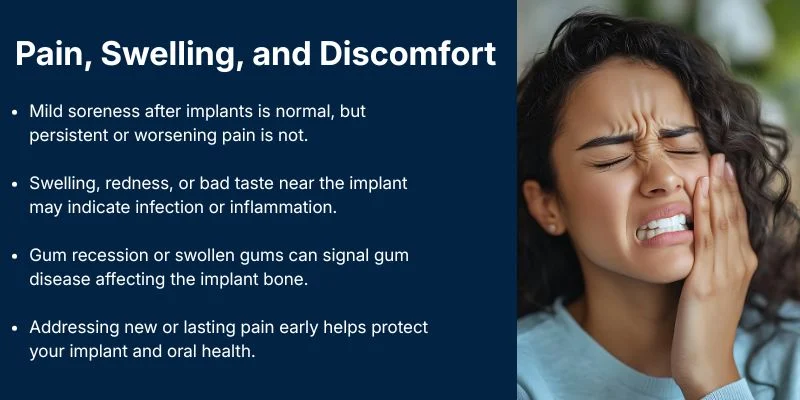
While some soreness right after getting implants is normal, pain that sticks around or gets worse is not. If you notice persistent pain, swelling, or redness near your gums, that could mean infection or inflammation.
Swollen gums, gum recession around the implant, or a bad taste in your mouth are signs your body isn’t happy with the implant. These symptoms suggest you might have gum disease or an infection, which can damage the bone holding the implant.
Taking any new or lasting pain seriously and catching early swelling helps protect your implant and your overall oral health.
Difficulty Chewing and Changes in Bite
If your bite feels off or you start having trouble chewing the foods you used to enjoy, this could be linked to implant problems. A shifting implant or swelling can change how your teeth come together.
You might notice discomfort when biting down or notice that food isn’t breaking down easily. These changes can also mean that the implant isn’t positioned correctly, or the prosthetic isn’t sitting quite right.
If you feel your chewing is harder or uneven, or your bite feels different, it’s smart to have a dental specialist evaluate what’s happening before it leads to more implant damage.
How Specialists Prevent Early Failures
Preventing early failures with full-arch implants takes careful work before, during, and after surgery. It includes knowing the patient’s health in detail, using precise imaging, and picking the best surgical methods to ensure the implant stays strong.
Bone health and any need for grafting also play a big role in making the implant successful.
Comprehensive Patient Assessment
I always start with a thorough patient evaluation. This includes checking medical history for conditions like diabetes or smoking habits that can slow healing.
I also assess oral health carefully, looking for gum disease or infections that might cause problems after surgery. Using 3D imaging lets me see the jawbone’s shape and quality clearly.
This helps me plan the best implant spots and avoid areas with poor bone. Knowing the patient’s bone density and structure is critical for deciding if bone grafting is needed.
By understanding the patient’s overall health and bone condition, I can reduce risks that might cause the implant to fail early.
Advanced Surgical Planning and Techniques
I rely heavily on advanced surgical planning to improve implant success. Using 3D scans, I map precise implant placement before the operation.
This helps me achieve primary stability, which means the implant is securely fixed in the bone from the start. During surgery, I use gentle but firm techniques to avoid damaging bone tissue.
This careful handling helps the bone grow around the implant properly. I prefer immediate loading only when the implant is very stable and conditions are ideal.
I also follow strict infection control and post-surgery care guidelines. Keeping the surgical site clean and advising patients on care can prevent infection, a common cause of early failure.
Ensuring Optimal Bone Health and Grafting
Bone health is key to implant success. Sometimes, patients don’t have enough bone where the implant needs to go.
In these cases, bone grafting helps rebuild or strengthen the area before or during implant placement. I choose the grafting method based on how much bone is missing and the patient’s healing ability.
A strong, healthy bone base provides better support and promotes faster healing around the implant. Good bone grafting combined with proper healing time can prevent implant loosening or failure.
I carefully monitor the patient’s bone health and healing progress after surgery to catch any issues early.
Specialist Strategies for Long-Term Implant Success
I focus on two key areas that help keep full-arch implants working well for years: careful maintenance by professionals and good daily care at home. Both are critical to stopping problems before they start and protecting implants in the maxilla or mandible after tooth replacement.
Regular Maintenance and Professional Care

Regular check-ups are a must to keep implants healthy. I recommend patients with implant-supported dentures or partial dentures visit their dentist or hygienist every 3 to 6 months.
During these visits, professionals remove plaque and biofilm buildup, especially in spots hard to reach during daily cleaning. This helps prevent peri-implant disease, a common cause of early failure.
Special tools are used to gently clean around implants without damaging their surfaces. We also check for any signs of bone loss or tissue inflammation that could signal trouble.
If issues are caught early, treatments can stop dental implant failure in its tracks. Maintaining healthy gums around full-arch implants makes a big difference in long-term implant success.
Patient Education and Home Oral Hygiene
Daily cleaning is just as important as professional care. I teach patients how to clean their implants properly, emphasizing flossing and brushing techniques designed for implant-supported dentures or fixed restorations.
Using special floss or interdental brushes helps remove debris under and around prostheses. Since some patients have trouble reaching implants in the back of the mouth, especially in the maxilla, I recommend tools like water flossers or angled brushes.
It’s vital that patients understand why flossing and careful hygiene prevent dental implant failure. By taking charge of home care, patients greatly reduce risks of inflammation and bone loss.
Frequently Asked Questions
Many factors can cause early failure of full-arch dental implants. Knowing what to watch for and how to take care of your implants can make a big difference.
Lifestyle habits and new treatments also play a key role in keeping implants strong and lasting.
What common reasons lead to the early failure of full-arch dental implants?
Early failure often happens because of poor bone quality, infections at the implant site, or problems during surgery. Smoking and placing implants in the upper jaw instead of the lower jaw can also raise risks.
Sometimes, the implant may not get a strong enough hold in the bone at first, causing failure within the first year.
How can regular maintenance improve the lifespan of my full-arch implants?
Keeping your mouth clean is crucial. Regular check-ups let your dentist spot problems like inflammation early.
Are there specific lifestyle factors that can affect the success of dental implants?
Yes, smoking is one of the biggest risks because it slows healing and increases infection chances. Poor general health, like uncontrolled diabetes, can also affect implant success.
Eating a balanced diet and avoiding habits that harm your mouth will help your implants last longer.
What are the latest techniques used by specialists to ensure implant longevity?
One newer method is photofunctionalisation, which uses UV light to improve the implant surface. This can help bone cells stick better.
Specialists also prefer implants with roughened surfaces because they bond to bone quicker. Precise surgical techniques and careful planning make a difference too.
How do I know if my full-arch implant is failing, and what should I do about it?
Signs include pain, swelling, mobility of the implant, and sometimes pus or bad taste. If you notice any of these, you should contact your dentist right away.
Early treatment can save the implant or prevent further problems.
Can you describe the role of bone density in the success of full-arch dental implants?
Bone density is very important. Dense bone offers a strong base for the implant to attach and heal properly.
The upper jaw usually has softer bone than the lower one. This can make implants there more likely to fail early.
Sometimes, treatments or bone grafts are needed to improve bone strength before placing implants.