



You can get dental implants after periodontal disease, but only if the infection is treated and your gums and bone are stable.
Your dentist will check for healed pockets, low inflammation, and enough jawbone, and may recommend treatments like deep cleaning or bone grafts first.
When gum disease is under control, implants can be a safe way to replace missing teeth and restore chewing and confidence.
If you still have swelling, bleeding, or active infection, surgery should wait until things improve. Follow-up care and daily cleaning matter a lot because implants need healthy gum tissue and low bacteria to last.
Knowing what to expect and how to prepare helps you move from disease to a lasting implant more smoothly.
Key Takeaways
- You may qualify for implants once gum disease is treated and tissues are stable.
- Preparing and treating gums first lowers the risk of implant failure.
- Ongoing cleaning and regular checkups keep implants healthy long term.
Dental Implants After Gum Disease: Is It Possible?
You can often get dental implants after gum disease, but successful treatment depends on controlling infection, rebuilding lost bone when needed, and committing to regular care. The next parts explain who can qualify, why healthy gums and jawbone matter, and the main risks you should know.
Implant Eligibility with Treated Gum Disease
If your periodontitis is treated and stable, you may qualify for implants. Dentists look for no signs of active infection, pocket depths that are reduced and stable, and healthy soft tissue around nearby teeth.
They also check your medical history, uncontrolled diabetes or smoking can reduce implant success, so your dentist may ask you to quit or manage conditions first.
Imaging like X-rays or 3D scans shows bone volume and quality. If you lack enough jawbone, bone grafting or a sinus lift can rebuild support before implant placement.
Your willingness to keep up with home care and professional cleanings also affects eligibility.
The Importance of Healthy Gums and Bone
Healthy gums and a strong jawbone give implants the support they need to fuse with bone (osseointegration).
Without enough bone, an implant can fail to stabilize. Periodontal disease often causes bone loss, so measuring bone height and density guides whether grafting is required.
Good gum health also prevents bacteria from attacking the implant site. You need consistent brushing, interdental cleaning, and routine periodontal maintenance.
These steps lower the chance of peri-implantitis, an infection that can destroy bone around the implant and cause tooth loss again.
Risks for Patients with a History of Periodontal Disease
A history of periodontal disease raises several specific risks. You face higher chances of implant failure if infection wasn’t fully controlled or if bone quality is poor. Peri-implantitis is more likely in people who previously had periodontitis, and it can progress faster than ordinary gum disease.
Other risks include the need for additional surgeries (bone grafts or soft-tissue grafts) and longer treatment times. Your dentist will monitor implants more often and may recommend deeper cleanings. Follow-up care and strict oral hygiene cut these risks and improve implant success.
For details on how clinicians assess and prepare mouths after periodontal disease, see a practical overview of the implant process after gum disease (includes imaging and grafting steps) from a dental practice.
If you are in Minot, ND, and wondering whether you qualify for implants after gum disease, contact Minot Dental Partners today to schedule a personalized evaluation.
How Gum Disease Affects Implant Success
Gum disease changes the health of your gums and jaw in ways that matter for implants. It can reduce bone support, increase infection risk, and make healing slower.
Types and Stages of Gum Disease
Gum disease starts as gingivitis, which shows as red, swollen gums and bleeding when you brush. Gingivitis affects soft tissue only and is often reversible with better brushing and professional cleaning.
If untreated, it can progress to periodontitis. Periodontitis creates pockets between your teeth and gums where bacteria grow. These pockets cause chronic inflammation and start damaging the supporting structures.
As periodontitis advances, you may lose attachment of the tooth and experience bone loss. That bone loss affects how stable an implant can be. Early-stage disease mainly needs scaling and root planing, while advanced cases often require surgical periodontal care before any implant work.
Impact on Jawbone and Bone Loss
Your jawbone needs enough density for an implant to integrate. Bone loss from periodontitis reduces bone volume and weakens the site. Without adequate bone, the implant may not reach proper primary stability, which lowers the chance of successful osseointegration.
Dentists often use bone grafting to rebuild lost bone. Bone grafts add material (your bone or donor bone) to the site and can restore height or width. Healing after grafting takes months and requires good periodontal control.
If you still have active gum disease, grafts and implants face higher failure risk because bacteria hinder bone healing.
Peri-Implantitis and Implant Complications
Peri-implantitis is inflammation around an implant caused by bacteria, similar to periodontitis around natural teeth. It attacks the soft tissue and the bone supporting the implant. If you develop peri-implantitis, you may notice bleeding, swelling, deep pockets, and eventually bone loss around the implant.
Peri-implantitis raises the risk of implant failure. Treatment options include professional cleaning around the implant, local antibiotics, surgical access to remove infected tissue, and sometimes bone grafting to recover lost bone.
Preventing peri-implantitis depends on strict oral hygiene, regular periodontal care, and monitoring by your dental team.
Preparing for Dental Implants After Gum Disease
You will need a clear picture of your mouth, a plan to stop infection, and steps to rebuild any lost bone or gum tissue before implants. Your dentist or periodontist will guide imaging, gum therapy, and any grafting so implants sit on a healthy foundation.
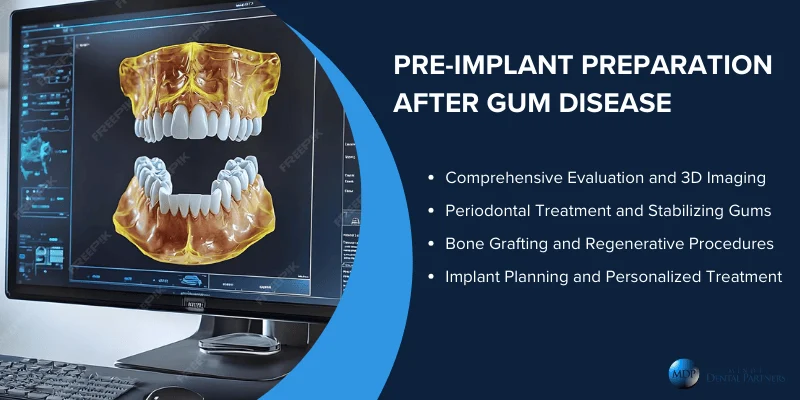
Comprehensive Evaluation and 3D Imaging
Your provider starts with a comprehensive evaluation that includes medical and dental history, clinical probing of pocket depths, and routine x-rays. They will often order a 3D scan (CBCT) to measure jawbone height, width, and the exact location of nerves and sinuses.
The 3D scan shows where bone is thin from past periodontal disease and helps decide if grafting or sinus lift is needed. Your dentist will document gum recession, mobility of nearby teeth, and soft-tissue thickness.
Expect photos, probing charts, and a review of medications that affect healing, such as steroids or bisphosphonates. This full workup sets the limits for safe implant placement and reveals whether you need periodontal surgery first.
Periodontal Treatment and Stabilizing Gums
Before any implant, you must control active infection. Your care may begin with scaling and root planing (deep cleaning) to remove plaque and tartar below the gumline. Dentists often add local or systemic antibiotic therapy if pockets stay inflamed or bleeding persists.
If deep pockets remain, your periodontist may recommend flap surgery or pocket reduction surgery to access roots and reshape bone. Laser therapy can be an alternative for some cases to remove diseased tissue with less bleeding.
After these steps, you’ll enter a periodontal maintenance program with professional cleanings every 3–4 months and strict home care. Stable, low-pocket depths and healthy gum tissue are required before moving to implant surgery.
Bone Grafting and Regenerative Procedures
If your 3D imaging shows bone loss, bone grafting rebuilds the ridge so an implant can anchor securely. Options include particulate bone grafts, block grafts, or guided bone regeneration using membranes. Your surgeon chooses graft material, autograft, allograft, xenograft, or synthetic, based on the defect size.
Regenerative procedures may also pair grafts with growth factors or membranes to encourage new bone and soft-tissue growth. In some cases, a sinus lift is needed to raise the sinus floor for upper back implants.
Healing time varies; small grafts may heal in a few months while larger reconstructions can take six months or more.
You must avoid smoking and follow antibiotic and oral hygiene instructions to protect the graft and improve success rates.
Implant Planning and Personalized Treatment
Once gums and bone are stable, your team creates a personalized treatment plan. They use the 3D scan, models, and digital planning software to choose implant size, position, and angulation that avoid nerves and roots.
Your plan may stage treatment: place implants after graft healing, or in some cases use immediate placement with careful risk assessment. The plan lists timelines, surgical steps, anesthesia options, and follow-up visits.
It also specifies periodontal maintenance after restoration, professional cleanings, home care tools like interdental brushes, and more frequent exams to detect peri-implantitis early.
Clear written consent and a schedule for monitoring healing and oral hygiene expectations help you stay on track for long-term implant health.
Still unsure if your gums are ready for surgery. Talk with one of our implant experts and get clear answers about your health risks and next steps.
The Dental Implant Procedure for Former Gum Disease Patients
You will follow a stepwise plan that rebuilds healthy gums and bone, places implants where bone is strong, and restores teeth once implants are stable. Expect cleanings, possible grafting, a healing period for the implant to integrate, and a final prosthesis that replaces missing teeth.
Implant Placement and Healing Period
Your dentist first confirms gum health and removes infection with deep cleanings or periodontal treatment. They will place the implant screw into the prepared jawbone using local anesthesia. The implant must sit in healthy bone free of active infection to reduce risk of failure.
After placement, you enter a healing period called osseointegration. This usually lasts 3–6 months depending on bone quality and implant location. During this time the implant integrates with bone to gain stability. You should avoid heavy biting on that area and follow strict home care and scheduled check-ups.
Your dentist may give antibiotics, anti-inflammatories, and soft-food instructions. If you smoke or have uncontrolled diabetes, healing can slow; discuss these risks before surgery. Regular maintenance visits help catch early problems like peri-implantitis.
Restoration and Final Tooth Replacement
Once the implant is stable and x-rays show solid bone contact, your dentist uncovers the implant and places an abutment. The abutment connects the implant to the crown, bridge, or denture that will replace your missing teeth.
For single teeth, a porcelain crown is common. For multiple missing teeth, implant-supported bridges or an All-on-4 style prosthesis can restore a full arch.
Your dentist takes final impressions or digital scans to make a custom restoration that matches your bite and appearance. The lab fabricates the crown or bridge, which your dentist cements or screws onto the abutment. You will learn specific cleaning techniques for implant restorations to protect both gums and implant stability.
Expect a short adjustment period for chewing and speech. Follow-up visits let the team check fit, bite, and gum health around the new tooth replacement.
Special Techniques for Low Bone Volume
If periodontitis caused bone loss, your dentist may rebuild the ridge before or during implant placement. Common techniques include bone grafting, ridge augmentation, and sinus lifts in the upper jaw. These add bone material to create enough volume for a stable implant.
For patients needing a faster solution, the All-on-4 approach uses angled implants to avoid grafting and support a full-arch prosthesis on four to six implants. This can shorten treatment time but still needs healthy soft tissue and careful planning.
In cases of minimal bone, short or narrow implants or zygomatic implants (anchored in cheekbone) may be options. Your dentist will choose the method that best balances implant success and your anatomy.
Long-Term Maintenance and Oral Health After Implants
You need a clear daily routine and regular professional care to keep implants healthy and prevent problems. Proper brushing, cleaning between teeth, and scheduled checkups protect gum tissue and the implant’s supporting bone.
Oral Hygiene Habits to Protect Implant Health
Brush your implants twice a day with a soft-bristle brush and low-abrasive toothpaste. Use gentle, short strokes at the gum line to remove plaque without irritating your gums. An electric toothbrush can give more consistent results if you prefer.
Floss every day around the implant crown. If flossing is hard, use interdental brushes sized to fit the gaps between your teeth and implant. Slide the brush gently; don’t force it.
Rinse with an antimicrobial mouthwash when your dentist recommends it. Avoid abrasive whitening pastes and hard scrubbing that can roughen the implant crown or annoy the gums. Stay hydrated and limit sugary, sticky foods that feed bacteria.
Do not let past gum disease hold you back from smiling again. Schedule your visit today and take the first step toward a strong, confident smile.
Ongoing Periodontal Maintenance Visits
Schedule professional cleanings every 3–6 months if you’ve had gum disease. Your periodontist or hygienist will use special instruments safe for implants to remove plaque and tartar without damaging the implant surface.
Tell your clinician about any history of periodontitis and show any nightguard or oral appliance you use. They will track bone levels and gum attachment with periodic X-rays and probing measurements.
If your gums show inflammation, your provider may tighten maintenance to every 3 months and prescribe targeted care like antimicrobial rinses or localized antibiotics. Keep all follow-up appointments; skipping visits raises the risk of peri-implantitis and implant complications.
Signs of Implant or Gum Issues
Watch for red, swollen, or bleeding gums around the implant. Tenderness, persistent bad taste, or pus are warning signs of infection.
Note any mobility of the implant crown or a feeling that the tooth is loose. Increased sensitivity or pain when biting can signal bone loss or mechanical problems.
Report changes in chewing, new gaps between teeth, or gum recession to your dentist right away. Early detection during maintenance visits makes treatment simpler and helps protect long-term oral health.
Who May Not Be a Candidate and Alternative Options
If you had gum disease, certain health and mouth conditions can make implants risky or unlikely to succeed. Know which problems matter most and what proven options your dentist or periodontist can offer instead.
When Implants Are Not Advisable
If you have active or advanced periodontitis, implants are usually not safe right now. Active infection destroys bone and soft tissue needed to hold an implant. Your dental team will look for deep pockets, loose teeth, and bone loss on X-rays before recommending implants.
Uncontrolled medical conditions matter too. Poorly controlled diabetes or immune-suppressing treatments reduce healing and raise implant failure risk.
Heavy tobacco use also lowers success, many practices require quitting or cutting back before surgery. Certain medications, like long-term bisphosphonates, can affect jaw bone healing and make implants risky.
If you lack enough jawbone and you cannot or will not have bone grafting, implants may not be possible. In these cases, your dentist will recommend treating gum disease first and reevaluating implant eligibility after healing.
Alternatives to Dental Implants

If implants aren’t an option, your team can suggest reliable alternatives that fit your mouth and health.
- Removable partial dentures: Cost-effective, easy to adjust, and replace missing teeth without surgery.
- Full dentures: A complete-arch solution when many teeth are missing; modern dentures can look natural and restore chewing.
- Fixed dental bridges: Use adjacent healthy teeth for support; no implants needed but may require reshaping those teeth.
- Implant-supported overdentures (if limited implants are possible): Fewer implants can anchor a denture and work for some people who can’t handle full implant treatment.
Your dental team may also offer staged care: treat gum disease, stop tobacco, manage medical conditions, and then reassess implant options like bone grafts or All-on-4 if appropriate. Ask about timelines, costs, and how each choice affects your oral hygiene and long-term results.
Get trusted local care close to home. Call our Minot, ND office now to book your consultation and create a treatment plan for healthier gums and lasting implants.
Frequently Asked Questions
You’ll find clear answers about treating gum disease before implants, bone grafting needs, and choices if you have few or no teeth. Each question gives steps you can expect, timing, and common options.
What are the treatment options for those with receding gums interested in dental implants?
You may need soft tissue grafts to thicken and cover exposed roots before implants. These grafts reduce sensitivity and protect the gum margin where the implant crown will meet tissue.
Your dentist might also perform scaling and root planing to remove deep plaque and tartar. Controlling infection first lowers the risk of implant failure.
Is it possible to receive implants for severe gum disease and what are the prerequisites?
Yes, but only after you clear the infection and stabilize your periodontal health. That typically means several months of periodontal therapy, repeat cleanings, and proof of healed gum pockets.
You will likely need a 3D scan to measure bone levels and a treatment plan that may include bone grafting.
Your clinician must confirm healthy gums and enough bone before placing implants.
How can someone with no teeth benefit from dental implants?
You can get implant-supported dentures or fixed bridges that restore chewing and speech.
Implant options replace the bone and hold prosthetics securely, so they feel and act more like natural teeth.
A typical path includes placing multiple implants, letting them integrate, then fitting a removable or fixed prosthesis. This approach prevents further bone loss and improves daily function.
Are dental implants a viable option for individuals with significant bone loss?
Yes, implants can still work if you have bone grafts or sinus lifts to rebuild lost bone. These procedures add a new foundation so implants can anchor safely.
Your dentist will use imaging to plan graft size and timing. Healing often takes several months before implant placement.
What alternatives to dentures exist for patients suffering from gum disease?
You can consider implant-supported bridges, mini implants, or fixed full-arch prostheses as denture alternatives. Each option varies by cost, number of implants, and how permanent the result feels.
Some patients use overdentures that clip onto implants for more stability than regular dentures. Your periodontal health and bone levels will guide the best choice.
What are the implications of getting all-on-4 dental implants for someone with gum disease?
All-on-4 can work, but you must have gum disease fully treated first. Active infection raises the chance of complications around multiple implants placed at once.
If you have moderate bone loss, the all-on-4 technique can reduce the need for grafting by using angled implants. Still, you’ll need strict oral hygiene and frequent follow-ups to protect the new prosthesis.