


Getting dental implants often means making sure your jawbone is strong enough to hold them.
Why Bone Grafting May Be Necessary Before Dental Implants
Sometimes, the jawbone needs extra help before it can hold a dental implant well. This happens when the bone volume or density isn’t enough to support the implant securely.
Bone loss and defects can come from many causes. Dentists watch for specific signs that mean a bone graft might be needed to make sure the implant lasts and works properly.
Common Reasons for Bone Loss in the Jaw
Over 40% of patients with periodontal disease experience significant bone loss in the jaw, which may require bone grafting before implant placement.
Bone loss in the jaw can happen for several reasons. One main cause is periodontal disease, which is a serious form of gum disease that eats away at the bone supporting your teeth.
When teeth are missing for a long time, the body starts breaking down the bone in that area, a process called bone resorption. Other reasons include trauma to the jaw and osteoporosis, a condition that weakens bones overall.
Without enough bone density or volume, a dental implant may not stay stable under chewing forces. If the jawbone has shrunk or has defects, a bone graft can help restore its strength to support the new tooth properly.
Red Flags Dentists Look For Before Implant Placement
Before placing an implant, I look for signs that the bone might not be enough. These include:
- Narrow or thin jawbone ridges seen on scans
- Low bone height or density on X-rays or 3D scans
- History of long-term tooth loss with bone shrinkage
- Signs of previous gum disease causing bone damage
- Difficulty achieving good implant stability during planning
If any of these issues come up, a bone graft may be needed. It builds up the bone, so the implant can fuse well and stay firmly in place under daily use.
Patients with a history of missing teeth for over 6 months show a 20-30% decrease in bone height at the implant site, increasing the need for bone grafting.
Consequences of Inadequate Bone for Implants
Trying to place an implant without enough bone can lead to problems like implant loosening or failure. Without a stable base, the implant won’t properly connect with the jawbone, a process called osseointegration, which is vital for chewing and everyday use.
Poor bone support can also cause uneven forces on the implant, increasing the risk of bone loss around the implant or soft tissue problems. This might lead to further surgeries or even losing the implant.
How Dentists Determine the Need for Bone Grafting
Before deciding on bone grafting, I need to gather clear details about your jawbone. This helps me figure out if there is enough bone volume and density to safely place an implant.
I also check for any risks that could affect healing or implant stability.
Diagnostic Techniques: 3D Imaging and CBCT Scans
One of the most useful tools I use is the Cone Beam Computed Tomography, or CBCT scan. This 3D imaging gives me a detailed, three-dimensional view of your jawbone.
It shows both the height and width of bone available, which regular x-rays can’t do as accurately. With 3D scans, I can see the exact shape and density of your bone.
This allows me to plan the implant placement precisely and decide if bone grafting is needed. The scan also helps me avoid important structures like nerves and sinuses during surgery, making guided surgery safer.
Assessing Bone Density and Volume
Bone volume refers to how much bone you have in the area where the implant will go. Bone density is about the quality or strength of that bone.
Both are critical for implant success because the implant needs solid bone to hold firmly. When I look at your scans, I measure the available bone size carefully.
If the bone is too thin or short, it won’t support the implant securely. Low bone density means the bone might not heal well around the implant.
These conditions signal that bone grafting is necessary to build a stronger foundation.
Clinical Examination and Case Evaluation
Along with imaging, I physically examine your mouth to check the gum health and ridge shape. I look for signs like a narrow ridge, bone loss from periodontal disease, or uneven bone contours.
I also review your dental and medical history. Previous tooth loss, trauma, or health issues might affect bone quality.
Putting all this information together helps me decide if grafting will improve implant chances and long-term oral health.
Types of Bone Grafts and Grafting Materials
Bone grafting involves different materials, each with specific qualities that fit a variety of dental needs. Choosing the right kind depends on factors like how much bone needs replacing, healing time, and personal preferences about using natural versus synthetic materials.
Autografts: Using Your Own Bone
Autografts use bone taken from your own body, often from areas like the chin, hip, or lower leg. This type is usually the best option because it carries living cells that help new bone grow faster and blend naturally.
The biggest advantage of autografts is their high success rate, with fewer risks of rejection or infection. Still, harvesting your own bone means an extra surgical site, which can increase discomfort and recovery time.
If you want the fastest healing and most natural graft, autografts usually deliver that. The trade-off is a longer and sometimes more painful procedure compared to other types of bone graft materials.
Allografts: Donor Bone from Human Sources
Allografts come from human donors and are processed to remove living cells, reducing the chance of immune rejection. These bone grafts don’t require bone harvesting from your body, so the procedure is less invasive.
They are available in different forms like powders, chips, or blocks. Their success rates are good, typically around 90 to 95%, but healing takes a bit longer than with autografts.
One thing I like about allografts is they offer a middle ground, natural human bone without the extra surgery. It’s a solid option if you want to avoid the discomfort of bone harvesting but still want reliable results.
Xenografts: Animal-Derived Grafting
Xenografts use bone from animals, usually cows, that’s been processed to remove all organic material. The bone acts as a sturdy scaffold to support your body’s own bone growth.
These grafts are popular because they are easy to get, cost-effective, and provide long-term support due to their slow resorption rate. Healing can take longer, often 6 to 9 months.
If you don’t want donor bone from humans or your own body, xenografts are a common alternative. They’re good when you need a strong framework to build new bone but are okay with a slower recovery.
Synthetic Grafts: Artificial Bone Materials
Synthetic grafts, also called alloplasts, are made in labs from materials like calcium phosphate or bioactive glass. They’re designed to mimic natural bone but contain no living cells.
The biggest plus is there is no risk of disease transmission or immune rejection. They also come in consistent quality and various formulations depending on the graft needs.
Healing times vary but tend to be longer than with natural bone grafts. They are a good choice if you prefer an artificial option or have concerns about donor tissue.
However, because synthetic bone lacks cells, it relies entirely on your body to grow new bone around it.
The Bone Grafting and Dental Implant Process
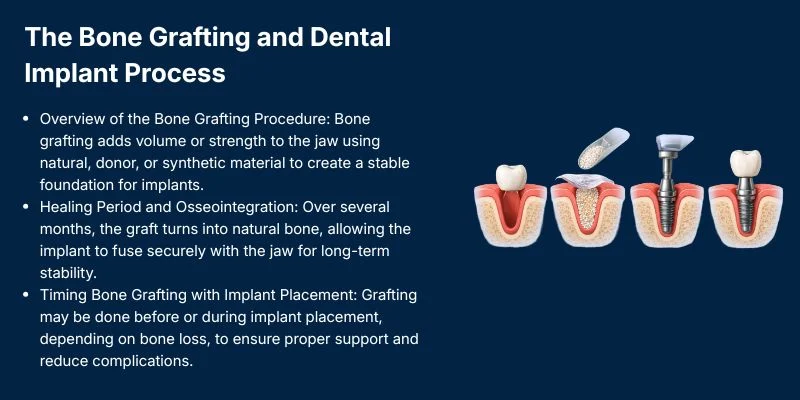
Before going further with dental implants, I learned that the jawbone often needs some extra care. Bone grafting builds a solid base, then healing and implant placement can follow.
Each step is important to make sure the implant stays strong and works well long term.
Overview of the Bone Grafting Procedure
Bone grafting is a surgical procedure where a dental bone graft is placed in the jaw to add volume or density. Depending on my situation, the graft can come from my own body, a donor, or synthetic material.
The surgeon carefully puts the graft where bone is missing or weak. The procedure usually happens under sedation to keep me comfortable.
They may also use a membrane to protect the graft while it starts healing. This graft acts as a support framework, encouraging my body to grow new bone tissue in that area.
Healing Period and Osseointegration
After the bone grafting procedure, there’s a healing period that can last several months. During this time, my body slowly replaces the graft material with new natural bone.
This process is key because it creates a strong base for the dental implant to anchor. Osseointegration happens when the implant post fuses with my jawbone.
Without good bone quality from the graft and proper healing, the implant might not stay in place. So, giving my jaw enough time to heal improves the chances for a successful implant.
Timing Bone Grafting with Implant Placement
Bone grafting may happen before or at the same time as dental implant placement, depending on my jawbone’s condition. If bone loss is significant, the surgeon usually waits until the graft fully heals before placing the implant.
In some cases, a minor graft can be done right when the implant goes in. But often, the entire process from grafting to implant can take a few months.
This careful timing ensures my implant has the best support and reduces the risk of problems later.
Special Considerations and Risks
When bone grafting is needed before dental implants, there are specific factors and risks I always consider carefully. These affect how the surgery goes and the long-term health of the implant and my face.
Knowing these details helps me prepare better and avoid problems.
Sinus Lift and Maxilla Grafting Scenarios
In the upper jaw, especially the maxilla, sometimes there’s not enough bone because the sinus cavity sits close by. When this happens, a sinus lift can raise the sinus membrane and add bone graft material below it.
This creates enough room and support for the implant. This procedure needs precise care to avoid tearing the sinus membrane.
A torn membrane can delay healing and increase infection risk. Healing after a sinus lift usually takes 4 to 9 months before the implant can be placed.
The maxilla can be trickier to graft because bone loss here often involves both vertical height and horizontal width. Different graft types may be used to build up the area, and I always make sure the graft is stable and well-protected during healing.
Potential Complications and How They’re Managed
Bone grafting, like any surgery, carries some risks. Common issues include mild swelling, bruising, and minor infections, which usually clear up with proper care and antibiotics.
More serious risks might include graft failure or poor integration. This can lead to implant instability or failure later on.
If that happens, the graft site may need to be treated again, sometimes with additional surgery. I find that close follow-up visits help catch problems early.
If swelling or pain worsens after the first week, it’s important to contact the dentist. Barrier membranes and sterile techniques during surgery reduce complications by protecting the new bone and preventing soft tissue from invading the graft.
Impact on Facial Aesthetics and Oral Health

Bone grafting does more than support implants; it helps maintain the shape of my jaw and face. Without enough bone, the face can look sunken or aged, since bone loss changes how lips and cheeks sit.
By regenerating lost bone, grafting keeps my facial features balanced and prevents further changes in jaw structure. This also improves oral health by creating a solid base for implants to work well during chewing.
Strong bone around implants lowers the chance of problems like gum recession or exposed metal parts. Preserving facial aesthetics is closely tied to keeping the bone healthy and stable over time.
Ensuring Dental Implant Success After Bone Grafting
Getting a dental implant after bone grafting takes careful steps to make sure everything heals well and the implant stays stable. How well your bone heals and how closely you follow care instructions can really affect the final result.
Factors That Influence Implant Success
The strength and quality of the new bone are super important. The jawbone needs to fully heal and integrate with the graft before the implant goes in.
This usually takes several months; often between 3 to 9 months depending on what type of graft was used and how my body heals. My overall health also plays a big role.
Conditions like diabetes or habits like smoking can slow healing and increase risks. Good oral hygiene is key too, since infections can cause implants to fail.
I make sure to follow my dentist’s advice on diet and medication after surgery to protect the graft site. Also, the skill of the surgeon placing the implant matters.
Precision in positioning the implant affects how well the implant bonds with the bone for long-lasting support.
Follow-Up Care and Long-Term Outcomes
After the implant is placed, I need to keep up regular check-ups so my dentist can check the bone and implant stability over time. This helps catch any early signs of problems before they get worse.
I avoid hard foods at first and gently clean around the implant site as directed. Over time, keeping up daily brushing and flossing helps maintain the health of the bone and gums.
Frequently Asked Questions
Bone grafting before dental implants can be a game changer when your jawbone isn’t strong or thick enough. It’s important to know the signs that show a bone graft might be needed, how your body handles grafts, and the time involved in healing.
What are the signs that indicate the necessity for a bone graft before getting dental implants?
If dental X-rays or scans show your jawbone is too thin or has lost height, that’s a strong sign a bone graft might be needed. Other signs include a history of gum disease, long-term missing teeth, or trouble getting a stable fit for implants during the planning phase.
How does insufficient jawbone density affect dental implant success?
Without enough bone density, implants can become loose or fail because they don’t have strong support. The implant needs to fuse tightly with the bone to stay secure, so lower bone quality increases risks like implant movement or infection.
What medical conditions could prevent someone from receiving a bone graft?
Certain health issues, like uncontrolled diabetes, immune disorders, or conditions that affect healing, might make bone grafting unsafe. If someone smokes heavily or has ongoing infections, that can also block proper recovery after the graft.
Can you explain the recovery process after a bone graft procedure?
After a bone graft, there’s usually some swelling and mild discomfort that can last a few days. Healing takes about 4 to 6 months depending on the graft size.
During this time, it’s important to follow your dentist’s care instructions to keep the area clean and protect the graft.
Are there alternatives to bone grafting for patients lacking sufficient bone density?
In some cases, dentists use shorter or narrower implants that don’t need as much bone. Other options include bone growth stimulators or delaying implant placement to let the bone grow naturally.
However, these aren’t always possible if the bone loss is severe.
How long after a bone graft can one typically proceed with dental implants?
Most patients need to wait between 4 and 9 months after a bone graft before implants can be placed.
This allows the graft to fully integrate into your existing bone, ensuring a strong and stable base for your implants.