



If you need to replace all your teeth, your dentist will evaluate your oral health, bone support, and goals to determine the best solution, carefully weighing all on 4 vs all on x decision factors.
Dentists decide between All-on-4 and All-on-X by evaluating your bone density, jaw structure, bite force, and long-term stability needs, with All-on-4 using exactly four implants per arch while All-on-X allows flexibility to place four, five, six, or more implants based on what your mouth requires.
The choice between these two full-arch restoration solutions isn’t about one being better than the other, but rather which approach fits your anatomy and goals.
Your dentist looks at several factors during treatment planning. If you have good bone in the front of your jaw and moderate bone loss, All-on-4 often works well.
But if you have more complex cases with severe bone resorption or need extra support for stronger chewing forces, All-on-X gives your dentist the option to add more implants where needed.
Understanding how dentists make this decision helps you have better conversations with your dental team about your treatment. The right choice depends on your unique mouth, not a one-size-fits-all approach.
Key Takeaways
- Dentists choose between All-on-4 and All-on-X based on your bone quality, jaw anatomy, and how much support your new teeth will need
- All-on-4 uses four implants in a set pattern while All-on-X adjusts the number and placement of implants to match your specific needs
- Both options can give you strong, permanent teeth that feel secure and restore your ability to chew normally
Understanding All-on-4 and All-on-X Techniques
Both approaches use dental implants to support a complete arch of prosthetic teeth, but they differ in how many implants are placed and how flexible the treatment plan can be for your specific needs.
What Are All-on-4 Dental Implants?
The All-on-4 technique was developed in the late 1990s as a solution for patients missing all their teeth in one or both arches. This method uses exactly four dental implants to support a full set of prosthetic teeth.
Your dentist places two implants vertically in the front part of your jaw. The other two implants go in the back at an angle. This angled placement helps maximize contact with your existing bone and often eliminates the need for bone grafting procedures.
All-on-4 dental implants are known for cost-efficiency and predictable outcomes. The technique works especially well if you have moderate bone loss but still have adequate bone in the front area of your jaw.
The standardized four-implant approach means your treatment planning and costs are more predictable from the start.
The Evolution of All-on-X Dental Implants
All-on-X dental implants evolved from the All-on-4 concept to give dentists more flexibility in planning your treatment. Instead of being limited to four implants, your dentist can place anywhere from four to six or more implants based on your individual anatomy.
This adaptable approach means your dentist can customize the number and position of implants to match your bone density and the functional demands you’ll place on your new teeth. If you have severe bone resorption or need extra support, All-on-X allows your dentist to add more implants where needed.
The additional implants in an All-on-X case can improve how forces distribute across your jaw when you chew. This often leads to better long-term stability of your prosthesis.
Full-Arch Restoration Concepts
Full-arch restoration replaces all the teeth in your upper or lower jaw using implant dentistry techniques. Both All-on-4 and All-on-X fall under this category of treatment.
Your dentist uses advanced imaging like CBCT scans to plan exactly where each implant should go before your surgery. Digital planning tools and surgical guides help ensure accurate placement during the procedure.
The prosthetic teeth attach to the implants through a framework that distributes chewing forces evenly. Digital dental design services have made these restorations more precise and predictable than ever before.
Your new teeth function more like natural teeth compared to traditional dentures. You can eat most foods without worry and don’t need to remove your teeth for cleaning.
Stop hiding your smile and start living confidently again. Contact us to discover which full mouth implant solution can give you lasting comfort and freedom.
Key Differences: All-on-4 vs All-on-X
The main distinction between these two approaches comes down to implant count and flexibility. All-on-4 uses exactly four dental implants per arch, while All-on-X adjusts the number based on your specific bone structure and needs.
Number and Placement of Dental Implants
All-on-4 follows a fixed protocol with four dental implants per arch. Two implants go straight into the front of your jaw where bone is typically denser. The other two are placed at angles in the back to avoid areas where bone may be thinner.
All-on-X gives your dentist more options for implant placement and flexibility. You might receive anywhere from four to six implants depending on your bone quality and jaw structure.
If you have good bone density throughout your jaw, your dentist might place five or six implants to create additional support points for your permanent teeth.
The angled implants used in both techniques help maximize contact with existing bone. This design choice often eliminates the need for bone grafting procedures that would add time and cost to your treatment.
Load Distribution and Stability Factors
When you bite and chew, forces spread across your implants. Four implants can handle these forces effectively for most patients. However, adding more implants through All-on-X improves load distribution across your full arch dental implants.
Think of it like supporting a bridge. More support pillars mean each one carries less weight. The same principle applies to your permanent teeth restoration.
Key stability factors include:
- Bone density in your jaw
- Your bite force during chewing
- The quality of remaining bone tissue
- Expected lifespan of the restoration
All-on-X typically provides better implant stability in cases where you have significant bone loss or high chewing forces. The additional implants reduce stress on each individual anchor point.
Treatment Personalization and Flexibility
All-on-4 works well when you have adequate bone in the front of your jaw. The standardized approach makes treatment planning straightforward and often more affordable.
All-on-X adapts to your unique situation. Your dentist can adjust implant numbers and positions based on where your bone is strongest. This customization becomes especially important if you have uneven bone loss or areas of very thin bone.
The All-on-X approach allows for more complex cases where a four-implant solution might not provide enough support. Your dentist can design a treatment plan that matches your anatomy rather than trying to fit your needs into a fixed protocol.
Treatment Planning and Decision Criteria
Dentists evaluate multiple physical and medical factors when choosing between All-on-4 and All-on-X approaches. Bone quality, patient health status, and modern digital planning tools all play specific roles in determining which treatment works best for your situation.
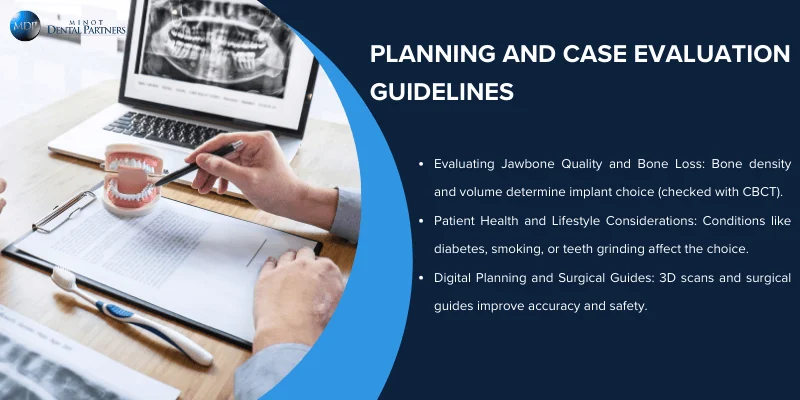
Evaluating Jawbone Quality and Bone Loss
Your jaw bone condition directly affects which implant system your dentist will recommend. When you’ve experienced significant bone resorption from missing teeth or dentures, the amount of remaining bone becomes a key decision factor.
All-on-4 works well when you have moderate bone loss because the angled back implants avoid areas where bone has deteriorated. This approach often eliminates the need for bone grafting procedures.
If you have severe bone loss in your upper jaw, your dentist might consider zygomatic implants that anchor into your cheekbone instead of the jawbone.
All-on-X becomes the better choice when bone loss is uneven across your jaw. Adding extra implants in areas with better bone density helps distribute forces more evenly.
Your dentist uses CBCT scans to measure bone density and volume in three dimensions, which shows exactly where healthy bone exists for implant placement.
Patients with minimal bone in the back of the upper jaw may need a sinus lift before standard implants can be placed. The All-on-X approach allows your dentist to position additional implants where bone is strongest, working around compromised areas.
Patient Health and Lifestyle Considerations
Your overall health and daily habits influence which treatment your dentist selects. Medical conditions like diabetes or osteoporosis can affect osseointegration, which is how implants fuse with your bone.
If you have health factors that increase surgical risk, the All-on-4 approach offers a shorter, less invasive procedure. Fewer implants mean less surgery time and faster recovery. Your dentist reviews your complete medical history, current medications, and any tobacco or alcohol use before recommending treatment.
Patients who grind their teeth or have strong bite forces often benefit from All-on-X. The additional implants provide extra support to handle the increased pressure on your restoration.
Your expectations matter too. During treatment planning, your dentist ensures you understand what each option can realistically achieve for your specific situation.
Digital Planning and Surgical Guides
Modern technology has changed how dentists plan full-arch implant cases. Cone beam imaging creates detailed 3D models of your jaw that show bone structure, nerve locations, and sinus cavities.
Digital design software lets your dentist plan exact implant positions before surgery begins. This technology is especially valuable for full-arch guided surgery, where precision determines long-term success.
Surgical guides are custom devices made from your digital treatment plan. They fit over your gums during surgery and direct the drill to exact locations and angles. Using a surgical guide makes the procedure faster and more accurate, which reduces your time in the chair.
These digital tools have dramatically improved implant positioning accuracy compared to freehand placement. Your dentist can also share the digital plan with the lab that makes your final restoration, ensuring everything fits together perfectly from the start.
You deserve teeth that feel secure and look beautiful every day. Book your implant evaluation near you in Minot, NS, and take the first step toward a smile you can truly trust.
Clinical Workflow and Patient Experience
Both treatment options follow similar steps that let you receive temporary teeth on the same day as your implant surgery. The main focus is getting you back to normal activities quickly while your permanent restoration is being made.
Temporary Teeth and Immediate Loading
You will receive temporary prosthetic teeth within hours of your implant placement surgery. Your dentist attaches these temporary teeth to the implants right away so you can leave the office with a complete smile.
This immediate loading approach means you won’t need to go without teeth during healing. The temporary restoration lets you eat soft foods and speak normally while your jawbone fuses with the implants over the next few months.
Your dental team uses digital scans and planning to create these temporary teeth before your surgery day. This preparation makes the process smooth and predictable for you.
The temporary phase typically lasts three to six months. During this time, your dentist will check your progress at follow-up visits to make sure everything is healing properly.
Restoring Function and Smile Aesthetics
Your permanent teeth are custom-made using advanced implant dentistry techniques and digital design. The final prosthetic teeth look natural and match your facial features.
The permanent restoration is stronger than the temporary version and built to handle normal chewing forces. You can eat most foods comfortably once your dentist installs the final teeth.
Your dental team works to restore your smile with teeth that fit your mouth shape and bite pattern. They consider your lip support, tooth color, and gum tissue appearance when designing your permanent restoration.
The digital workflow process helps create precise results that feel comfortable and look attractive. Most patients report high satisfaction with both the function and appearance of their completed restoration.
Comparing Outcomes and Long-term Considerations
Both All-on-4 and All-on-X approaches deliver reliable results for full-arch restoration, but their differences affect how well they perform over time and what maintenance you’ll need to plan for. The number of implants, materials used, and prosthetic design all play a role in patient satisfaction years down the road.
Long-term Stability and Maintenance
The main difference in stability comes down to implant distribution across your patient’s jaw. All-on-4 uses four implants positioned at specific angles to maximize bone contact. All-on-X typically uses six or more implants placed throughout the arch.
More implants generally mean better load distribution. This can reduce stress on individual implants and potentially improve long-term survival rates. Research on dental implant survival shows that proper maintenance is critical for both approaches.
Your patients will need regular checkups every three to six months. You’ll examine the implants, check for bone loss, and clean around the prosthetic components. The screw-retained design makes it easier for you to remove the prosthesis during maintenance visits.
Both options require similar home care routines. Patients should use water flossers, special brushes, and follow proper cleaning techniques to prevent peri-implantitis.
Material Choices and Prosthetic Design
Your choice of materials affects durability and aesthetics for full-arch restoration. Most full-arch cases use either acrylic, zirconia, or a combination with a titanium bar foundation.
Acrylic prosthetics are lighter and easier to adjust if problems occur. They’re also more affordable for patients on a budget. However, they wear down faster and may need replacement after 5-10 years.
Zirconia offers superior strength and stain resistance. It looks more natural and lasts longer than acrylic. The trade-off is higher cost and more difficult repairs if something breaks.
Fixed hybrid prosthetics combine these materials effectively. A metal framework provides strength while aesthetic materials create a natural appearance. This design works well for both All-on-4 and All-on-X cases.
Removable Dentures vs Full-Arch Implants
Removable dentures that snap onto implants differ significantly from fixed full-arch solutions. Traditional implant-retained overdentures use two to four dental implants per arch with ball or bar attachments. Patients can remove them for cleaning.
Fixed options like All-on-4 and All-on-X stay in place permanently. Only you can remove them during maintenance appointments. This gives patients a more natural feeling and eliminates the worry of dentures slipping.
Comparing these treatment options shows clear differences in patient satisfaction. Fixed solutions typically score higher for comfort and confidence. Overdentures cost less upfront but may need more frequent adjustments.
The choice depends on your patient’s bone quality, budget, and preferences. Some patients feel more secure with removable options they can clean thoroughly. Others want the permanence and convenience of fixed arch restoration that functions like natural teeth.
Here in Minot, ND, Minot Dental Partners is ready to help you restore your smile and your confidence with a personalized full mouth implant plan made just for you.
Frequently Asked Questions
Dentists weigh multiple clinical factors when choosing between these two implant systems, including your bone quality, bite force, and overall oral health status. Cost differences and maintenance needs also vary based on how many implants are used and how forces distribute across your jaw.
What factors influence a dentist’s choice between All-on-4 and All-on-X dental implants?
Your dentist examines your bone density and volume in both the front and back parts of your jaw before making a recommendation. They also look at how hard you bite and whether you grind your teeth at night.
The condition of your gum tissue matters too. Your dentist checks for any signs of gum disease or inflammation that could affect healing.
Your medical history plays a role in the decision. Conditions that affect bone healing or tissue repair may push your dentist toward one system over the other.
Can you explain the differences in oral health requirements for All-on-4 versus All-on-X procedures?
Both procedures require healthy gums and adequate bone in your jaw to support the implants. All-on-4 needs good bone quality specifically in the front part of your jaw where the implants go.
All-on-X can work with lower bone density because the extra implants help distribute forces better. If you have uneven bone distribution or previous bone loss, your dentist might suggest All-on-X.
You need to maintain good oral hygiene with either option. Regular brushing and professional cleanings help both types of implants last longer.
How does jawbone density play a role in selecting All-on-4 or All-on-X treatments?
Your bone density directly affects which treatment your dentist recommends. All-on-4 works well when you have adequate bone in the front section of your jaw.
Patients with low bone density or bone loss often benefit more from All-on-X. The additional implants spread out the pressure, which reduces stress on any single point.
All-on-X adapts better to varying bone conditions throughout your jaw. Your dentist can place the extra implants where your bone is strongest.
Could you tell me about the long-term maintenance differences between All-on-4 and All-on-X dental implants?
Both systems need the same basic care routine. You brush twice daily and use special tools to clean around the implants.
Regular dental visits are essential for both options. Your dentist checks the implants and cleans areas you can’t reach at home.
All-on-X may offer better long-term bone preservation because forces spread across more implants. This can mean less stress on the bone around each implant over time.
What are the advantages of choosing All-on-X over All-on-4 implants for full mouth reconstruction?
All-on-X provides better force distribution across your jaw since more implants share the load. Each implant handles less pressure when you chew.
If you grind your teeth or have a strong bite, All-on-X offers more stability. The extra implants reduce the risk of overload on any single implant.
All-on-X works better for patients who want maximum longevity from their restoration. The increased implant support can lead to better outcomes over many years.
How do the costs compare between an All-on-4 and an All-on-X treatment plan?
All-on-X typically costs more because it uses additional implants. Each extra implant adds to the surgical time and materials needed.
All-on-4 usually has a lower upfront cost since it requires only four implants per arch. The simpler surgical procedure can also mean less time in the dental chair.
Your total cost depends on your specific situation and location. Some patients find the extra investment in All-on-X worthwhile for the added stability and potential longevity.