



Losing most or all of your teeth can make eating difficult and affect how you feel about your smile. Many older adults face this challenge and need to choose between different tooth replacement options.
Full-arch implants are generally better than traditional dentures for older adults because they provide stronger chewing power, protect jawbone health, and feel more like natural teeth, though they cost more upfront.
The decision between full-arch implants and dentures depends on your health, budget, and personal goals. Traditional dentures have helped people for many years and work well for some patients.
However, dental implants offer benefits that can improve your daily life in ways dentures cannot match.
Understanding full arch implants vs dentures for seniors will help you make the best choice for your situation. This guide explains what makes these treatments different and what you should think about before deciding.
Key Takeaways
- Full-arch implants restore up to 90% of natural chewing ability while dentures only restore 20-30%
- Implants prevent jawbone loss and maintain facial structure, whereas dentures can lead to bone deterioration over time
- Implant-supported restorations can last decades with proper care, but dentures typically need replacement every 5-10 years
How Full-Arch Implants and Dentures Work
Both options replace missing teeth, but they use different methods to stay in your mouth. Full-arch implants attach directly to your jawbone with titanium posts, while traditional dentures rest on your gums.
Full-Arch Dental Implants Explained
Full-arch dental implants replace an entire upper or lower set of teeth by anchoring prosthetic teeth to your jawbone. Your dentist places several titanium posts into your jaw during surgery. These posts act like tooth roots and bond with your bone over time.
Once the posts heal, your dentist attaches a full set of prosthetic teeth to them. The teeth stay permanently in place and don’t come out.
Most people get four to six implants per arch, which is why you might hear terms like “All-on-4” or “All-on-6.” Full-arch implants anchor securely to your jawbone through strategically placed titanium implants, creating a stable foundation.
The implants stimulate your jawbone just like natural teeth would, which helps prevent bone loss over time.
Traditional Dentures Overview
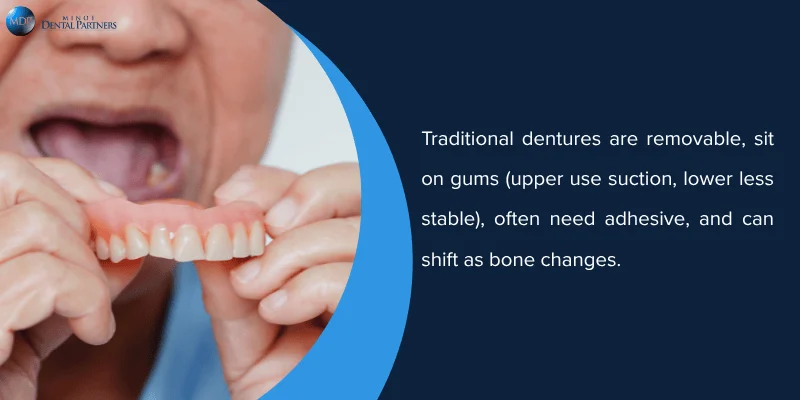
Traditional removable dentures are artificial teeth attached to a plastic base that matches your gum color. You take them out of your mouth each night for cleaning and soaking.
Upper dentures cover the roof of your mouth and use suction to stay in place. Lower dentures rest on your gums and tongue, which makes them less stable than uppers.
Many people use denture adhesive to help keep them from slipping. Dentures don’t attach to your jawbone, so they sit on top of your gums. This means they can move around when you eat or talk, especially as your jawbone changes shape over time.
Implant-Supported and Snap-In Denture Options
Implant-supported dentures combine features of both dental implants and removable dentures. Your dentist places two to four titanium posts in your jaw, and special attachments on your denture snap onto these posts.
You can remove snap-in dentures for cleaning, but they stay more secure than traditional dentures during the day. The implants provide some bone stimulation, though less than full-arch implants.
Some implant-supported dentures are fixed and don’t come out at all, while others you can remove yourself. The number of implants needed depends on your bone health and which type you choose.
Snap-in dentures cost less than full-arch dental implants but more than traditional dentures.
Key Differences: Function, Comfort, and Chewing Ability
Full-arch implants stay firmly in place and don’t move around in your mouth, while traditional dentures can slip and cause discomfort. The way these options affect your ability to eat, speak, and feel confident varies quite a bit.
Stability and Natural Feel
Full-arch implants remain fixed in your mouth because they attach directly to your jawbone. You won’t need adhesives or worry about them shifting when you talk or laugh. The implants feel more like your natural teeth because they’re anchored securely.
Traditional dentures rest on your gums and rely on suction or adhesive creams to stay in place. Over time, bone loss under dentures makes them looser and less stable. You might experience sliding, rotating, or clicking during meals and conversations.
The permanent nature of implants means you don’t remove them at night. Dentures require daily removal for cleaning and soaking. This can feel inconvenient and may affect your confidence in social situations.
Chewing Efficiency and Bite Force
Your chewing ability improves significantly with full-arch implants. You can bite down with up to 70% more force compared to dentures. This means you can eat harder foods like apples, corn on the cob, and steak without worry.
Dentures limit your food choices because they don’t provide the same chewing function. Many people with dentures avoid chewy or crunchy foods and stick to softer options. You might need to cut food into smaller pieces or avoid certain meals entirely.
The superior bite force with implants helps you maintain better nutrition. You won’t have to give up favorite foods that support your overall health. Implants transmit chewing forces through your jawbone like natural teeth, which helps preserve bone density and oral health.
Speech and Confidence
Full-arch implants don’t interfere with your speech patterns. The fixed bridges sit in the right position without bulky plastic covering your palate. You can pronounce words clearly and speak naturally.
Dentures can make speaking difficult, especially when they’re new or become loose. The plastic base takes up space your tongue needs to form certain sounds. You might notice slurring, whistling on S and F sounds, or clicking noises when you talk.
Your confidence improves when you don’t worry about your teeth moving. With implants, you can smile broadly, laugh freely, and eat in public without concern. Studies show that up to 96% of patients report major improvements in self-esteem after getting full-arch implants.
Bone Health and Oral Wellness in Older Adults
Your jawbone needs stimulation from tooth roots to stay strong and healthy. When you lose teeth, the bone in your jaw begins to shrink, which affects both your oral health and facial appearance.
Bone Loss and Jawbone Density
When you lose a tooth, your jawbone no longer receives the pressure and stimulation it needs from chewing. This leads to bone resorption, where your body starts to break down and absorb the bone tissue that once supported your teeth.
You can lose up to 25% of your jawbone width within the first year after tooth loss. This process continues over time, making your jawbone thinner and weaker.
Lower jawbone density creates several problems for you:
- Difficulty fitting dentures properly as your jaw shape changes
- Increased risk of jaw fractures
- Changes to your facial structure and appearance
- Limited options for tooth replacement in the future
Your age can make bone loss happen faster because older adults naturally experience decreased bone density throughout their body.
Bone Preservation and Osseointegration
Full-arch implants work differently than dentures because they act like natural tooth roots. When your dentist places implants into your jawbone, they fuse with the bone through a process called osseointegration.
This fusion creates a strong connection between the titanium implant and your bone. The implant then stimulates your jawbone when you chew, just like a natural tooth root would.
Dental implants help prevent bone loss by maintaining the natural pressure on your jaw. Your bone recognizes this stimulation and continues to rebuild itself instead of breaking down.
Some older adults worry they don’t have enough bone for implants. Your dentist can perform gum grafting to build up areas where bone loss has already occurred. This procedure adds bone material to strengthen your jaw before placing implants.
How Tooth Replacement Options Affect Facial Structure
Dentures sit on top of your gums and don’t stop bone resorption from happening underneath. As your jawbone shrinks over time, your face begins to change shape.
You might notice your chin moving closer to your nose, creating a sunken appearance. Your cheeks can also look hollow, and wrinkles around your mouth become deeper. These changes make you look older than you actually are.
Full-arch implants maintain your facial structure by preserving your jawbone. The bone stimulation keeps your jaw strong and prevents the collapse that happens with dentures.
Your long-term oral health improves when you maintain proper bone density in your jaw. A stronger jawbone supports better overall dental health as you age.
Maintenance, Durability, and Daily Care
Full-arch implants can last for decades with basic oral hygiene, while dentures typically need replacement every 5-10 years and require nightly removal for cleaning.
Longevity of Full-Arch Implants vs. Dentures
Full-arch implants offer significantly longer durability compared to traditional dentures. With proper care, your implants can last decades or even a lifetime after the initial implant placement heals completely.
The prosthetic teeth attached to the implants may need occasional repairs or replacement over time. However, the implants themselves integrate with your jawbone and provide stable, long-term support.
Dentures present a different story. Traditional dentures typically last between 5 and 8 years before you’ll need replacements. Your jawbone gradually shrinks over time when you wear dentures, which means they’ll need frequent adjustments to maintain a proper fit.
Daily Cleaning and Maintenance Requirements
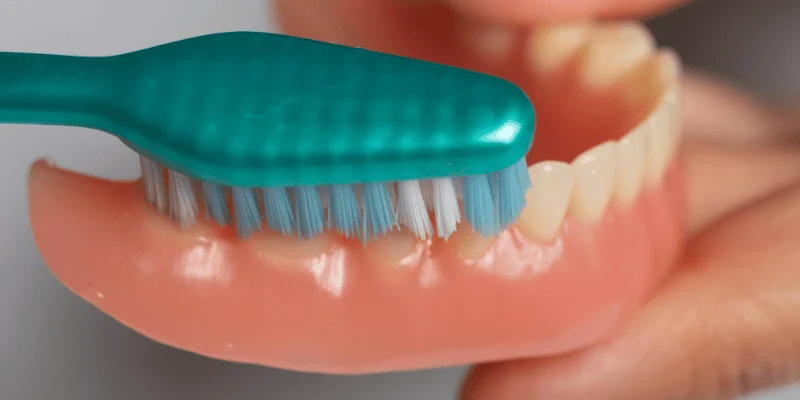
Your daily care routine differs dramatically between these tooth replacement options. Full-arch implants require brushing and flossing just like natural teeth. You can use a regular toothbrush, interdental brushes, or water flossers to clean around the prosthesis.
You won’t need to remove your implants at night. They stay in your mouth permanently, allowing you to maintain your normal routines.
Dentures demand more involved daily care:
- Remove them every night before bed
- Clean them thoroughly with special denture cleaners
- Soak them overnight in a cleaning solution
- Clean your gums and any remaining natural teeth
- Reinsert them each morning
This daily removal and cleaning process adds extra steps to your routine that many older adults find inconvenient.
Dental Checkups and Professional Care
Both tooth replacement options require regular dental checkups, but the focus differs. With full-arch implants, you’ll need periodontal maintenance and professional cleanings every 3-6 months. Your dentist will check the implants, tighten any loose screws, and monitor your bone health.
These visits typically involve routine maintenance similar to regular dental care. Your dentist may recommend a nightguard if you grind your teeth.
Denture wearers also need regular exams and checkups. Your dentist will examine your gums, check the denture fit, and make adjustments as your jawbone changes shape. You may need relining or rebasing services to maintain a proper fit as your mouth structure evolves over the years.
Cost Considerations and Candidacy Factors
Full-arch implants require a larger upfront payment than dentures, but the financial picture changes when you look at long-term expenses. Your eligibility for either option depends on bone health, overall medical condition, and lifestyle needs.
Initial Cost of Implants Versus Dentures
Full-arch dental implants typically cost between $15,000 and $30,000 per arch. This price includes the surgical placement, titanium posts, and the final restoration. Traditional dentures are much less expensive initially, ranging from $1,000 to $3,000 for a complete set.
A single dental implant starts around $3,000-$4,500 in most areas, and full-arch solutions use multiple implants to support your new teeth. Partial dentures cost even less than full dentures, making them an attractive option if you still have some natural teeth.
Many dental practices offer financing plans to help spread out the cost of implants over several months or years. Insurance coverage varies widely, with most plans covering a portion of dentures but limited coverage for implants.
Long-Term Value and Investment
Dentures need replacement every 5-10 years due to wear and changes in your jaw shape. You’ll also pay for regular adjustments, relining, adhesives, and repairs throughout their lifespan. These ongoing expenses add up quickly.
Full-arch implants can last decades with proper care and standard brushing and flossing. The long-term benefits include reduced maintenance, fewer replacements, and improved quality of life, which makes them cost-effective over time, even with the higher initial price.
Who Is a Good Candidate for Each Option
You need adequate jawbone density for implants to succeed. Dental implants for seniors work well if you have good bone structure or are willing to undergo bone grafting procedures. Your implant dentist will take X-rays and CT scans to evaluate your bone quality.
Good overall health matters for implant surgery. You should be free from uncontrolled diabetes, active gum disease, or conditions that slow healing. Smokers face higher implant failure rates.
Traditional or partial dentures suit nearly everyone regardless of bone loss. A lower denture can be challenging to keep stable, which is why some people choose implant-supported options for the lower arch while using regular dentures on top.
Your budget, health status, and personal preferences all play a role in the final decision.
Making the Right Choice for Your Needs
Your personal circumstances, health status, and daily habits all play major roles in determining which tooth replacement option works best for you. Working closely with a dental professional helps ensure you select the solution that matches your specific situation.
Lifestyle and Personal Preferences
Your daily routine matters when choosing how to replace missing teeth. If you travel frequently or lead an active lifestyle, full-arch implants offer convenience since they stay fixed in place and don’t require special cleaning routines or adhesives.
Traditional dentures need removal each night for cleaning and soaking. You’ll also need to avoid certain sticky or hard foods that might dislodge them. Some people feel self-conscious about dentures slipping during meals or conversations.
Full-arch implants function like natural teeth, so you can eat most foods without worry. You brush and floss them the same way you would regular teeth. This makes them appealing if you want a solution that feels natural and doesn’t change your daily habits.
Your budget also shapes this decision. Dentures cost less upfront, making them attractive if you need an immediate, affordable solution.
However, comparing tooth replacement options shows that implants may prove more economical over time since dentures typically need replacement every 5-10 years.
Health Considerations for Older Adults
Your jawbone health plays a big role in determining which option works for you. Full-arch implants need sufficient bone density to support the implant posts. If you’ve had missing teeth for years, bone loss might have occurred.
Age alone doesn’t disqualify you from implants. Your overall health matters more. Conditions like uncontrolled diabetes, active gum disease, or certain medications can affect healing after implant surgery.
Fixed full-arch implants help preserve bone density by stimulating your jawbone like natural tooth roots. Dentures don’t provide this stimulation, which can lead to continued bone loss and changes in your facial appearance over time.
Your ability to undergo surgery is another factor. Implant placement requires a surgical procedure and healing time. If you have health conditions that make surgery risky, dentures might be the safer choice for your oral health needs.
Consulting With Your Dental Professional
A thorough dental examination reveals which option suits your mouth best. Your dentist will take X-rays to check your bone density, examine your gum health, and review your medical history.
Be honest about your expectations and concerns during your consultation. Discuss your budget, timeline, and what matters most to you in a tooth replacement solution. Your dentist can explain the specific treatment process for your situation.
Ask about success rates, potential complications, and what happens if problems arise. A personalized estimate based on your needs helps you understand the true cost difference between options.
Some dentists offer trial periods or intermediate solutions. You might start with implant-supported dentures as a middle ground between traditional dentures and fixed implants. Your dental team should support whatever choice makes sense for your life.
Frequently Asked Questions
Full-arch implants and dentures each offer different advantages for older adults dealing with tooth loss. The choice between them depends on your budget, health needs, and lifestyle goals.
What are the benefits of choosing full-arch implants over traditional dentures for senior patients?
Full-arch implants provide better stability than traditional dentures because they anchor directly into your jawbone. This means you won’t need adhesives or worry about your teeth slipping while eating or talking.
Full-arch implants restore up to 90% of natural chewing ability, while traditional dentures only restore about 20-30%. You’ll be able to eat a wider variety of foods with more confidence.
These implants also help preserve your jawbone density. Traditional dentures don’t stimulate the bone, which can lead to bone loss over time and a sunken facial appearance. Implants prevent this by mimicking natural tooth roots.
How does the cost of dental implants compare to traditional dentures for older adults?
The upfront cost of full-arch implants is much higher than traditional dentures. This initial investment can be a significant barrier for many seniors on fixed incomes.
However, dentures typically need replacement every 5-10 years, while implant-supported restorations can last decades with proper care. Over time, the costs of denture relining, repairs, and replacements add up.
You might want to consider implant-supported dentures like All-on-4 as a middle-ground option. These combine better stability than traditional dentures with a lower cost than individual implants.
Can dental implants improve the quality of life for seniors compared to dentures?
Dental implants can significantly boost your confidence and comfort in social situations. You won’t have to worry about your teeth shifting or falling out when you laugh, talk, or eat with friends and family.
Traditional dentures can affect how clearly you speak, especially if they don’t fit properly. Full-arch implants stay fixed in place, allowing you to speak naturally without any changes to your pronunciation.
Many denture wearers experience sore spots and gum irritation from the constant pressure and movement. Implants eliminate these issues because they don’t rest on your gums or require removal.
What is the maintenance and care difference between full-arch implants and dentures in elderly individuals?
Traditional dentures require daily removal and cleaning with special solutions. You’ll need to take them out every night and soak them to keep them clean and prevent damage.
Full-arch implants need care similar to natural teeth. You can brush and floss them just like you would your original teeth, without any special removal or soaking routines.
Dentures also require periodic adjustments as your jawbone changes shape over time. This means regular dental visits for relining or refitting to maintain a comfortable fit.
Are there any age-specific considerations when choosing between full-arch implants and dentures for seniors?
Your overall health plays a big role in whether you’re a good candidate for implants. You need adequate jawbone density and good healing ability for the implant surgery to succeed.
Some medical conditions common in older adults, like uncontrolled diabetes or osteoporosis, can affect implant success rates. Your dentist will need to evaluate your specific health situation before recommending implants.
The decision depends on your individual needs, health conditions, lifestyle, and budget. A thorough consultation with your dentist is essential to determine the best option for you.
What are the long-term success rates of full-arch implants versus dentures for older adults?
Full-arch implants have high long-term success rates when properly placed and maintained. With good oral hygiene and regular dental checkups, they can last for decades or even a lifetime.
Traditional dentures have a shorter lifespan and need more frequent replacements. The ongoing bone loss that occurs with dentures means they’ll fit less securely over time, requiring adjustments or new sets.
The durability and longevity of implants often make them more cost-effective in the long run, despite their higher initial price. You’ll spend less time and money on repairs, replacements, and adjustments compared to dentures.